

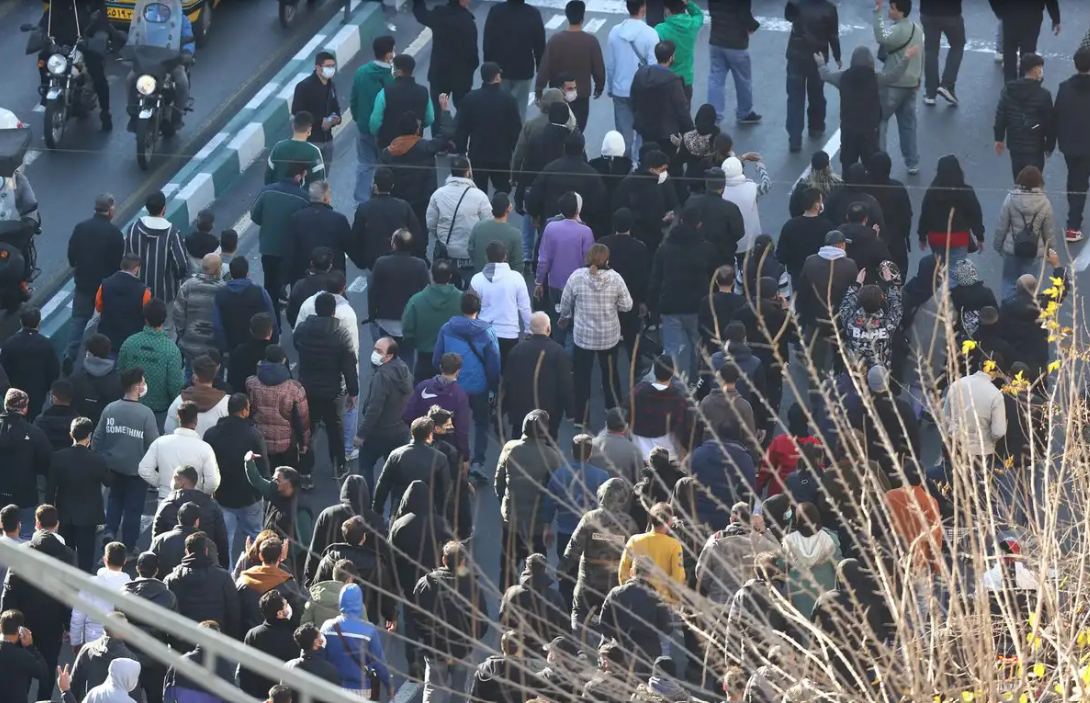

Protests driven by rising living costs expanded across Iran on Tuesday as university students joined shopkeepers and traders. Demonstrations were reported in several parts of Tehran, reflecting growing frustration with inflation and currency collapse. Moreover, protesters warned that unrest could spread nationwide if economic pressure continues unchecked.
Government Signals Willingness to Engage
Iran’s leadership responded by offering dialogue with demonstrators. President Masoud Pezeshkian said he instructed the interior minister to listen to legitimate public demands. Meanwhile, government officials announced plans to establish a formal dialogue mechanism. They stated that talks would include engagement with protest representatives.
A senior government spokesperson acknowledged the demonstrations openly. She said authorities recognize the protests and understand they stem from intense pressure on livelihoods. Therefore, officials framed the unrest as an economic issue rather than a security challenge. This tone marked a notable shift from previous responses.
Currency Collapse and Inflation Fuel Anger
Iran’s economic crisis has intensified throughout 2025. The rial has lost nearly half its value against the US dollar this year. On Tuesday, it slid to about 1.4 million rials per dollar, marking a record low. At the same time, inflation reached 42.5 percent in December.
Consequently, essential goods have become unaffordable for many households. Prices have surged beyond incomes, particularly for food and basic services. As a result, economic anxiety has spread across social groups, including students, merchants, and labor unions.
Street Protests and Symbolic Chants
Footage circulating online showed groups marching through Tehran streets. Protesters chanted slogans referencing Iran’s pre-revolution history. State television also aired scenes of crowds gathering in central areas. In addition, reports said hundreds of students protested at multiple universities in the capital.
On social media, Iranians voiced growing support. Many argued that corruption and mismanagement pushed society to a breaking point. Others warned that protests could soon reach other cities. These messages highlighted widespread anger rather than isolated discontent.
Sanctions and Long-Term Economic Strain
Iran’s economy has struggled for years under international sanctions. Restrictions intensified after sanctions were reimposed in 2018 following the collapse of the nuclear agreement. More recently, United Nations sanctions returned, adding further strain.
Officials have privately discussed ways to prevent economic collapse and manage public anger. However, disparities between ordinary citizens and political elites have deepened resentment. State media itself has acknowledged corruption and policy failures. Therefore, trust in economic governance remains weak.
Political Context and Security Pressures
These protests mark the first major unrest since foreign airstrikes targeted Iranian military and nuclear facilities in June. Those strikes previously sparked patriotic unity. However, economic hardship has now overshadowed that sentiment.
President Pezeshkian met trade unions and market representatives on Tuesday. He promised efforts to address their concerns and stabilize conditions. Still, authorities have not clarified how dialogue with protest leaders will proceed.
Iran also faces external pressure over its missile and nuclear programs. International warnings and regional tensions continue to weigh on investor confidence. Meanwhile, officials insist the nuclear program remains peaceful.
Uncertain Path Ahead
Iranian authorities have previously suppressed unrest through force and arrests. This time, dialogue has been emphasized publicly. Whether talks can ease economic anger remains uncertain. However, with inflation soaring and the currency weakening, pressure on the government is intensifying.
