

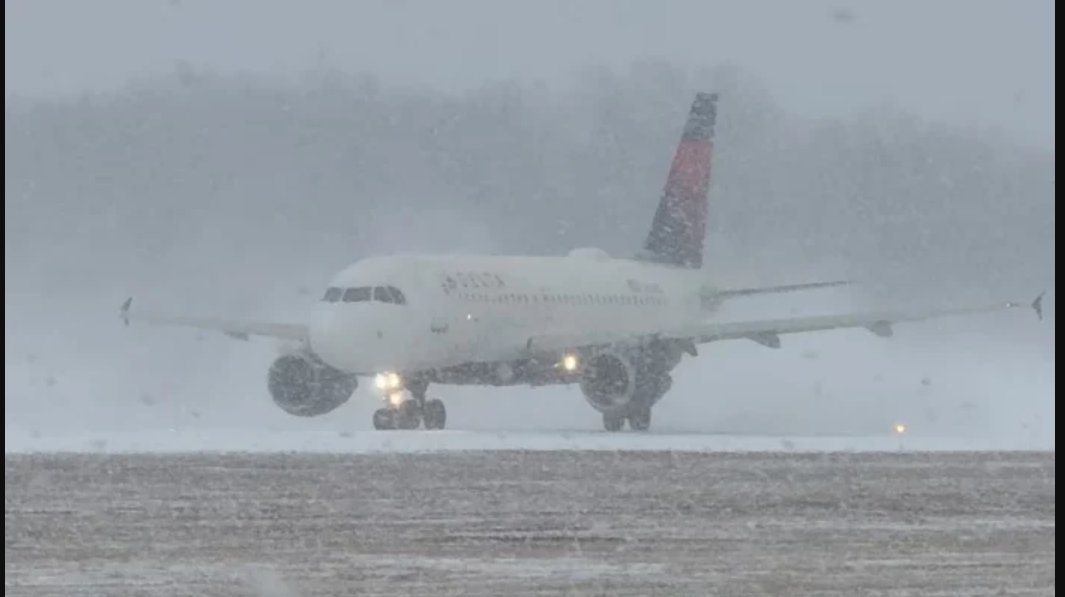

A powerful Midwest winter storm disrupted operations at Detroit Metro Airport during a critical holiday travel period. As a result, hundreds of passengers faced delays and cancellations throughout Sunday. By late evening, 21 departing flights were canceled, while nearly 150 experienced delays. Meanwhile, arriving traffic also suffered, with 24 incoming flights canceled and more than 100 delayed. Consequently, airport operations slowed as weather conditions worsened across the region. Nationally, more than 3,000 flights were delayed or canceled, highlighting the storm’s broad impact. Importantly, the disruptions followed another recent winter system, which had already strained Midwest and Great Lakes travel networks.
Flooding Reported Across Southeast Michigan
In addition to aviation disruptions, heavy rainfall caused flooding in several Southeast Michigan communities. For instance, Northville Road between Five Mile and Six Mile roads became impassable on Sunday afternoon. Authorities urged residents to avoid the area to ensure safety. At the same time, drainage systems struggled to manage excess water, worsening local conditions. Elsewhere, an outdoor trail attraction in Commerce Township announced a temporary nighttime closure due to extensive flooding. Event organizers confirmed ticket holders could seek refunds or reschedule for early January. These closures reflected the storm’s rapid shift from snow and ice to heavy rain.
Flash Freeze and Wind Threats Follow Storm
Although rain dominated much of Sunday, temperatures were expected to drop sharply overnight. As a result, officials warned of possible flash freezing on flooded and wet surfaces. Such conditions can quickly turn standing water into hazardous ice. Furthermore, strong winds were forecast for Monday, increasing the risk of snow squalls. Therefore, weather alerts were issued as officials urged caution during morning commutes. Travelers were advised to monitor conditions closely, especially near airports and major roadways.
Holiday Travel Faces Continued Uncertainty
The timing of the storm amplified its impact, as Sunday ranked among the busiest travel days of the season. Consequently, recovery efforts faced additional pressure from high passenger volumes. While crews worked to stabilize operations, lingering weather threats remained a concern. Ultimately, the combination of flight disruptions, flooding, and freezing risks underscored the storm’s complexity. Travelers were encouraged to stay informed and allow extra time, as conditions continued to evolve across Michigan and the Midwest.
