

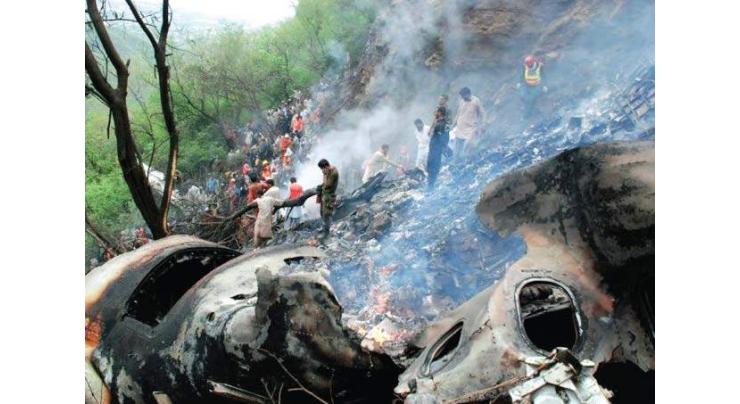

An Islamabad court has awarded Rs5.4 billion in compensation to the families of victims of the 2010 AirBlue plane crash. The judgment marks a major step toward long-delayed justice. The crash had claimed 152 lives after the aircraft slammed into the Margalla Hills near Islamabad.
The ruling was issued by an additional district court in Islamabad. The court was headed by Judge Rasool Bashir Mirjat. It dismissed an appeal filed by AirBlue and upheld the airline’s liability. The court also imposed a Rs1 million fine on AirBlue for intentionally delaying the legal process.
The decision has been widely welcomed by families who waited over 15 years for accountability. Legal experts believe the ruling may influence future aviation compensation cases in Pakistan.
Court Upholds Airline Responsibility
AirBlue Flight 202 departed from Karachi on the morning of July 28, 2010. The aircraft was scheduled to land at Islamabad International Airport. During its descent, it crashed into the Margalla Hills. All 152 passengers and crew members were killed.
The court rejected AirBlue’s arguments challenging compensation claims. It ruled that the airline remained responsible for the loss of lives. The judge noted that repeated delays by the airline prolonged the suffering of victims’ families. The Rs1 million penalty was imposed to discourage similar tactics in future cases.
Families had approached the courts after failing to receive fair compensation through initial settlements. The court observed that justice delayed further deepened emotional and financial distress for affected families.
Investigation Findings Highlight Pilot and ATC Errors
A detailed investigation by the Pakistan Civil Aviation Authority classified the crash as a Controlled Flight Into Terrain incident. The report blamed serious pilot errors. Investigators said the flight crew descended below the prescribed safe altitude. They also violated standard operating procedures.
The aircraft attempted to land in poor weather conditions. Heavy rain and low cloud cover reduced visibility. The pilots continued the approach despite unsafe conditions. The inquiry highlighted weak cockpit resource management and poor decision-making.
Later reports and court observations also pointed to air traffic control shortcomings. These errors added to the unsafe environment before the crash. Combined failures created conditions that proved fatal.
Families’ Long Legal Struggle Finally Recognized
For years, most families were pressured into accepting First Tier Liability compensation. They were required to sign release documents. These agreements limited their right to seek further damages.
However, a small number of families rejected these settlements. They pursued legal action demanding fair compensation. Their persistence ultimately led to this landmark judgment.
Legal analysts say the ruling sets an important precedent. It reinforces airline accountability and passenger safety obligations. The decision could reshape how compensation claims are handled in Pakistan’s aviation sector.
For grieving families, the judgment offers long-overdue recognition. While no compensation can replace lost lives, the ruling affirms their right to justice.
