

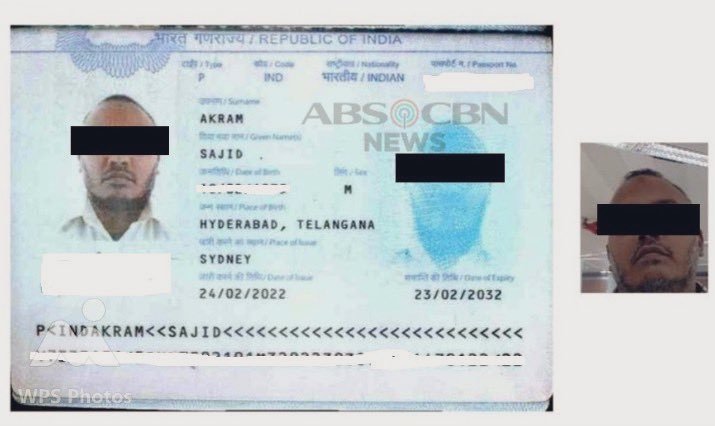

The investigation into the Bondi Beach attack during a Jewish Hanukkah celebration has taken a new turn with the emergence of Indian passports belonging to the attackers, Sajid and Naveed Akram. The attack, which occurred on December 14, left at least 15 people dead and several others injured, including two police officers who remain in critical but stable condition.
Attack Details and Victims
Father and son duo, Sajid Akram (50) and Naveed Akram, opened fire during the religious gathering, shocking the nation and raising concerns about antisemitism and violent extremism. Among the victims were a rabbi and father of five, a Holocaust survivor, and a 10-year-old girl named Matilda Britvan, according to officials and media reports.
Passport Details and Nationality Revelation
Filipino media outlet ABS-CBN News reported that Sajid Akram entered Australia using an Indian passport, issued on February 24, 2022, with a 10-year validity expiring on February 23, 2032. The passport lists Hyderabad, Telangana, as his place of origin. His son, Naveed Akram, also reportedly holds an Indian passport, despite previously circulating reports misidentifying him as a Pakistani national.
Authorities were aware of Sajid’s Indian citizenship from the outset, but initial media reports and narratives allegedly tried to link the attackers to Pakistan. Indian media outlets faced criticism for spreading misleading claims, which sources say aimed to malign Pakistan internationally. These narratives collapsed once evidence of Indian nationality became public.
Philippines Visit Clarified
Contrary to early speculation, the Philippines’ National Security Adviser, Eduardo Ano, stated that there is no evidence suggesting the father-son duo received any military or terrorist training in the country. Ano clarified that their visit, from November 1 to 28, would not have permitted any structured or meaningful training.
Immigration records show the pair arrived in Manila on November 1 and traveled to Davao City in Mindanao, a region historically affected by militancy. They departed on November 28 via a connecting flight from Davao to Manila, eventually returning to Sydney. The Australian police suggest the attack appeared to be inspired by Daesh.
Ongoing Regional Investigations
The Davao Regional Police, led by Maj Catherine Dela Rey, confirmed that a multi-agency investigation is underway to determine the specifics of the Akrams’ visit. Authorities are examining whether the duo stayed in Davao, the people they met, or if they only passed through the area.
Maj Dela Rey emphasized that the Davao region remains peaceful despite its association with the overseas terror incident. “Overall, the whole Davao region is very peaceful. And we have maintained this status all over the year,” she said.
The revelation of Indian passports adds complexity to the narrative surrounding the attack. Previous reports tied the incident to alleged links with Pakistan or militant networks, but current evidence highlights Indian nationality and refutes claims of military training abroad.
This development is likely to influence ongoing investigations in Australia, the Philippines, and potentially in India, as authorities work to understand the attackers’ movements, motives, and sources of radicalization.
The Bondi Beach tragedy remains a stark reminder of global concerns regarding violent extremism and the challenges of preventing attacks targeting religious communities.
