

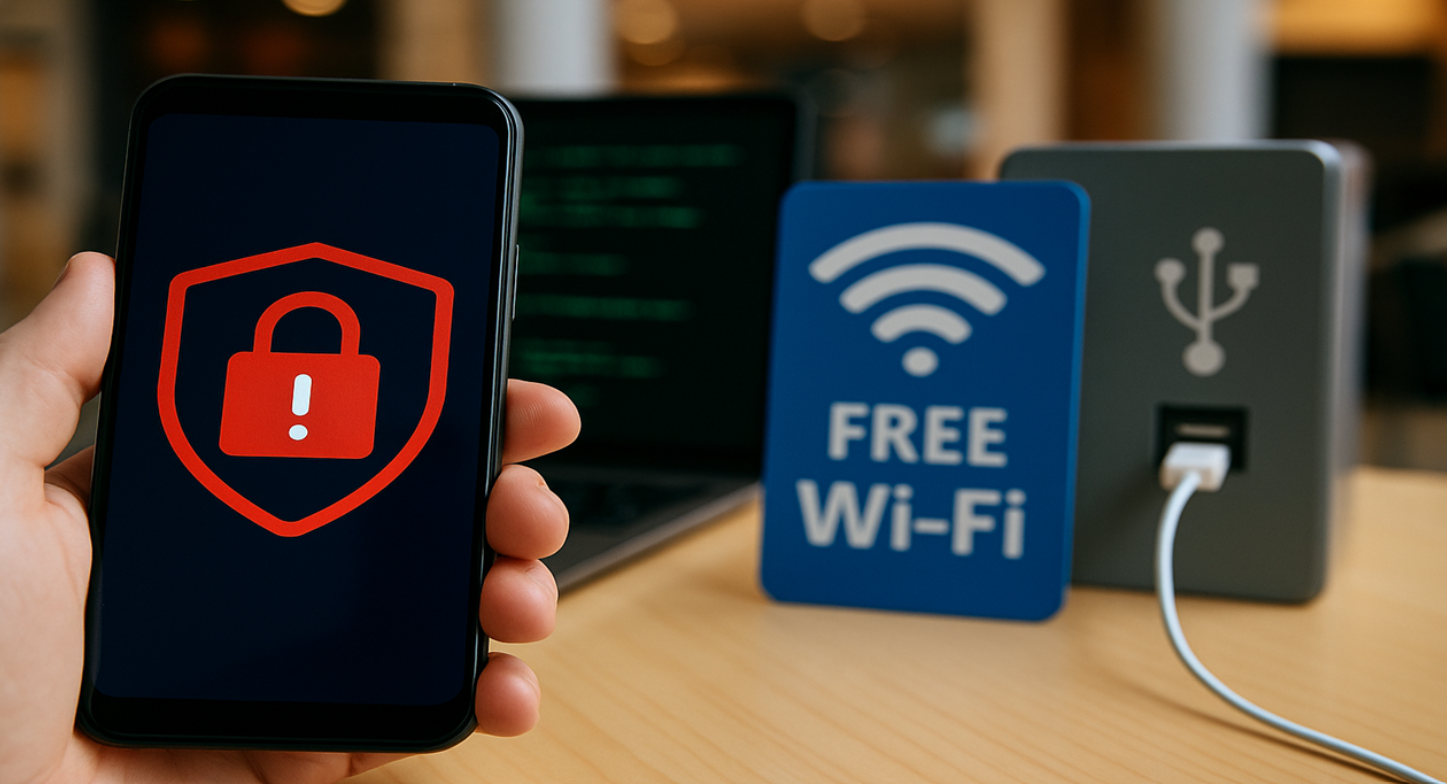

Many travellers rely on free airport Wi-Fi and public charging stations. However, cybersecurity experts warn that these conveniences carry serious risks.
During travel delays or disruptions, people act quickly and carelessly. As a result, scammers find it easier to target unsecured devices.
Hackers often create fake Wi-Fi networks that appear legitimate. Once connected, personal data becomes exposed.
These risks include phishing links, fake booking messages, and fraudulent payment requests. In addition, criminals may use “juice jacking” to steal data through charging ports.
Public Wi-Fi and Charging Stations Can Be Dangerous
Free Wi-Fi networks may not be what they seem. Scammers often name networks to mimic official airport services. Once connected, hackers can monitor activity or inject malicious software. Therefore, sensitive tasks become extremely risky.
Public USB charging stations also pose threats. Criminals can use modified ports to access stored data. Because of this, experts strongly advise travellers to avoid shared chargers. Personal cables and power banks offer safer alternatives.
Smart Cyber Safety Tips for Travellers
Cybersecurity specialists recommend several precautions for safer travel. First, use personal mobile data or a private hotspot for banking and emails. This step reduces exposure significantly. Second, verify network names before connecting. If unsure, ask airport staff for confirmation. Third, limit app permissions and keep devices updated. Regular updates fix security weaknesses.
Moreover, enable strong passcodes and biometric locks. These measures protect devices if stolen.
If a phone goes missing, act immediately. Lock or erase the device remotely. Then change passwords and inform banks.
Protect Personal Data Beyond Your Phone
Digital safety extends beyond smartphones. Rental cars and hotel televisions often store personal data. Therefore, wipe saved contacts and accounts before leaving. This step prevents future misuse.
Similarly, log out from shared devices after use. Small actions can prevent major problems. Experts also warn against clicking suspicious booking or refund messages. Scammers exploit tired and distracted travellers.
Treat Travel Cybersecurity Seriously
Travel should not be treated like home. Public networks require extra caution. Strong security habits reduce risk significantly. With awareness, travellers can stay protected. By staying alert, cyber scams become easier to avoid. Safe travel begins with smart digital choices.
