

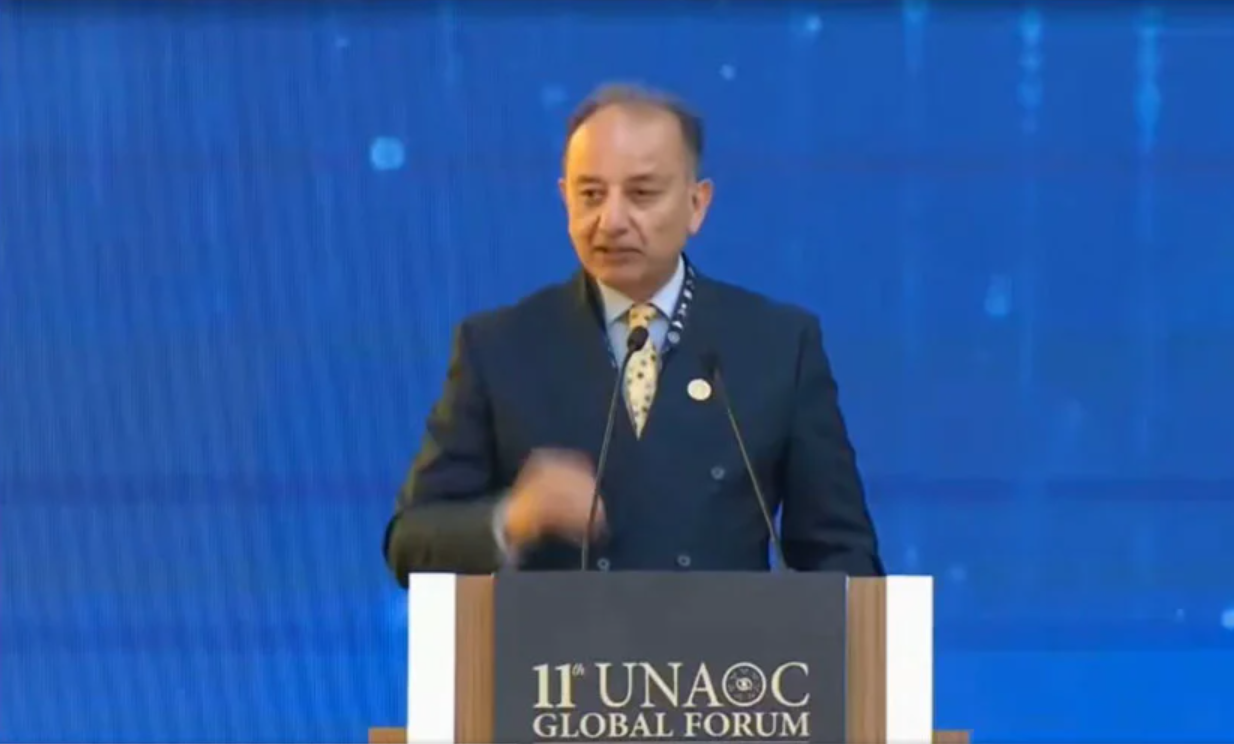

Pakistan’s Federal Minister for Climate Change, Musadik Malik, warned that the global order is weakening. He delivered the remarks at the 11th United Nations Alliance of Civilisations Global Forum. The forum focused on two decades of dialogue for humanity.
He cautioned that unilateral actions are rising across the world. Meanwhile, cooperation among nations continues to erode. As a result, global peace and justice face growing pressure.
He pointed to increasing conflicts and trade disputes. Additionally, funding for environmental and development priorities has declined. Therefore, global challenges are becoming harder to manage collectively.
Call to Revive Multilateral Cooperation
The minister urged nations to recommit to multilateral problem-solving. He stressed that cooperation remains essential for stability. Otherwise, fragmented approaches may deepen global divisions.
He noted that bilateral engagement is losing ground to unilateral decisions. Consequently, trust among states continues to weaken. He warned that this trend carries serious consequences for humanity.
However, he expressed hope that dialogue can still reverse this trajectory. Platforms like the UNAOC remain vital for bridging differences.
Commitment to Rights and Justice
Musadik Malik reaffirmed Pakistan’s commitment to universal justice and rights. He described women’s rights, minority protections, and children’s welfare as non-negotiable principles. Environmental protection, he added, must remain central to global policy.
He emphasized that rights should apply consistently across regions. Selective enforcement, he warned, undermines global credibility. Therefore, fairness must guide international decision-making.
He also highlighted ongoing crises in Palestine and Indian Illegally Occupied Jammu and Kashmir. He urged the international community to uphold rights according to international norms. Respect for these principles, he said, strengthens global justice.
Water Sharing as a Stability Issue
The minister stressed the importance of equitable water sharing. He highlighted the responsibility of upper riparian states toward lower riparian nations. Fair distribution, he said, supports regional stability and human security.
Water scarcity already threatens development and peace in many regions. Therefore, cooperation over shared resources remains essential. Sustainable water management can reduce conflict risks.
He linked water equity with climate resilience and economic growth. As climate pressures intensify, cooperation will become even more critical.
Recommitment to Dialogue and Peace
Concluding his address, Musadik Malik reflected on the UNAOC’s 20-year journey. He described the anniversary as a moment for renewal. Dialogue, peace, and mutual respect must guide future global engagement.
He urged nations to move beyond divisions and rebuild trust. Only collective action, he said, can address shared global challenges.
