


By Col Chaudhry Muhammad Sabahuddin, IS (Retired)
Abstract
Pakistan’s emerging cooperation with U.S. entities on critical minerals—particularly rare-earth elements (REEs), copper, and gold—has sparked regional debate and raised questions about sovereignty, geo-economic balancing, and long-term national security. Using the framework articulated in Pakistan’s National Security Policy (NSP-2022), this article evaluates whether such initiatives advance Pakistan’s geo-economic pivot, strengthen national resilience, and uphold the principles of economic security, citizen-centric development, and strategic autonomy. Regional implications for China (CPEC), India, and Iran are assessed, alongside scrutiny of claims linking U.S. commercial/logistics activity with military basing interests in Baluchistan.
- Introduction:
Pakistan’s National Security Policy establishes geo-economics as the central pillar of national security.[1] Under this framework, economic revival, foreign investment, and sustainable development are treated as national-security imperatives equal to defence preparedness.
Recent communications—originating from U.S. government channels and Pakistani diplomatic outreach—indicate renewed U.S. interest in Pakistan’s critical minerals. Pakistan, in turn, presented itself as a reliable economic partner committed to enhanced trade, broader market access, and an investment-friendly environment through the Special Investment Facilitation Council (SIFC).
This approach is consistent with NSP-2022’s emphasis on:
- Economic diplomacy
- Investment facilitation
- Secure and sustainable resource governance
- Diversification of partners without compromising strategic autonomy[2]
- Pakistan’s Mineral Wealth: A National Security Asset
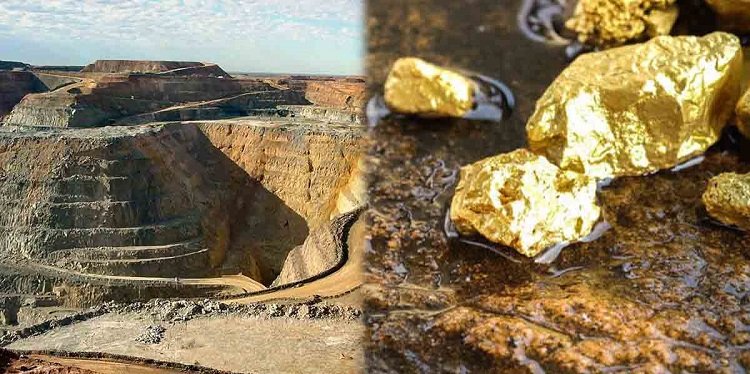
Pakistan possesses significant deposits of copper, gold, antimony, tungsten, and rare-earth elements concentrated primarily in Baluchistan and parts of Khyber Pakhtunkhwa. These resources, if responsibly developed, can support the NSP’s objective of shifting Pakistan toward high-value exports, resource-driven industrialization, and economic resilience.
However, as the NSP warns, extractive industries must be governed through:
- Transparent frameworks
- Equitable provincial benefit-sharing
- Community inclusion
- Strict environmental safeguards
- Protection against external exploitation [3]
Thus, while foreign investment is welcome under a geo-economic framework, governance failures can convert opportunities into long-term vulnerabilities.
- Nature of the Pakistan–U.S. Cooperation on Critical Minerals
Recent official announcements confirm Pakistan’s signature of MoUs with U.S. private-sector entities for:
- Exploration and development of critical minerals
- Establishment of local processing and value-addition facilities
- Civilian logistics support for mineral transport and export [4]
These agreements do not reference military access, intelligence facilities, or basing rights. They focus on commercial activity, investment, and logistical infrastructure essential for mining operations.
Pakistan has simultaneously increased engagement with U.S. advisory and lobbying firms—activities legally registered under the U.S. Foreign Agents Registration Act (FARA)—to promote investment, shape narratives, and improve diplomatic access. [5]
Recent disclosures from official communication channels indicate that a former senior U.S. diplomat—who previously served as Mission Chief in Pakistan and is now affiliated with a major Washington advisory firm—reached out to a senior official in the U.S. State Department to request a meeting on how to advance U.S.–Pakistan relations. In that outreach, Pakistan positioned itself as a willing economic partner capable of deepening trade cooperation, signaling readiness to expand imports from the United States and to offer foreign investors streamlined access through its Special Investment Facilitation Council (SIFC). These points align with Islamabad’s publicly stated objective of attracting foreign investment and improving trade ties with key partners
This aligns with NSP-2022’s call for:
“Leveraging diplomatic channels to unlock markets, attract capital, and secure technology transfers.”[6]
- Security & Governance Challenges: NSP Perspective
Because mineral-rich regions overlap with historically fragile security environments, Pakistan must manage several NSP-relevant risks:
4.1 Local Sensitivities and Provincial Rights
The NSP emphasizes equitable federal–provincial coordination. Without formal benefit-sharing and community participation, mineral projects can:
- Intensify grievances
- Encourage anti-state narratives
- Undermine stability in Baluchistan [7]
4.2 Security Requirements
Pakistan must avoid a scenario where foreign investors justify private security arrangements or external interference. The NSP stresses:
“Pakistan’s sovereignty and internal security cannot be compromised in pursuit of economic gains.”[8]
4.3 Transparency and Accountability
Opaque contracts or uneven enforcement can create political crises, undermine investor confidence, and weaken state legitimacy.
- Regional Implications: India, China, Iran
5.1 China (CPEC & Gwadar)
China is Pakistan’s all-weather partner and the primary investor in CPEC. Beijing views mineral cooperation through two lenses:
- Strategic reassurance — Pakistan has communicated that new partnerships do not undermine CPEC.[9]
- Economic competitiveness — Chinese analysts are monitoring any U.S. presence near Gwadar or CPEC logistics corridors.
China dominates the global rare earth Elements (REE) sector, holding reserves of 44 million tons and accounting for nearly 85% of worldwide production, processing, and supply. This dominance has made even major economies most notably the United States, which imports 80% of its REEs from China heavily dependent on Beijing for critical inputs vital to high-tech and defense industries worth trillions of dollars. Although the U.S. has initiated efforts to develop domestic capacity, including Pentagon-funded exploration projects, reducing reliance on China will take years. Meanwhile, global demand for REE is projected to rise from 140,000 tons in 2019 to 220,000 tons by 2025 at a 7% annual growth rate, driven primarily by Asia-Pacific economies. While cerium and lanthanum are currently the most consumed, future demand will increasingly center on neodymium, dysprosium, and terbium essential for electric vehicles, renewable energy systems, and other advanced technologies further reinforcing the strategic importance of REE in the emerging global economy. China accounts for approximately 70 percent of global REE extraction and more than 85 percent of refining capacity. Its dominance rests on three pillars:
- Vertical Integration – complete control from mining to refining to downstream manufacturing.
- Overseas Acquisition Strategy – securing concessions in Africa, Latin America, and Central Asia.
- Technological Investment – advancing refining, recycling, and exploring thorium as a potential nuclear fuel.
Beijing has demonstrated its readiness to leverage this dominance as a geopolitical tool. During disputes with Japan and the United States, China restricted REE exports, signaling the potential to weaponize supply control. This has raised alarm among industrialized states whose advanced sectors depend heavily on steady access to these minerals. Pakistan’s untapped deposits present both an economic and strategic opportunity to supply U.S. industry and defense needs. U.S. public statements frame this as supply-chain security and economic partnership.
Given China’s dominance in global REE processing (85%) and its strategic interests in Baluchistan, Islamabad must ensure alignment with NSP-2022’s directive:
“Strengthen traditional alliances while diversifying partnerships without compromising core strategic relationships.”[10]
5.2 India
India interprets Pakistan–U.S. minerals cooperation as a strategic development. Expected Indian responses include:
- Increased surveillance of activity in the Arabian Sea
- Expanded partnerships with U.S. allies on critical minerals
- Heightened diplomatic pressure through Afghanistan and regional forums
- Potential exploitation of instability in Baluchistan via non-state proxies[11]
5.3 Iran
Iran’s concerns stem from proximity. Any perceived U.S. logistical footprint in Baluchistan—however civilian—may be viewed through a geopolitical lens. NSP-2022 stresses “balanced neighbourly relations,” implying Islamabad must avoid misperceptions that could strain Pakistan–Iran ties.
- The Question of U.S. Basing: Separating Fact from Speculation
Speculation has circulated that U.S. commercial logistics linked to mineral projects could evolve into a military or quasi-military presence in Baluchistan, potentially replacing lost access to Bagram Airbase.
6.1 What Evidence Shows
- All publicly available MoUs reference civilian logistics only.
- No document, statement, or verified leak supports U.S. basing negotiations.
- Pakistan’s state institutions have publicly denied offering any military base or port access to the U.S.[12]
- The Taliban government has categorically rejected any U.S. return to Bagram.[13]
6.2 NSP-2022 Position
The NSP clearly states:
“Pakistan shall not allow its territory to be used by foreign powers in ways that compromise sovereignty or regional stability.”[14]
Thus, the NSP’s principles, combined with political realities, make a Bagram-replacement scenario highly improbable.
- Global REE Politics: Why the U.S. Is Interested
China controls:
- 70% of REE extraction
- 85% of REE processing
- The majority of downstream manufacturing and magnet production[15]
The U.S. imports 80% of its REEs from China. Diversifying supply is therefore a national-security priority for Washington.
Pakistan’s untapped reserves provide:
- Geographic proximity to global sea-lanes
- Large, unexplored deposits
- A potential non-Chinese supply chain
This fits the NSP’s goal of “leveraging geoeconomics potential through responsible resource development.”
- Policy Recommendations Based on NSP-2022
- Institutional Transparency
Publish MoUs and investment terms to reinforce public trust and reject misinformation.
- Provincial Benefit-Sharing
Implement constitutional, legally-binding mechanisms ensuring Baluchistan and KP receive proportional benefits.
- Security–Civilian Separation
Maintain a strict boundary between foreign investment security and sovereign defence prerogatives.
- Coordination With China
Provide formal reassurances to Beijing that CPEC and Gwadar remain Pakistan’s long-term strategic anchors.
- Parliamentary Oversight
Institutionalize review of mineral agreements through Parliamentary Committees and public audit bodies.
These measures operationalize NSP-2022’s principles of economic security, transparency, political stability, and strategic autonomy.
- Conclusion
Pakistan’s engagement with U.S. partners on critical minerals represents a substantial geo-economic opportunity aligned with the National Security Policy’s emphasis on economic revival, investment attraction, and diversified partnerships. Yet, it simultaneously requires careful management of regional sensitivities, domestic governance, and strategic alignments—especially with China.
There is no evidence to suggest that these engagements involve U.S. military basing or a Bagram-substitute facility. However, without robust oversight, transparent agreements, and provincial participation, such initiatives could generate long-term political or sovereignty concerns.
The choices Pakistan makes today—guided by NSP-2022—will determine whether critical minerals become a catalyst for economic resilience or a source of new geopolitical vulnerabilities.
