

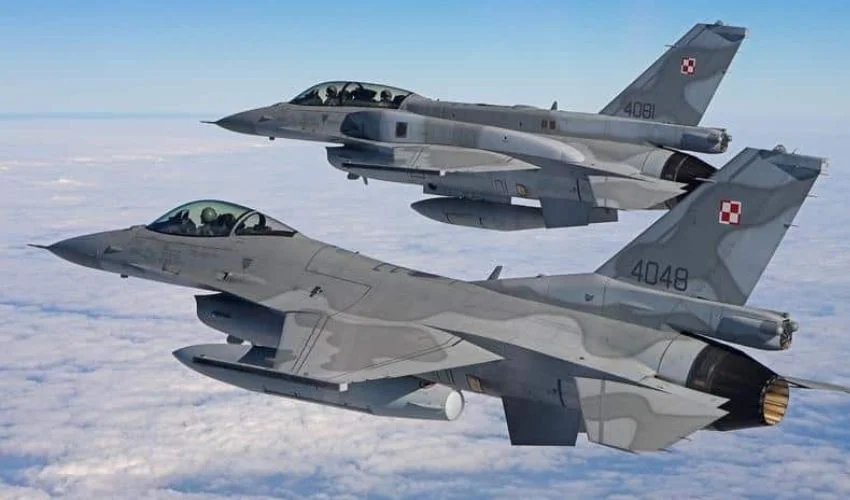

The United States has approved a $686 million package to modernise Pakistan’s F-16 fleet and bolster long-term operational readiness. In a letter to Congress, the US Defence Security Cooperation Agency (DSCA) confirmed that the sale advances Washington’s foreign policy and security objectives by sustaining Pakistan’s interoperability with US and partner forces. The approval explicitly supports ongoing counterterrorism operations and prepares both countries for future contingencies.
Enhancing Capability and Fleet Longevity
The package delivers Link-16 systems, secure cryptographic devices, avionics upgrades, and comprehensive logistics and training support. These enhancements directly improve Pakistan’s ability to meet evolving threats. DSCA stresses that the upgrades will extend the operational life of Pakistan’s Block-52 and Mid-Life Upgrade F-16s through 2040 while addressing critical flight-safety issues. The integration of Link-16—an advanced, jam-resistant, real-time tactical data network—will strengthen surveillance, identification, air control, and weapons-coordination functions across allied air forces.
Maintaining Regional Balance
DSCA notes that Pakistan can easily absorb the new technologies due to its established technical capacity. It emphasises that the sale does not alter the region’s basic military balance. The package includes 92 Link-16 systems and six inert Mk-82 bomb bodies for integration testing. The bulk of the deal comprises non-major defence equipment, such as Identification Friend-or-Foe systems, cryptographic modules, avionics updates, precision-navigation tools, Joint Mission Planning Systems, training simulators, and extensive technical documentation.
Implementation and Broader Context
Lockheed Martin will serve as the principal contractor, with no additional US personnel required in Pakistan. The sale will not affect US defence readiness. Islamabad first sought these upgrades in 2021, but Washington delayed approval amid strained ties. Despite Pakistan’s reduced reliance on F-16s after fielding newer platforms proven in the May 2025 air conflict, officials still view the US offer as crucial for extending F-16 viability for another 15 years.
