

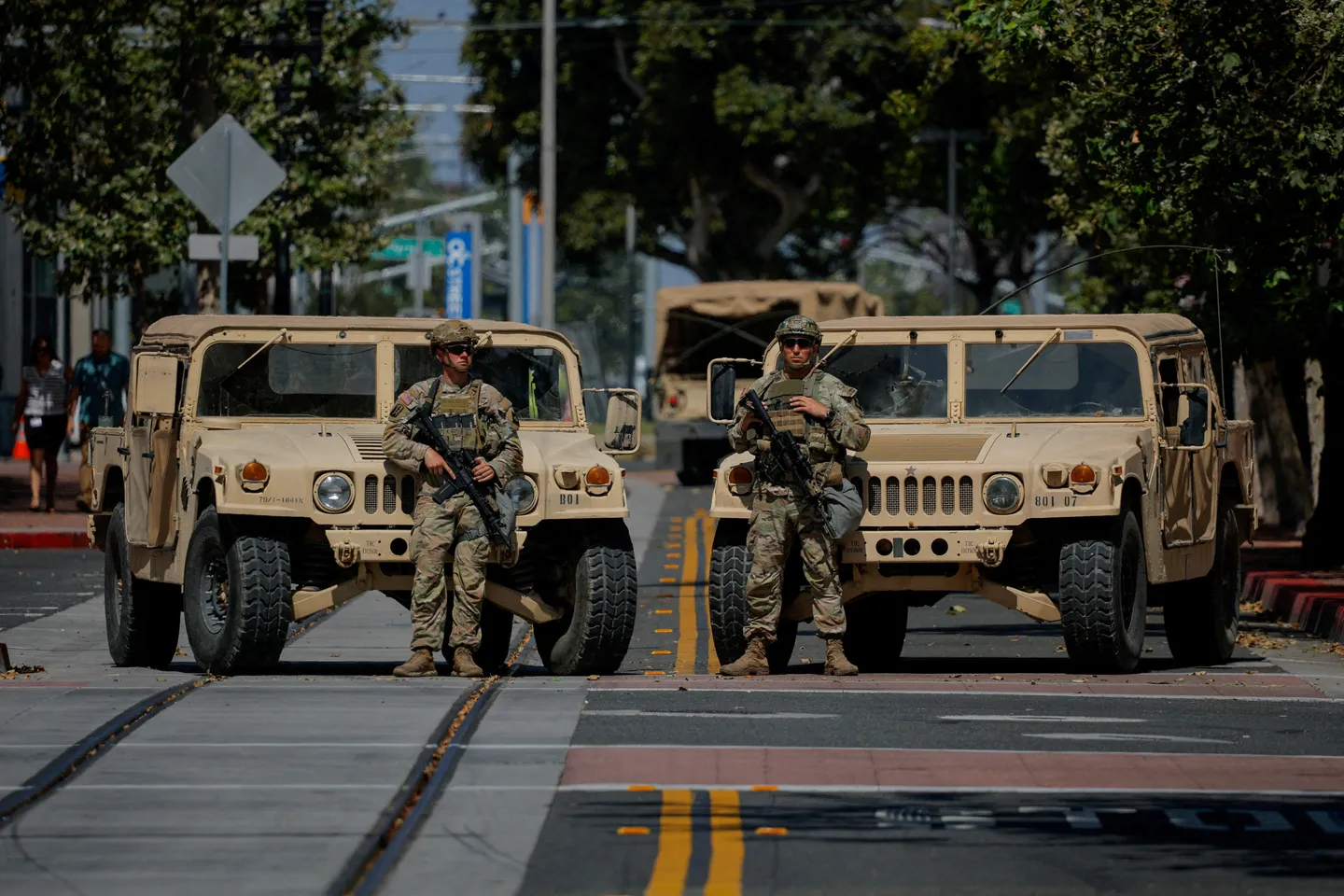

A U.S. federal court has halted President Trump’s decision to deploy National Guard troops to Los Angeles after federalizing them. The Judge ruled that the administration lacked legal grounds to override state authority. Judge Charles Breyer dismissed the government’s argument that protests against immigration enforcement amounted to a “rebellion,” concluding that the situation did not justify taking command from the governor.
The Trump administration mobilized roughly 4,000 California National Guard personnel in June, asserting that the deployment was necessary to protect federal property and staff during heated demonstrations. State and local officials objected, insisting that existing law enforcement resources were sufficient to manage the unrest.
State Challenges Federalization of Troops
Although the number of federally controlled troops had already dropped to around 300 by last month, the administration planned to keep 100 under presidential authority until February. California Governor Gavin Newsom opposed the move from the outset and took the matter to court, arguing that the decision represented a political maneuver rather than a legitimate response to a security threat.
The Ninth Circuit Court of Appeals ruled in June that conditions in Los Angeles justified temporary federal control of the Guard, enabling troops to assist federal immigration authorities. That decision temporarily allowed Trump to retain operational command, despite a district court ruling that initially deemed the deployment illegal.
Political and Legal Clash Over Immigration Protests
The administration defended its actions by citing violent protests against federal immigration raids and describing the situation as part of a broader “migrant invasion.” Newsom criticized the deployment as unnecessary political theater and called for all federally controlled troops to return to state authority. “We call on Trump and the Department of Defense to end this theater and send everyone home now,” he said.
Judge Breyer’s decision effectively restores California’s authority over its National Guard units, marking a significant setback for the administration’s immigration enforcement strategy.
