

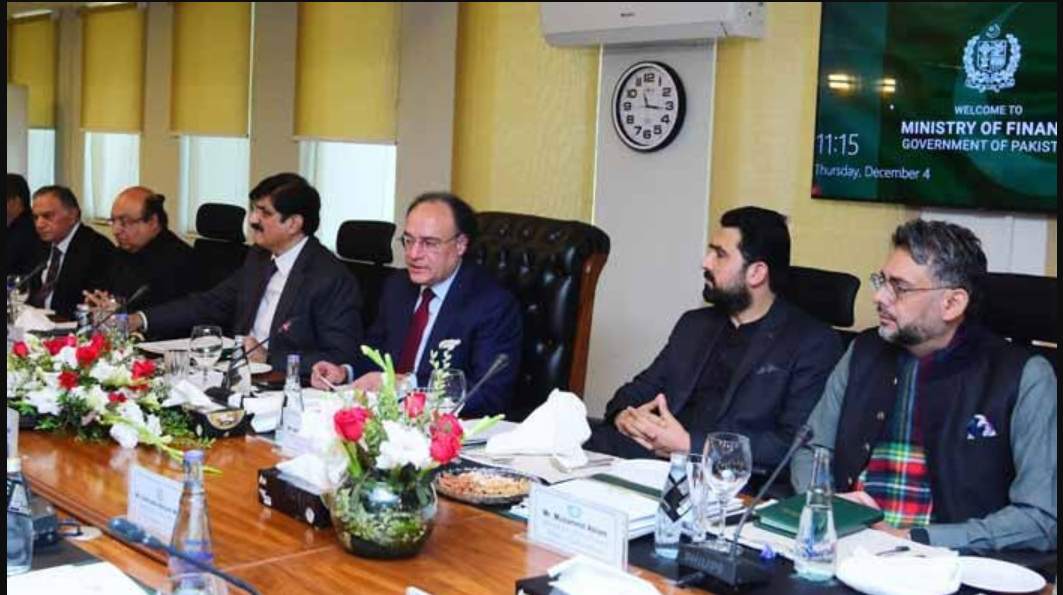

The 11th National Finance Commission meeting opened with significant friction. The provinces forcefully opposed the federal government’s effort to shift major financial responsibilities onto their budgets. The strong pushback set the tone for a tense but important debate on Pakistan’s future fiscal structure.
The Centre outlined a troubling economic backdrop as the meeting began. Officials explained that national finances had deteriorated sharply after the Seventh NFC Award. They argued that debt servicing consumed nearly all available funds, leaving the federation with limited fiscal space. Because of this, the Centre claimed it could no longer absorb the cost of certain provincial functions.
However, provincial leaders responded firmly. They stated that the NFC’s mandate was limited to revenue distribution only. Therefore, they argued, shifting federal expenditures to provincial accounts was outside the commission’s legal boundaries.
Why Provinces Rejected the Proposed Shifts
The Centre proposed that provinces should take on financial responsibility for the Higher Education Commission, the Benazir Income Support Programme and several development projects under the Public Sector Development Programme.
Provinces disagreed strongly. They argued that these functions historically belonged to the federation. Moreover, they warned that such shifts would strain their budgets and disrupt ongoing development plans.
Sindh took the strongest position. It insisted that the federal government could not question how provinces used their funds under the NFC framework. Sindh also objected to the proposed Terms of Reference, saying they conflicted with the constitutional mandate. The federation responded that any dispute over the ToRs should be forwarded to the president.
Despite the disagreements, the discussion moved forward. Each province stressed that the Centre must not dictate spending priorities. They also argued that federal departments must improve their own revenue systems instead of redirecting responsibilities downward.
A Rare Consensus: Inclusion of Merged Districts
Although the meeting was marked by disagreements, one issue reached unanimous approval. All provinces agreed that the merged tribal districts should be included in KP’s future share. This recognition resolved a long-standing concern for the province.
KP officials said the Seventh NFC Award no longer reflected Pakistan’s realities after the 18th Amendment. Population, education and key devolved sectors had changed, yet the fiscal formula remained static. Additionally, KP highlighted that its spending on security and counter-terrorism had continued to rise.
Provincial Positions on Fiscal Stress
KP leaders told the forum that the province’s development share had fallen below its 2005 level. They urged the federation to acknowledge the economic burden caused by terrorism. Punjab confirmed its cooperation with the federal government. It stated that it was running a budget surplus and had eliminated domestic borrowing.
Balochistan argued that its share remained unjustly low. The province highlighted that it supplied gas and hosted major mineral projects yet remained underfunded. Its representatives asked for a more equitable distribution that reflected its contributions and needs.
Centre Pushes Revenue Mobilisation
Senior federal officials briefed the meeting on revenue challenges. They said both federal and provincial governments collected far below their potential. As a result, they urged all parties to strengthen tax mobilisation. They warned that continued borrowing could worsen Pakistan’s economic outlook.
The finance secretary added that federal expenditures kept increasing. Since revenue growth did not keep pace, Islamabad faced constant strain. Because of this imbalance, the Centre called for shared responsibility and stronger planning.
11th NFC Roadmap: Sub-Groups and Future Deliberations
The meeting concluded with agreement on the next steps. Participants decided to create technical groups to analyse specialised areas. One major sub-group will review the share of the newly merged districts. Its recommendations are expected by mid-January 2026.
The meeting also reviewed the calendar for upcoming sessions. All sides agreed that progress would require patient, honest and consistent dialogue. The finance minister stressed transparency and unity. He said the NFC must guide Pakistan toward long-term fiscal stability.
Saudi Deposit Extension Brings Temporary Relief
Separately, Saudi Arabia extended the maturity of its three-billion-dollar deposit for another year. The extension supported Pakistan’s foreign exchange reserves. It also provided short-term stability before the IMF Executive Board meeting on Pakistan’s next tranche.
Pakistan expects one billion dollars from the Extended Fund Facility and two hundred million dollars from the Resilience and Sustainability Fund. Analysts noted that the Saudi decision offered breathing room but also exposed Pakistan’s reliance on friendly rollovers rather than improved competitiveness.
Economic Indicators Remain Tight
Pakistan’s foreign exchange reserves increased slightly by fourteen million dollars. However, total liquid reserves dipped because of lower holdings in commercial banks. Reserve coverage stood at 2.76 months of imports. Projections indicate potential improvement by mid-2026, though risks remain.
The 11th NFC discussions revealed deep tensions between federal and provincial authorities. Provinces defended their autonomy. The Centre stressed fiscal constraints. Despite disagreements, the shared recognition of merged districts showed that consensus remains possible.
The next NFC sessions will decide whether Pakistan can craft a fair and sustainable revenue formula. Until then, the debate over responsibility, authority and economic survival is set to intensify.
