

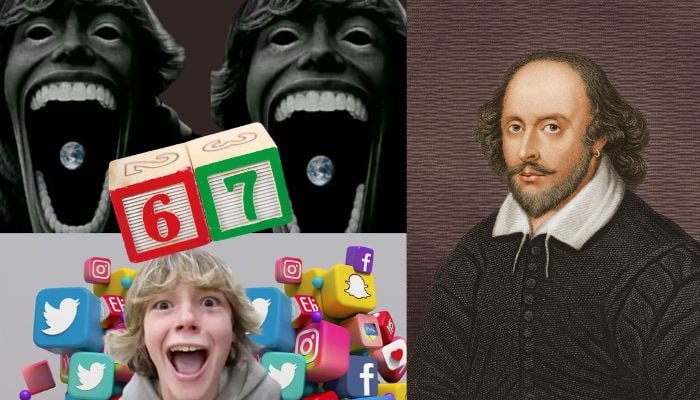

Generation Alpha has recently embraced the brain-rotting slang “6-7,” a phrase that has gained so much traction it was named Word of the Year by Dictionary.com. Analysts noted a sharp rise in searches for “6-7” beginning in the summer of 2025, increasing more than sixfold since June, and the trend shows no signs of slowing. Despite its viral popularity, the term carries a fascinating history stretching back centuries.
According to Fox News Digital columnist David Marcus, the origins of “6-7” may trace back to the 1300s, around the dawn of modern English. He links it to an old dice game called Hazard, a precursor to modern craps.
In Hazard, players would call out the numbers they aimed to roll with two dice. Numbers like five, eight, and nine were statistically more likely, while six and seven offered lower odds, making them synonymous with risk and uncertainty.
Over time, “six and seven” became associated with worry and instability, appearing in literary works such as Chaucer’s writings and Shakespeare’s Richard II, where the phrase “All is uneven, and everything is left at six and seven” captures this meaning.
Fast forward to today, “6-7” entered popular culture via rapper Skrilla’s song “Doot Doot (6 7),” which referenced 6-foot-7 basketball player LaMelo Ball.
From there, the phrase went viral through memes and NBA highlights, eventually evolving into a call-and-response chant among children. When kids shout “six!” the answer comes back with “seven!” often accompanied by a juggling hand gesture.
Though most of Generation Alpha likely has no awareness of the historical context, the chant conveys a collective sense of energy, fun, and shared excitement. The 400-year-old mystery behind “6-7” persists even as it transforms into a modern meme, reminding parents and observers that sometimes, a viral craze is just about feeling the vibe—whether you understand its meaning or not.
