

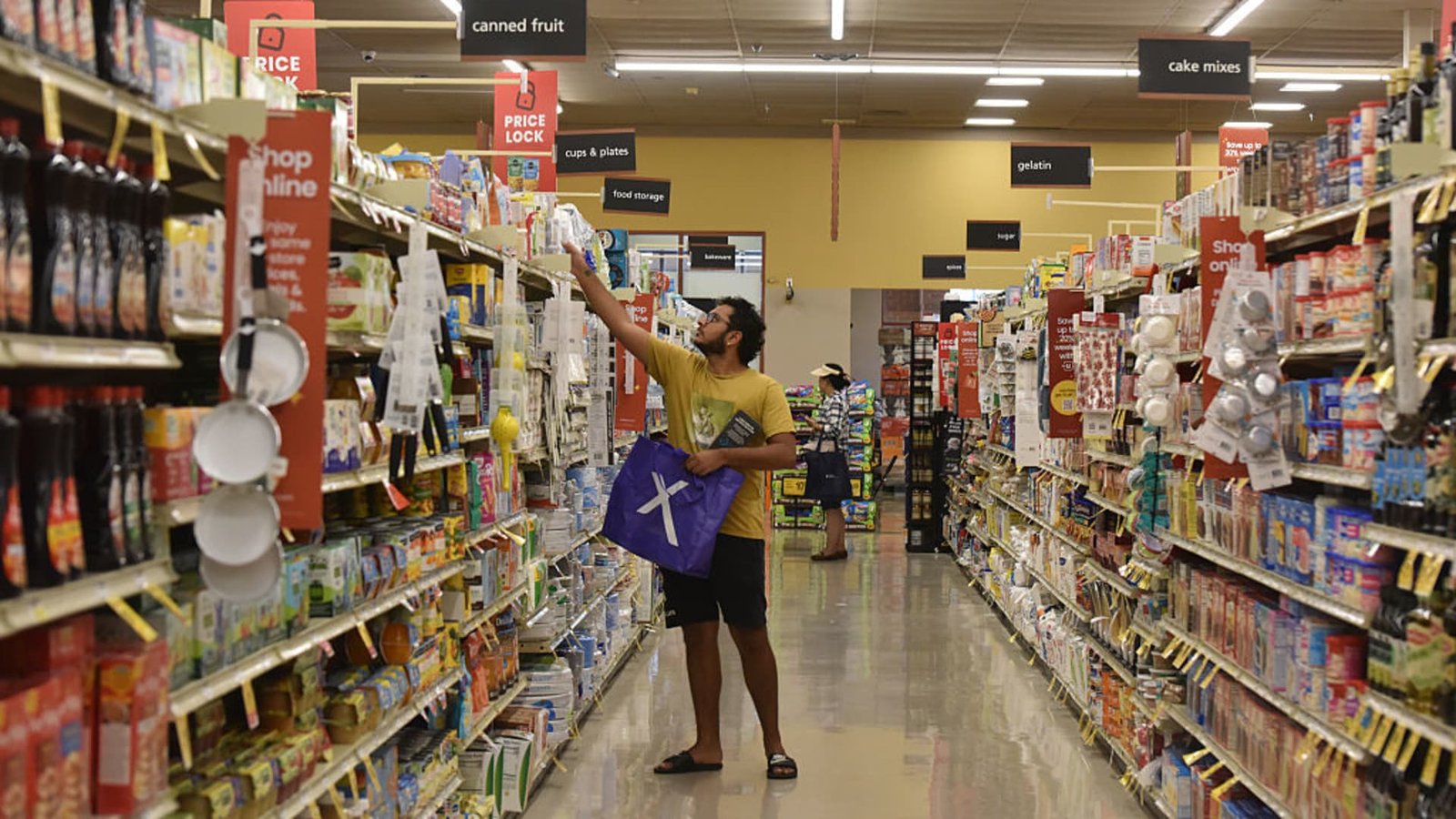

US President Donald Trump on Friday rolled back tariffs on more than 200 food products, including staples such as coffee, beef, bananas, and orange juice, in response to growing concerns among American consumers over rising grocery costs.
The exemptions, effective retroactively from Thursday midnight, represent a notable reversal from Trump, who has previously maintained that the import duties imposed earlier this year have not significantly contributed to inflation.
Speaking aboard Air Force One, Trump acknowledged that tariffs “may in some cases” raise prices but insisted that overall US inflation remains “virtually nonexistent.” The move comes as Democrats have gained victories in recent state and local elections, where affordability, including food costs, was a key voter concern.
In addition to the tariff rollback, Trump said the administration plans to issue a $2,000 payment to lower- and middle-income Americans next year, funded by tariff revenues. The White House cited “significant progress” in securing reciprocal trade deals with Argentina, Ecuador, Guatemala, and El Salvador, as well as additional framework agreements and investment deals, as the basis for exempting certain food items.
The list of exempted goods includes over 200 products widely consumed by American households, ranging from oranges, acai berries, and paprika to cocoa, fertilisers, and even communion wafers.
Food prices have seen substantial year-over-year increases, with ground beef up nearly 13% and steaks 17% higher as of September. Bananas rose about 7%, while tomatoes increased by 1%, contributing to an overall 2.7% increase in home food costs.
Industry groups welcomed the rollback, noting its potential to ease costs for both consumers and manufacturers, though some expressed disappointment over exclusions, particularly spirits from the EU and UK.
Trump indicated no further tariff changes are planned, emphasizing that the rollback should quickly reduce prices for key items like coffee. The move signals a renewed administration focus on affordability, even as critics argue the tariffs themselves have been a major driver of inflation and higher consumer prices.
