

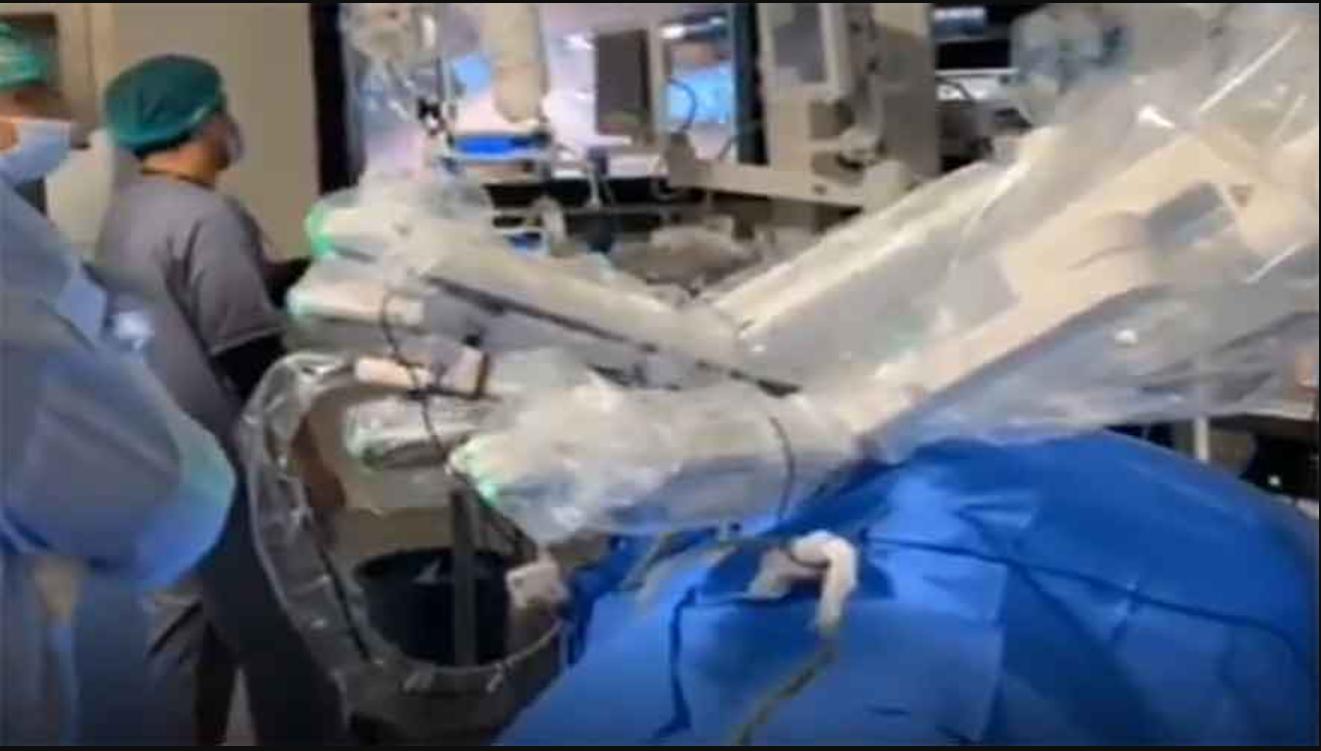

Islamabad reached a major milestone as the Pakistan Institute of Medical Sciences completed its first robotic surgery. The achievement signals rapid progress in the country’s medical technology. Moreover, it highlights Pakistan’s increasing focus on safer and more precise surgical procedures.
PIMS used the advanced “To My Surgical Robot” system for this groundbreaking operation. The technology enabled enhanced control, improved accuracy, and smoother movements during the procedure. Although the system is highly sophisticated, local surgeons handled it confidently with guidance from international specialists.
A team of experts from the United Kingdom joined the operation. They collaborated with PIMS surgeons and ensured every step stayed aligned with global standards. Their involvement also strengthened the skills of local doctors who aim to expand the scope of robotic procedures in Pakistan.
The surgical team included Professor Shamim Khan, Professor Mateen Sharif, and Dr. Javed Burki. They supervised the process and offered strategic support throughout the operation. Their leadership helped the team use the robotic system effectively, which eventually contributed to the success of the procedure.
Additional insights came from PIMS medical specialists Dr. Atif Inam Shami, Dr. Burhan-ul-Haq, and Dr. Khalid Saeed. They noted that robotic surgery can increase safety and precision in many complex cases. According to them, the technology will transform several medical fields in Pakistan over the coming years.
Robotic surgery provides several well-established benefits. For instance, patients experience minimal incisions during such procedures. As a result, recovery becomes faster and pain levels remain comparatively lower. Furthermore, surgeons gain better visibility and improved accuracy, which reduces the risk of complications.
This development also strengthens Islamabad’s position as an emerging hub for advanced medical care. With every technological upgrade, local patients gain access to safer and more modern treatment options. Consequently, Pakistan’s healthcare future appears more promising than before.
The successful robotic surgery at PIMS has already set a strong precedent. It shows that the country is ready to adopt high-end innovations in its medical institutions. Additionally, it encourages more hospitals to explore robotic systems for delicate procedures. The achievement reflects both medical progress and a renewed national commitment to better patient care.
As PIMS continues to advance its surgical capabilities, more breakthroughs are expected. The introduction of robotic technology marks a new chapter in Pakistan’s healthcare journey. Ultimately, this milestone will inspire further training, deeper research, and broader adoption of cutting-edge medical tools.
