

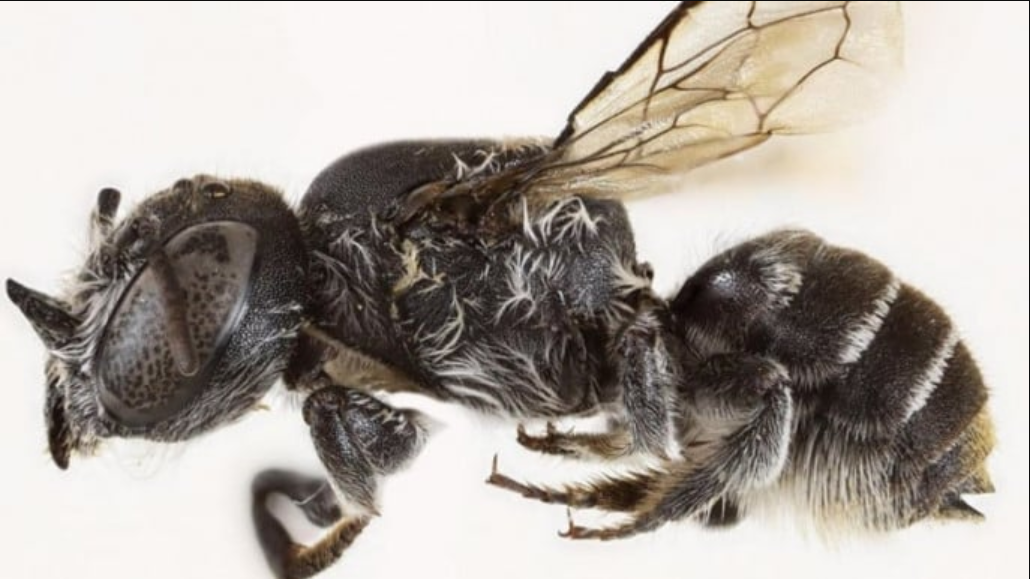

Australia, already famous for its dangerous wildlife, now adds a surprising new insect to its list: the “Lucifer” bee. This remarkable species, scientifically named Megachile (Hackeriapis) lucifer, was discovered in Western Australia and has captured attention due to its unusual appearance.
Discovery and Appearance
The horned bee was first noticed in 2019 during a survey of critically endangered wildflowers. Its striking facial horns immediately drew attention. The researcher, fascinated by its unique look, named it after the popular TV show “Lucifer,” emphasizing its devilish appearance.
Experts note that this bee is the first new member of its group to be described in over twenty years. Its discovery emphasizes how much biodiversity remains hidden and unknown, even in regions that are already studied.
Importance for Ecosystems
Native bees like Megachile lucifer are essential for pollination. Many flowering plants rely entirely on wild pollinators to survive. However, habitat destruction, climate change, and human activities threaten their populations.
This new species highlights the urgent need to survey native insects, especially in areas affected by mining and development. Many vital species remain undiscovered, and losing them could endanger plants and ecosystems that depend on them.
Conservation Implications
Raising awareness about newly discovered species is critical. Understanding which bees exist and their plant dependencies helps prevent ecological losses. Protecting habitats where these bees thrive ensures the survival of both pollinators and endangered plants.
The discovery of Megachile lucifer reinforces the importance of continued scientific exploration. Even in well-studied regions, many species remain unknown. Their protection is crucial for ecological balance and biodiversity.
The horned “Lucifer” bee serves as a reminder of nature’s mysteries. Its discovery urges scientists and policymakers to prioritize conservation. Protecting native bees not only preserves biodiversity but also safeguards the ecosystems that humans rely on.
