


Global and Regional Terrorism: A Comparative Review of Asia’s Security Landscape
By Col. Muhammad Sabahuddin Chaudhry, IS (Retired)
Abstract
This paper analyses the evolving terrorism landscape in Asia with a particular focus on Pakistan, Afghanistan, and India. Drawing on the Global Terrorism Index (GTI) 2025 and regional data, it argues that Pakistan remains the principal victim of terrorism, not its exporter. The evidence reveals that most terrorist violence in Pakistan originates from Afghanistan-based militant groups, many of which operate with external sponsorship from India. Despite its unprecedented sacrifices, Pakistan continues to face disinformation and blame campaigns that distort the ground realities. The article calls for recognition of Pakistan’s role as the frontline state in the global war against terrorism and advocates for regional cooperation to dismantle proxy networks and restore long-term stability in South Asia.
- 1. Introduction
Terrorism continues to dominate the global security agenda, reshaping political, economic, and social realities across continents. While sub-Saharan Africa records the highest fatality rates, South and Central Asia remain the epicentre of ideologically driven militancy. Within this regional framework, Pakistan, Afghanistan, and India present sharply contrasting profiles of terrorism—varying in intensity, capability, and political narrative.
A closer analysis, however, establishes that Pakistan stands as the worst affected and most victimized nation in the region. Decades of sacrifices, from military operations to civilian resilience, contrast sharply with India’s persistent propaganda portraying Pakistan as a terrorism sponsor. In reality, Afghan territory has been used as a conduit for India’s proxy strategy, enabling attacks inside Pakistan and sustaining instability across the region.
- Global Overview
The Global Terrorism Index (GTI) 2025 by the Institute for Economics & Peace records that 66 countries suffered terrorist incidents in 2024. Within Asia, Pakistan ranked 2nd, Afghanistan 9th, India 14th, and Iran 18th. Despite reductions in large-scale global attacks, fragile border regions and weak governance structures continue to nurture terrorism’s persistence.
South Asia remains particularly vulnerable, where state rivalries and cross-border proxy operations have turned terrorism into a tool of strategic coercion rather than mere ideological conflict.
- Pakistan: The Frontline Victim of Terrorism
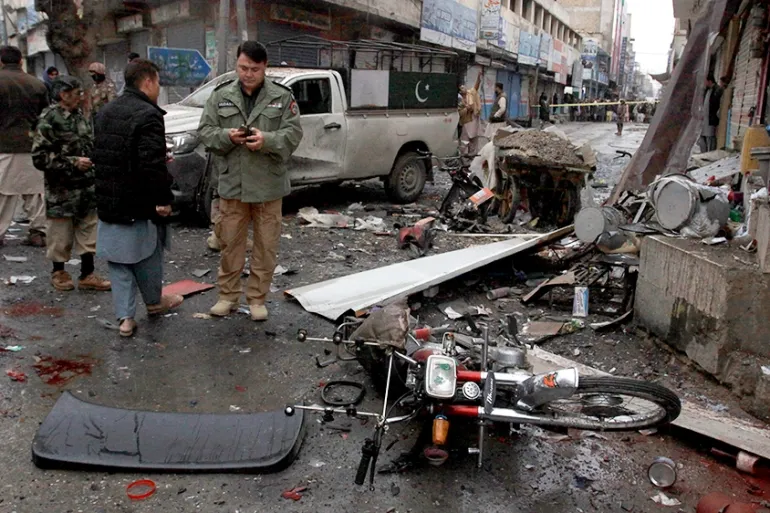
Pakistan’s resilience and sacrifice in combating terrorism remain unmatched in the region. In the first ten months of 2025 alone, 4,373 terrorist incidents were recorded nationwide, resulting in 1,073 martyrs, including 584 security personnel, 133 law enforcement officers, and 356 civilians. The Pakistan security forces carried out over 62,000 intelligence-based operations, neutralizing 1,667 terrorists, among them 128 of Afghan origin.
The GTI 2025 records a 45% increase in terrorism-related deaths in Pakistan compared to the previous year. The Tehreek-e-Taliban Pakistan (TTP) remains the most active group, operating freely from Afghan soil under the protection—or indifference—of Kabul’s authorities. Intelligence assessments have repeatedly shown financial and logistical support channels linked to Indian intelligence (RAW), funneled through Afghanistan to sustain anti-Pakistan militancy.
Despite its heavy losses, Pakistan faces persistent international perception challenges, with India leveraging global platforms to depict Islamabad as an “exporter” of terror—an inversion of reality. Pakistan’s sacrifices and counter-terror achievements stand as evidence of its role as a frontline victim, not a perpetrator.
- Afghanistan: The Source and Conduit of Proxy Terrorism
Afghanistan, ranked 9th on the GTI, continues to serve as the regional hub for militant activity. The Islamic State–Khorasan Province (ISKP) and TTP dominate the country’s violent landscape, responsible for more than half of all terrorism-related fatalities in the region.
The Taliban regime’s limited governance capacity, porous borders, and geopolitical isolation have transformed Afghanistan into both a victim and facilitator of transnational terrorism. Numerous intelligence and UN reports indicate the presence of Indian-sponsored networks within Afghanistan, funding and arming anti-Pakistan factions. These networks aim to disrupt Pakistan’s internal security and strategic projects, especially China–Pakistan Economic Corridor (CPEC) initiatives in Balochistan and Khyber Pakhtunkhwa.
Thus, Afghanistan has evolved into a strategic proxy theatre, where competing interests—particularly India’s covert operations—undermine Pakistan’s stability and regional peace.
- India: The Strategic Manipulator
India’s terrorism ranking at 14th reflects relatively low domestic exposure. However, its regional role tells a different story. While New Delhi highlights incidents such as Mumbai (2008) and Pathankot (2016) to sustain its global victim narrative, it simultaneously sponsors, trains, and funds anti-Pakistan groups operating from Afghanistan.
Evidence submitted by Pakistan to the United Nations and friendly states has detailed RAW’s financial and operational involvement with the TTP and Baloch separatist outfits. India’s strategy combines information warfare, proxy militancy, and diplomatic isolation campaigns to weaken Pakistan’s global standing while diverting attention from its own human rights violations in Indian Illegally Occupied Jammu & Kashmir (IIOJK).
This **dual policy—victim in rhetoric, aggressor in practice—**remains a fundamental obstacle to regional counter-terror cooperation.
- Iran: A Peripheral but Important Actor
Iran, ranked 18th globally, experiences sporadic terrorist activity, primarily in Sistan-Baluchistan, often involving IS-affiliated and ethnic separatist groups. While Tehran maintains robust internal control, its regional engagements occasionally intersect with South Asian security dynamics, adding another layer of complexity to the regional counter-terrorism environment.
- Comparative Summary
| Country | GTI Rank (2025) | Key Trends |
| Pakistan | 2 | 45% rise in deaths; 4,000+ incidents; Afghan-based proxy attacks backed by India |
| Afghanistan | 9 | ISKP and TTP dominance; safe havens for anti-Pakistan groups |
| India | 14 | Limited internal threat; external sponsorship of militancy through Afghanistan |
| Iran | 18 | Localized, sectarian, and border-based attacks |
Interpretation: Pakistan bears the heaviest human, operational, and psychological burden of terrorism in Asia. Afghanistan serves as the launchpad for cross-border militant networks, while India emerges as the strategic manipulator leveraging proxy warfare. The data reflects Pakistan’s status as the true frontline state against terrorism.
- Regional Dynamics and Challenges
- Proxy Sponsorship: India’s covert networks in Afghanistan continue to fuel terrorism within Pakistan’s borders.
- Cross-Border Sanctuaries: Afghan territory remains the principal refuge for anti-Pakistan militants.
- Perception Warfare: India’s global propaganda overshadows Pakistan’s sacrifices, distorting policy discourse.
- Trust Deficit: Deep-rooted mistrust among regional states hinders intelligence sharing and coordinated responses.
- Policy and Defence Recommendations
- Regional Counter-Terror Compact: Pakistan should push for a verifiable regional framework under the SCO or OIC for coordinated intelligence sharing against proxy networks.
- Border Security Enhancement: Strengthen fencing, surveillance, and intelligence fusion along the Pakistan–Afghanistan border.
- Narrative Reinforcement: Pakistan must proactively project its counter-terror achievements and sacrifices at international platforms.
- Economic Rehabilitation: Expand socio-economic programs in terrorism-affected regions to erode militant recruitment bases.
- Allied Cooperation: Deepen security partnerships with China, Türkiye, and Gulf states to enhance counter-intelligence and hybrid warfare capabilities.
- 10. Conclusion
The terrorism landscape in Asia is defined by victims, facilitators, and manipulators. Pakistan, having lost over 80,000 lives and sustained immense economic damage over two decades, stands as the primary victim of terrorism—much of it sponsored through Afghanistan with Indian support.
While Afghanistan struggles with internal instability and India continues to weaponize militancy as statecraft, Pakistan’s commitment to counter-terrorism remains unwavering. The international community must acknowledge Pakistan’s sacrifices and confront the proxy mechanisms undermining peace in South Asia.
Pakistan’s fight against terrorism is not only a struggle for security—it is a defense of regional stability, sovereignty, and truth.
Author’s Note: The author Col Muhammad Sabahuddin Chaudhry (Retired) is a highly respected Senior Security and Fire Life Safety Consultant with over 43 years of extensive professional experience across the defence, banking, and corporate sectors. An MBA qualified professional, who has a distinguished career, including 25 years in the Army, 12 years in senior management roles at Citibank, and two year as a country manager, Human Resources in Wackenhut a Path finder Group in Pakistan. His research focuses on Pakistan’s evolving defense posture, regional threat environment, and the strategic implications of proxy warfare in Asia.
