

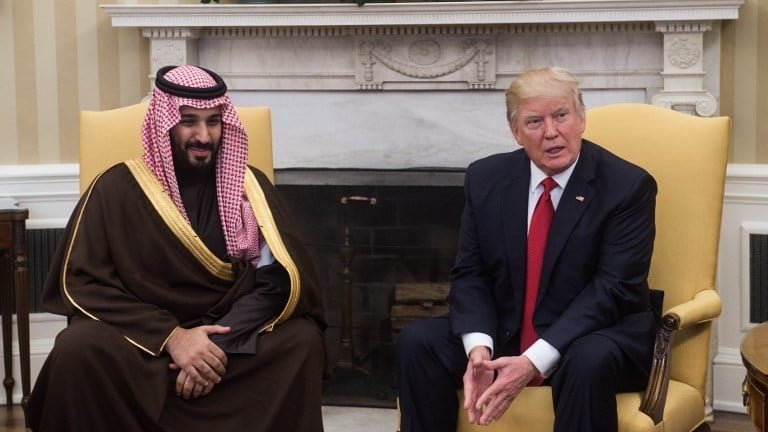

Saudi Crown Prince Mohammed bin Salman (MBS) will visit the White House on November 18 for an official working meeting with US President Donald Trump, a White House official confirmed on Monday. The high-profile visit comes as Washington intensifies efforts to persuade Saudi Arabia to join the Abraham Accords — the US-brokered agreements aimed at normalising relations between Israel and Arab nations.
Trump Pushes for Saudi Inclusion in Abraham Accords
Former President Trump, who spearheaded the original Abraham Accords in 2020, is hoping to add Saudi Arabia to the list of signatories that already includes the United Arab Emirates, Bahrain, Sudan, and Morocco. However, Riyadh has so far remained cautious, linking any move toward normalisation with Israel to tangible progress on Palestinian statehood.
In a recent interview on CBS’s 60 Minutes, Trump expressed optimism, saying he believes the Saudis will eventually join the accords. Analysts suggest the upcoming meeting could mark a significant step toward that goal, as both leaders explore ways to reshape Middle East alliances.
Defence Pact and Strategic Cooperation on the Agenda
Beyond the peace talks, discussions are expected to focus on a potential US–Saudi defence agreement. According to The Financial Times, both sides are hopeful that a security pact could be signed during MBS’s visit. A senior Trump administration official told Reuters that “there are discussions about signing something when the crown prince comes, but details are in flux.”
Saudi Arabia has long sought stronger US defence guarantees and access to advanced American weaponry. The kingdom remains one of Washington’s biggest arms customers, sustaining a decades-long partnership built on oil, security, and economic cooperation.
During Trump’s earlier visit to Riyadh in May, the US announced an arms deal with Saudi Arabia valued at nearly $142 billion, further strengthening bilateral defence ties. The upcoming White House meeting could potentially redefine US–Saudi relations and influence the broader geopolitical landscape in the Middle East.
