

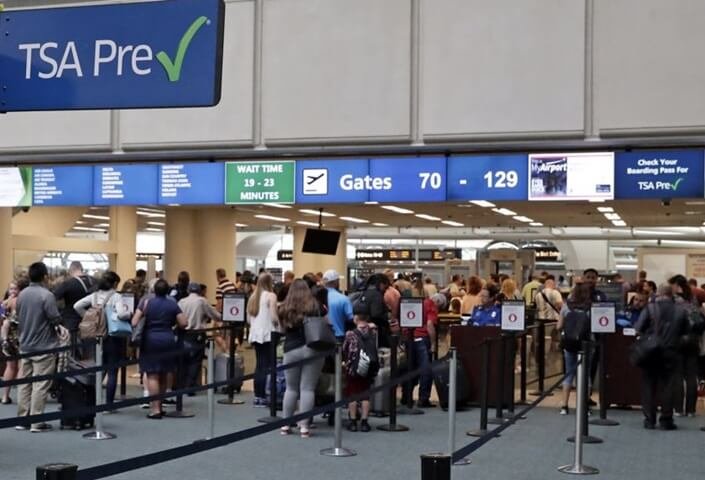

The United States government has announced a major expansion of facial recognition technology at border crossings in a move aimed at tracking non-citizens entering and leaving the country. According to a new regulation published on Friday, the policy seeks to curb visa overstays, identity fraud, and illegal immigration, while enhancing border security and identity verification processes.
The updated rule will allow US border authorities to photograph and collect biometric data from all non-citizens — including those arriving and departing through airports, seaports, and land borders. Previously, the technology had been deployed only in limited pilot programs.
The regulation, scheduled to take effect on December 26, also authorizes border officials to request additional biometric data, such as fingerprints or DNA samples, where necessary. Notably, the new rules will also apply to children under 14 and elderly travelers over 79, both of whom had been exempted under earlier guidelines.
Officials said the measure aligns with a broader border enforcement strategy under President Donald Trump’s administration, which has prioritized reducing illegal immigration and curbing visa overstays — a key contributor to the estimated 11 million undocumented immigrants living in the country.
Privacy Concerns Emerge Amid Growing Use of Biometric Surveillance
The expansion of facial recognition has drawn privacy and civil rights concerns from advocacy groups and watchdog organizations. Critics argue that the growing use of biometric surveillance poses risks of government overreach, data misuse, and misidentification.
A 2024 report by the US Commission on Civil Rights found that facial recognition systems had higher error rates when identifying Black individuals and other minorities, raising fears of bias and discrimination in immigration enforcement.
Despite such concerns, the US government maintains that the system will improve national security and streamline entry-exit verification. A Congressional Research Service estimate in 2023 found that 42% of undocumented immigrants in the United States had overstayed their visas, underscoring the importance of better exit tracking.
According to US Customs and Border Protection (CBP), facial recognition technology is already used for all commercial air entries but only partially for departures. The agency now plans to achieve full nationwide implementation at all major airports and seaports within three to five years.
The move fulfills a mandate first issued in 1996, requiring the creation of an automated entry-exit tracking system — a project that has taken nearly three decades to materialize.
