


Legal Afghan businesses to be taxed; locals caught in crossfire of combing operations
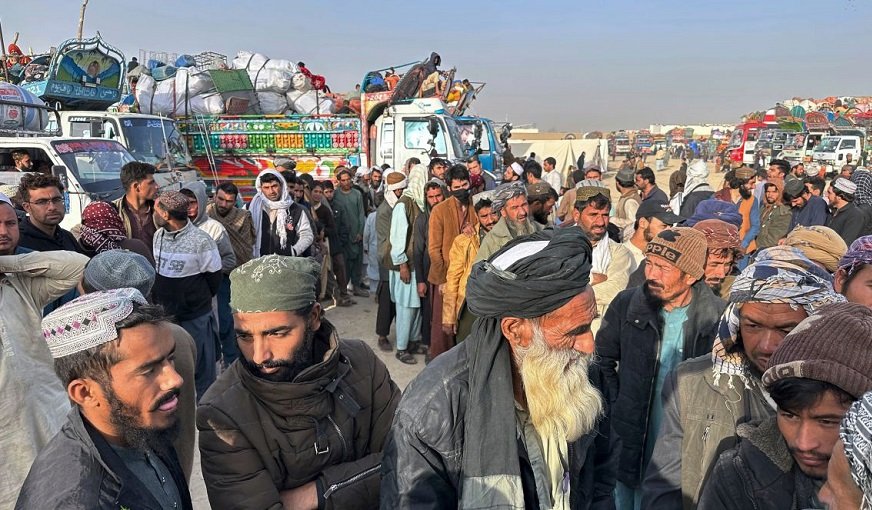
The Punjab government has launched a renewed crackdown against illegal Afghan nationals residing in the province, following escalating security concerns and deadly border incidents. The drive includes mass deportations, combing operations, and the rollout of a new whistleblower system aimed at identifying undocumented individuals.
Chaired by Chief Minister Maryam Nawaz Sharif, a high-level meeting approved the introduction of a confidential informant mechanism to report the presence of illegal migrants. The system will protect whistleblowers’ identities, while enabling law enforcement to carry out targeted actions. A province-wide combing operation is also being initiated, focusing on undocumented Afghan residents and unregistered businesses.
Officials clarified that Afghan nationals with valid legal documents will not be affected by deportation efforts. However, they will now be required to register their businesses and pay taxes under provincial law. “No Afghan national, regardless of legal status, will be permitted to run a business without fulfilling their tax obligations,” said the Punjab Information Minister.
According to Home Department data, over 65,000 Afghan nationals have already been deported, and operations are continuing. But this has created unease among the local Pakistani Pakhtun community, who say they are frequently subjected to identity checks and treated with suspicion during raids.
Pakistani Pakhtuns Caught in the Middle
Members of the Pakistani Pakhtun community have raised concerns that their neighborhoods are facing repeated combing operations due to the presence of Afghan migrants. “We’re being treated like suspects in our own country,” said Gulzeb Khan, a Lahore businessman and member of the Pakhtun Welfare Association.
He explained how the administrative process has become increasingly difficult for his community. “Even when renewing a lost CNIC or applying for a child’s birth certificate, NADRA is asking for additional proof of nationality,” he said, adding that the burden of proving identity has become a source of humiliation and frustration.
Afghan Migrants Voice Despair Over Deportation
On the other side, long-term Afghan residents feel betrayed by the government’s decision. Many say they’ve known no other home than Pakistan.
Moeen Khan, a 37-year-old Afghan labourer from Lahore’s Azam Cloth Market, said his family has been in Pakistan for over 60 years. “I was born here, my children were born here. We have no family or property left in Afghanistan. Where are we supposed to go?” he asked.
Khan shared how, during a recent journey to Lahore, he was forced off a bus by police at the Babu Sabu checkpoint. Fearing detention, he said he paid Rs500 to officers to avoid being separated from his young children.
Despite possessing an Afghan Citizen Card (ACC), he claims authorities routinely tell him to leave. “We don’t hate Pakistan. We’ve built our lives here. This country gave us shelter. We don’t want conflict — we want to stay in peace.”
As tensions mount between security imperatives and humanitarian concerns, the government faces increasing pressure to ensure that its deportation efforts distinguish clearly between illegal migrants and long-established Afghan families — while also protecting the dignity of Pakistani citizens caught in the middle.
