

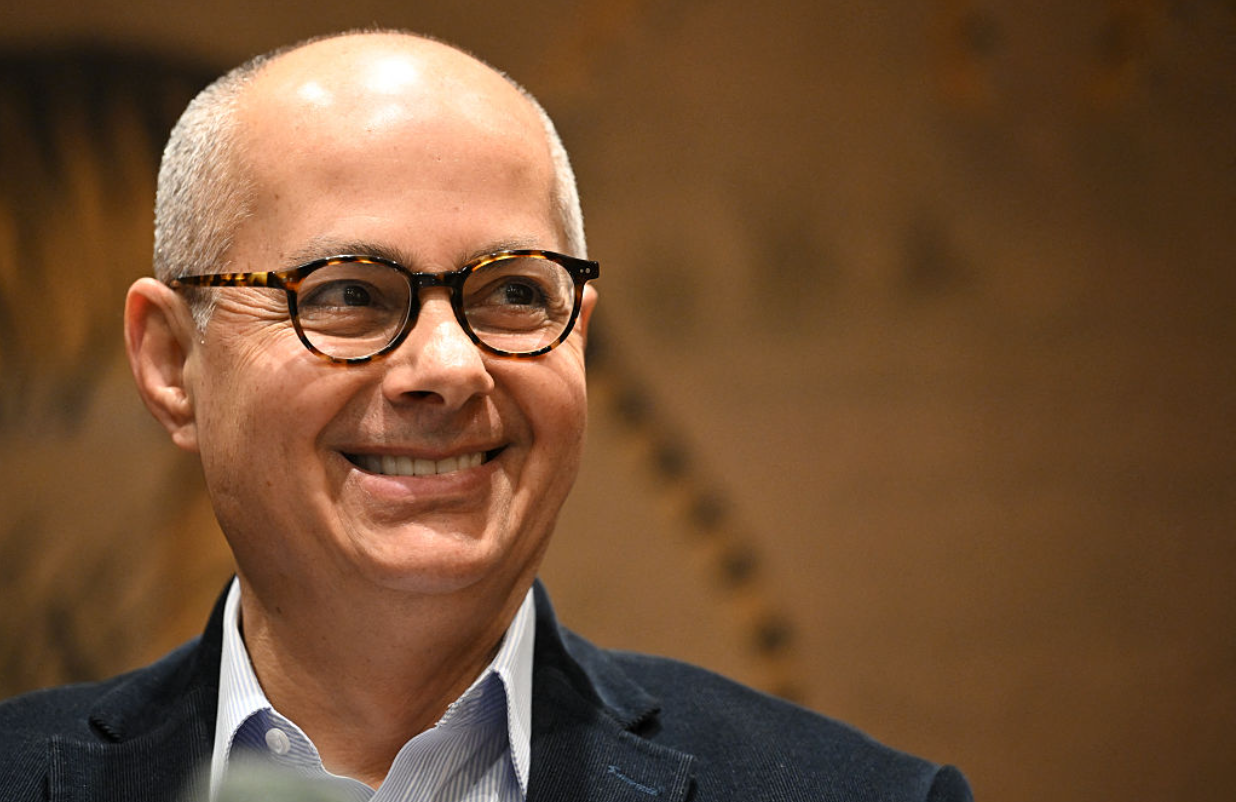

Omar Yaghi, a U.S.-based chemist of Palestinian origin, has made history as the first Palestinian scientist to win the Nobel Prize in chemistry. At 60, Yaghi reflected on a long and remarkable journey from a refugee camp in Jordan to the pinnacle of scientific achievement.
Early Life and Refugee Background
Yaghi was born in Amman, Jordan, to parents who had fled Gaza in 1948. Growing up, he shared a single small room with a dozen family members and even kept livestock inside. His parents, who could barely read or write, instilled in him the importance of education and curiosity despite their challenging circumstances.
At the age of ten, Yaghi discovered a “stick and ball” diagram of molecules at a public library in Amman. He was immediately fascinated by their structure and later learned these were the molecules that form the world around us.
Education and Early Career in the United States
At 15, Yaghi moved to Troy, New York, where he initially studied English at a community college. He then transferred to the University at Albany in 1983, where his passion for chemistry deepened. “I was in love with chemistry from the very beginning,” he said. He quickly became involved in research and began exploring new ways to engineer molecules.
Over the next three decades, Yaghi developed innovative methods for combining metals with organic molecules to create hybrid compounds. His work in molecular architecture has unlocked new possibilities for materials science and chemistry, emphasizing both aesthetic design and scientific innovation.
Nobel-Winning Work and Global Impact
The Royal Swedish Academy of Sciences awarded Yaghi the 2025 Nobel Prize in chemistry, alongside collaborators Susumu Kitagawa and Richard Robson, for their pioneering work on porous molecular structures. These compounds offer solutions to global challenges such as water purification, carbon capture, and greenhouse gas reduction.
The Nobel Committee highlighted the transformative potential of these compounds, calling them capable of creating “previously unforeseen opportunities” in chemistry. Yaghi emphasized that his goal was not initially to solve global problems but to explore and build beautiful molecular structures.
Regional Recognition and Inspiration
Yaghi’s achievement has been celebrated across the Arab world. Jordan’s King Abdullah II called it “Jordan’s pride,” emphasizing that talent can thrive anywhere. UAE Vice President Mohammed bin Rashid al-Maktoum highlighted the accomplishment as proof that Arab youth and scientists can excel globally.
Representatives from Saudi Arabia and the Palestinian mission to the United Nations also celebrated Yaghi’s win. The Palestinian mission reposted the Nobel announcement, emphasizing that refugees can achieve global recognition in science.
Personal Reflections
Despite his groundbreaking work, Yaghi remains humble about his scientific journey. “I did not set out to solve the world’s carbon or water problems,” he said. Instead, he focused on addressing intellectual challenges and creating beautiful, functional molecular structures. His approach demonstrates that curiosity and perseverance can lead to extraordinary impact.
Omar Yaghi’s journey from a refugee camp in Jordan to Nobel laureate highlights the power of determination, education, and scientific curiosity. His work continues to inspire young scientists worldwide, showing that innovation can emerge from even the most challenging beginnings.
