

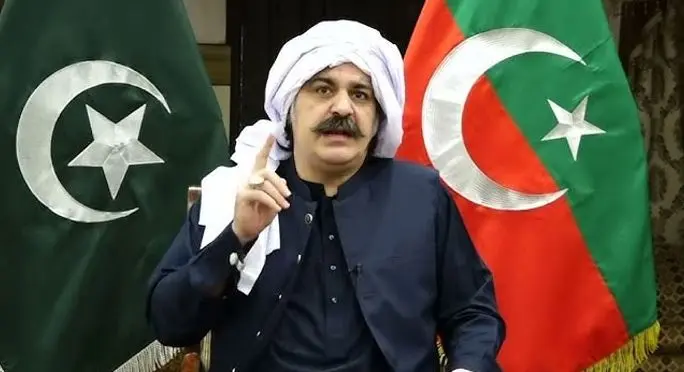

In a significant political shift, Ali Amin Gandapur has announced his resignation as the Chief Minister of Khyber Pakhtunkhwa (KP), marking an unexpected yet calculated move within the Pakistan Tehreek-e-Insaf (PTI) ranks.
Gandapur confirmed that his decision was made in compliance with the directive of PTI’s founder, emphasizing his loyalty to the party’s leadership and its evolving vision for the province. “I am resigning from the chief ministership on the orders of the founder of PTI,” he stated, adding that he would “fully support the new chief minister in every way possible” and continue working for the development and welfare of KP under party guidance.
According to senior PTI officials, the decision was the result of extensive internal consultations aimed at reinforcing the party’s provincial governance and aligning its administrative strategies with the broader objectives of PTI.
Party insiders revealed that the PTI founder personally instructed Gandapur to step down to pave the way for a leadership transition that would ensure continuity, stability, and unity within the provincial government.
The move reflects PTI’s attempt to reconfigure its internal power dynamics and strengthen cohesion among its ranks, particularly amid growing political challenges at the national level.
Following Gandapur’s resignation, PTI Secretary General Salman Akram Raja confirmed that Sohail Afridi has been nominated as the new Chief Minister of Khyber Pakhtunkhwa.
Afridi, who belongs to the Khyber district, is regarded as a consensus figure capable of bridging divides between different provincial factions. His appointment is seen as an effort to maintain equilibrium within the party’s KP chapter and to carry forward PTI’s governance agenda with renewed vigor.
Gandapur’s graceful exit and commitment to support his successor underscore a disciplined leadership transition within the PTI, aiming to project organizational unity and administrative stability in Khyber Pakhtunkhwa.
