

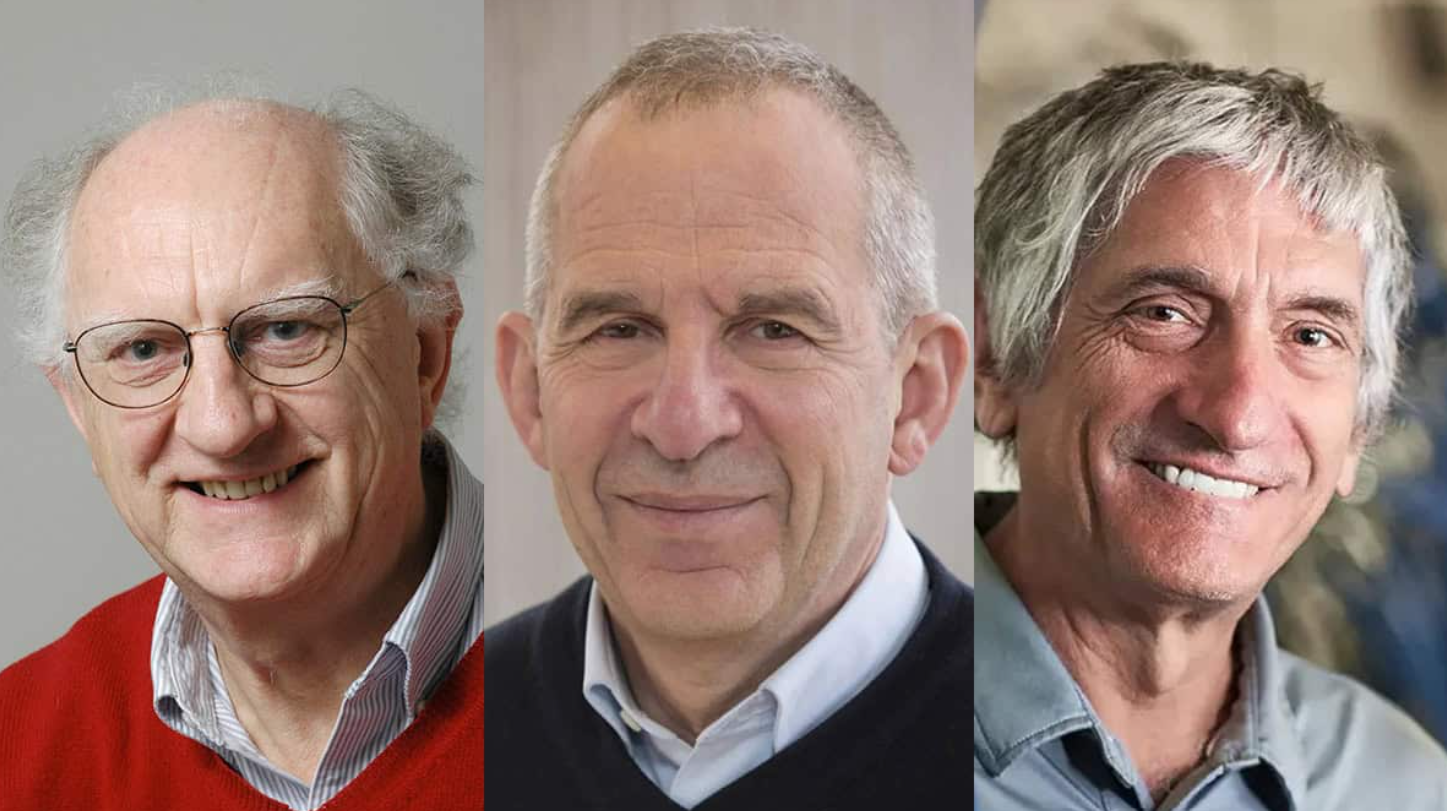

The 2025 Nobel Prize in Physics has been awarded to John Clarke, Michel Devoret, and John Martinis for their pioneering discovery of macroscopic quantum mechanical tunnelling and energy quantisation in electric circuits. The announcement was made by the Royal Swedish Academy of Sciences on Tuesday, recognizing their work as a milestone that has paved the way for modern quantum technologies.
According to the Nobel Committee, the discovery represents a significant advancement in understanding how quantum phenomena manifest on a macroscopic scale, bridging the gap between classical and quantum physics. Their research has created new opportunities for innovations in quantum computing, quantum cryptography, and quantum sensing technologies, which are now at the forefront of scientific and industrial development.
Quantum Discovery That Redefined Physics
The trio’s groundbreaking experiments demonstrated that quantum mechanical effects—previously thought to occur only at microscopic levels—can also appear in large-scale electronic systems. This achievement has helped scientists design more stable and scalable quantum systems that are now being used to build next-generation quantum computers.
The Nobel Committee noted that this year’s prize acknowledges research that not only deepens theoretical understanding but also drives technological transformation. By exploring how quantum states behave in electric circuits, Clarke, Devoret, and Martinis opened pathways for practical applications that could revolutionize computing, communication, and data security.
Recognizing a Legacy of Scientific Excellence
All three laureates are based in the United States, continuing a long tradition of American leadership in physics research. The Nobel Prize comes with a monetary reward of 11 million Swedish crowns (approximately $1.2 million), which will be shared among the winners.
Since its establishment through the will of Alfred Nobel, the prize has celebrated the world’s most influential scientists. Nobel, who gained fame for inventing dynamite, envisioned these awards to honor those who advance knowledge and benefit humanity. The Physics Prize, mentioned first in Nobel’s will, reflects the field’s central importance at the time and remains one of the most prestigious global distinctions today.
Context and Previous Laureates
The Nobel Prizes have been awarded annually since 1901, with occasional interruptions during major global events. Physics laureates over the years have included legendary figures such as Albert Einstein, Pierre and Marie Curie, Max Planck, and Niels Bohr, all of whom laid the foundations of modern science.
In 2024, the Nobel Prize in Physics was awarded to John Hopfield and Geoffrey Hinton for their groundbreaking contributions to machine learning, which accelerated the global artificial intelligence revolution. Both scientists also highlighted the ethical challenges of rapidly advancing AI technologies.
This Year’s Nobel Week
The Physics Prize is traditionally announced after the Medicine Prize, which this year went to two American and one Japanese scientist for their work on immune system research. The Chemistry Prize will follow on Wednesday, while the Peace Prize will be revealed on Friday in Oslo.
Each year, the Nobel laureates in physics, chemistry, medicine, literature, and economics receive their awards from the King of Sweden on December 10, the anniversary of Alfred Nobel’s death. The ceremony in Stockholm is followed by a grand banquet attended by royalty, dignitaries, and scientists from around the world.
The Nobel Peace Prize, however, is presented separately in Oslo, Norway, in accordance with Nobel’s wishes.
The Future of Quantum Technology
The 2025 Physics Prize underscores the growing importance of quantum science in shaping the future of technology and communication. By uncovering how quantum principles operate in electrical circuits, Clarke, Devoret, and Martinis have helped lay the foundation for a new technological revolution—one that could transform global computing and information security.
Their discovery not only celebrates human curiosity and perseverance but also reaffirms the Nobel tradition of honoring research that redefines the boundaries of knowledge.
