


KP and Balochistan Account for Over 96% of Fatalities, Terror Incidents Spike Sharply
Pakistan experienced a significant 46% increase in violence during the third quarter (Q3) of 2025, according to a new report from the Centre for Research and Security Studies (CRSS). The report paints a grim picture, revealing 901 fatalities and 599 injuries across 329 incidents of violence — including terrorist attacks and counter-terror operations.
The deadly surge brings the year’s total fatalities to 2,414, nearly equalling the full-year toll of 2,546 deaths recorded in 2024 — with one quarter still remaining in 2025.
Among the Q3 deaths, 516 (57%) were outlaws, while 219 (24%) were civilians, and 166 (18%) were security personnel. Compared to Q2, these figures represent a 55% increase in terrorist deaths, 43% rise in civilian casualties, and 28% increase among security forces.
The report emphasizes that although terrorists were the primary fatalities in numbers, civilians were the most targeted group, suffering the highest number of attacks and injuries. Out of 123 terror attacks, civilians bore the brunt, with 355 injuries, followed by security personnel with 209 injuries and only 35 injuries reported among terrorists.
Despite conducting only one-third the number of attacks compared to militants, security operations matched the fatality rate inflicted by terrorist violence, demonstrating the intensity and effectiveness of state-led countermeasures.
Suicide Attack Near Quetta FC HQ Highlights Ongoing Threat
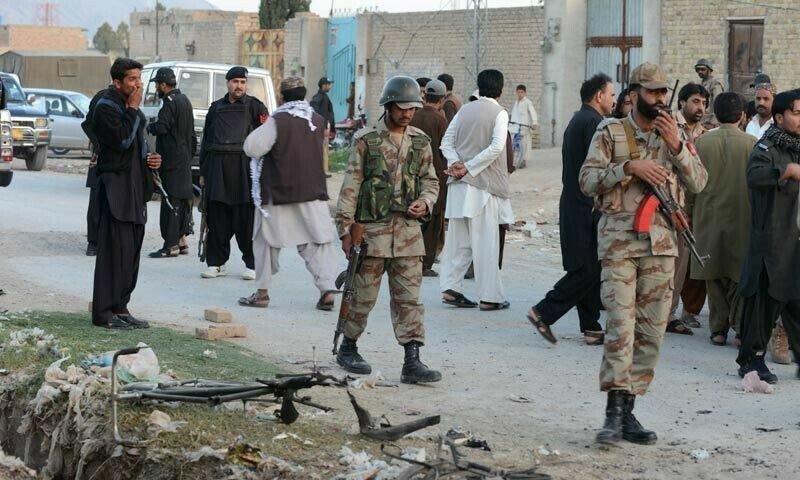
The alarming statistics were underscored by a recent suicide bombing near Quetta’s Frontier Corps (FC) headquarters, which claimed 11 lives, including two FC personnel. Security officials stated the attack involved an explosives-laden vehicle driven by India-sponsored terrorists disguised as FC soldiers.
The blast was followed by an attempted breach of the FC premises by five more terrorists, all of whom were neutralized by swift military action. A day earlier, 13 terrorists were reportedly killed in two intelligence-based operations (IBOs).
CRSS attributed the rise in violence largely to escalating militant activity in Khyber Pakhtunkhwa (KP) and Balochistan, which together accounted for over 96% of total violence in Q3.
KP alone reported 638 fatalities — nearly 71% of the total deaths — and over 67% of all violent incidents (221). Balochistan followed with 230 fatalities and 85 incidents, reflecting a 64% and 21% increase, respectively, from Q2.
Sindh, though relatively peaceful, witnessed a 162% spike in fatalities, rising from 8 in Q2 to 21 in Q3. These increases come after a brief decline in violence during Q2, where CRSS had reported reduced attacks in both KP and Balochistan.
The report concluded by highlighting the high precision of counter-terrorism operations, where terrorists suffered fewer injuries but the highest fatalities, showing the lethal accuracy of state responses.
