

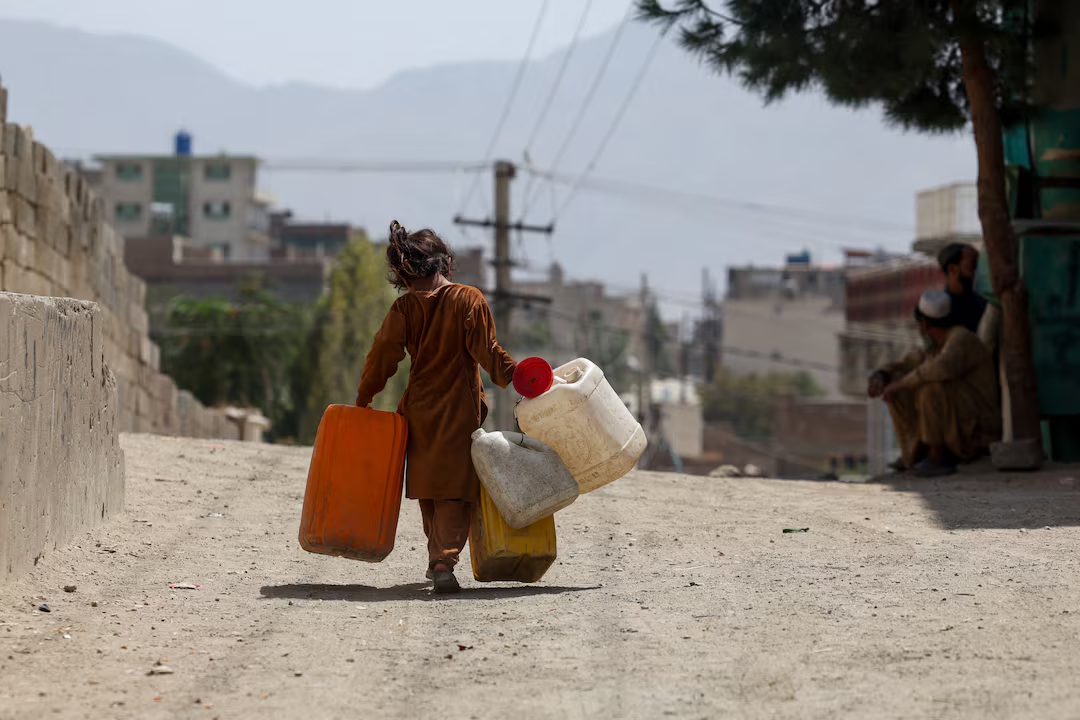

Eight-year-old twins Noorullah and Sanaullah spend their days pushing a wheelbarrow loaded with yellow jerrycans through Kabul’s dusty alleys instead of going to school.
Their family of thirteen once relied on water from their own well, but when it dried up four years ago, they were forced to queue at communal taps or buy expensive water from tankers. The burden of fetching water now falls on the children, who often spend hours in line, fighting exhaustion and heat.
Noorullah, who suffers from epilepsy, once collapsed while waiting for water. His father, Assadullah, a shopkeeper, said the boys make six to seven trips daily. Sometimes they cry in protest, but without water, there is no alternative.
The family’s hardships mirror Afghanistan’s deepening water crisis, driven by climate change, prolonged droughts, and poor infrastructure.
Kabul, with a population of over six million, is among Asia’s most water-stressed cities. According to aid groups, shortages are worsening disease, malnutrition, and school dropouts.
Poor families spend up to 30 percent of their income on water, while the wealthy can dig deeper wells. Assadullah earns barely $2 to $3 a day and often shuts his shop to help his sons haul water.
His wife carefully measures every jug for washing and cooking, boiling it twice to protect her children from infections. Still, she has contracted H. pylori, and her husband now suffers from stomach ulcers.
Experts warn the crisis could worsen dramatically. Wells more than 120 meters deep are running dry, and reduced snowmelt has failed to replenish Kabul’s water basin.
The UN has cautioned that Kabul may become the first modern capital to run out of water within years. For Assadullah, the dream is simple: enough water so his children can leave the wheelbarrow behind and return to school.
