

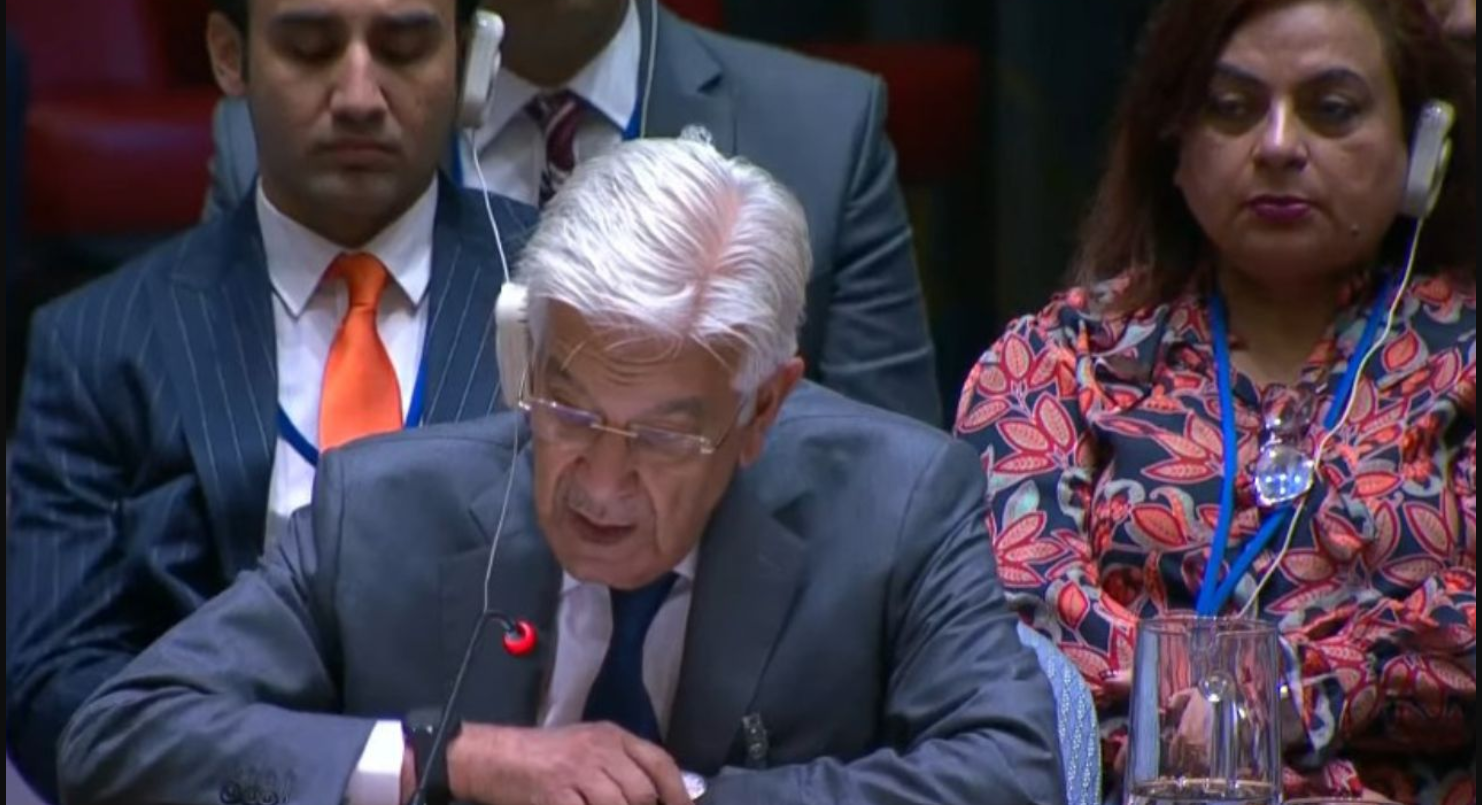

The participation of Dr Shama Junejo in Pakistan’s delegation to the United Nations General Assembly has triggered a storm of criticism. A photo showing her seated directly behind Defence Minister Khawaja Asif during the session fueled heated discussions on social media, with many questioning her presence.
Shama Junejo, a British-Pakistani analyst, lawyer, and journalist, often comments on Pakistan’s politics and foreign relations. She holds a PhD in military ethics and previously received the Tamgha-e-Imtiaz for her contributions to journalism. Despite these achievements, her reputation has long been marked by controversy, particularly regarding her statements perceived as supportive of Israel.
Critics accused Junejo of previously praising Israeli Prime Minister Benjamin Netanyahu and allegedly meeting Israeli officials. These allegations reignited anger when she appeared at the UN as part of Pakistan’s delegation. Social media users strongly condemned her inclusion, questioning why someone linked to pro-Israel views was allowed to represent Pakistan.
Defence Minister Khawaja Asif quickly distanced himself from Junejo after the criticism gained momentum. He clarified that he did not know her and that seating arrangements were managed by the Foreign Office. Asif emphasized that he attended the session because Prime Minister Shehbaz Sharif was unable to deliver the address due to other commitments. In a statement, he asked why Junejo was placed behind him, insisting that the Foreign Office should provide answers.
The Foreign Office also issued a clarification but failed to quell the controversy. It explained that Junejo was not listed in the official Letter of Credence for Pakistan’s delegation to the 80th UNGA session. The document, signed by the deputy prime minister and foreign minister, did not include her name, meaning her presence was unauthorized.
Despite these denials, Junejo defended herself, insisting she had indeed traveled with the prime minister on the official aircraft. She further claimed she was tasked with drafting the prime minister’s speeches and had access to confidential state documents. To counter criticism, she shared screenshots of her social media posts from July and September condemning Israel and labeling Netanyahu as a war criminal.
According to Junejo, the backlash against her was orchestrated by Indian and Israeli lobbies to distract from the prime minister’s UN speech and his meeting with U.S. President Donald Trump. She alleged that such campaigns were designed to silence her, just as she had faced smear campaigns in the United Kingdom.
However, her defense failed to pacify critics. Social media users continued to accuse her of double standards, recalling her previous admiration for Israel while condemning her sudden change of stance. Many argued that her presence undermined Pakistan’s credibility at the UN, especially when the country was voicing strong opposition to Israeli actions in Gaza.
Prominent commentators also weighed in. Author Ayesha Siddiqa remarked that Junejo had long been associated with senior Pakistani politicians, particularly in London, and suggested her inclusion was a reward for her political ties. Others argued that granting her national recognition in the past and now including her in the UN delegation reflected poor judgment.
The controversy highlighted broader concerns over how representatives are chosen for international platforms. It also raised questions about transparency in Pakistan’s diplomatic delegations and the vetting process of individuals who accompany top officials.
Although Shama Junejo tried to deflect criticism by presenting herself as a victim of smear campaigns, her inclusion in the UN delegation continues to raise doubts. For many, her past record and controversial statements remain a barrier to credibility.
