


The Last Note of Freedom
By Zeeshan Shah
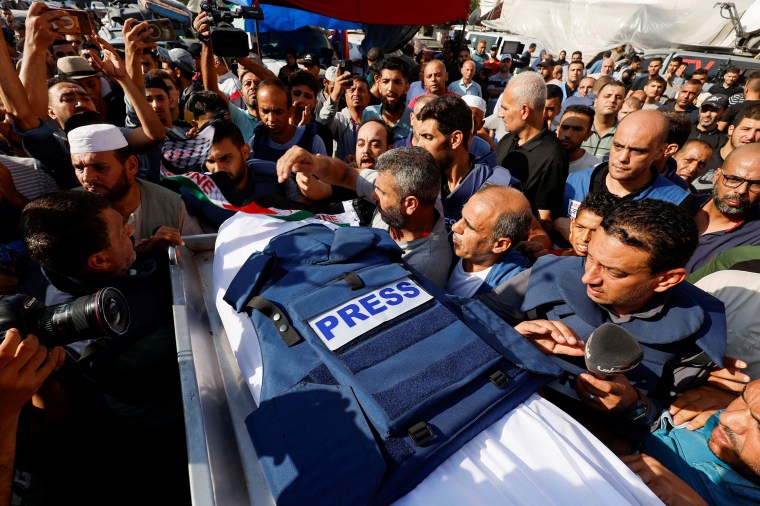
KARACHI: On November 2 this year, the United Nations will once again observe the International Day to End Impunity for Crimes against Journalists. Today, there has never been a more dangerous time for journalists across the globe, with record numbers being killed, silenced, or forced into exile, as confirmed by recent reports. Whether it is war crimes in Palestine, drug trafficking in Mexico, urban flooding in India and Pakistan, or corruption across the global landscape, almost every major country struggles to ensure the promotion of credible journalism.
By the time this day is commemorated, many journalists will already have been killed, declared missing, or caught in wars. Disturbingly, over eighty percent of journalist killings are never properly investigated and remain unresolved, as their murderers continue to roam free. Crimes against journalists are on the rise in an increasingly unsafe environment, while freedom of expression falls into dire straits in the absence of meaningful global justice.
Even worse, many crimes against journalists are underreported by law enforcement agencies, while those covering war crimes and protests are increasingly under attack. Where the world must ensure that the voice of journalism is preserved, there exists a consistent failure to protect journalists who risk their lives in the line of duty. Legally, we remain powerless despite constitutional protections that many governments claim to provide under their laws.
Recently, a United Nations Security Council meeting was held following an Israeli attack on one of the member states of the Gulf Cooperation Council. At the meeting, an official apology was sought from Israel after thousands of Palestinian lives were lost, in a war triggered by rogue Israeli forces. Reports confirm that over 190 journalists have been killed in Palestine alone, highlighting the grave cost of unrestrained conflict.
The challenge of ensuring punishment under a legitimate legal system remains immense. Many nations must critically revisit their judicial systems to address rising failures. Criminals who threaten constitutional protections must be brought under the law, since legal order cannot be compromised at any cost. Where justice is absent, criminals roam freely, leaving the system to collapse into failure, a cycle that must urgently end.
In countries where conviction rates remain dismal, courts inspire little confidence to interpret laws and dispense swift justice. Innocent victims, often turned into prisoners, languish for decades inside jails as justice systems lack both impartiality and strength.
It is often said that “no one is above the law.” Yet, in practice, this principle rarely applies equitably across the world. Nepotism, lawlessness, dissent, and corruption persist unchecked as governments struggle to maintain any credible rule of law. This has triggered moral and ethical decline, fueling public desperation and unrest in many nations.
The “might is right” mindset ultimately becomes counterproductive, often leading to disaster, particularly under non-consultative approaches to political management, social welfare, education, health, and governance. The lack of rational and inclusive policymaking erodes the proper functioning of states and triggers systemic failures across social structures. Sooner or later, nations must enforce laws to safeguard citizens against crime and violence. At the same time, until brutal crimes are proven in courts as brutal acts, extreme punishment should not be misapplied.
In today’s interconnected world, the absence of accountability weakens nations morally and politically, enabling corruption and allowing external patronage of destructive forces. This collapse of ethical resistance even impacts journalist communities, which remain a critical fourth pillar of society. Now, more than ever, the world requires credible journalism and an openness to constructive criticism.
For Muslim-majority nations, one possible way forward lies in implementing punishments under Islamic Shariah laws, enabling swift justice against tyranny, barbarism, dissent, and disorder. Another pathway is to strengthen space for journalists, allowing them to conduct deeper investigations and present evidence-based reporting that supports meaningful judicial action against criminals.
Journalistic standards must rise, credibility must be prioritized, and freedom with safety must be guaranteed for all journalists. Furthermore, societies must reject unjust laws or amendments that undermine journalistic independence. This is also the time to reject “yellow journalism” and draw clear distinctions between real reporting and fake narratives.
Ultimately, the protection of journalists will always remain the last and most essential defense of freedom.

About the Writer:
Zeeshan Shah – writes on International Relations, Governance, and Public Policy. Tweets at @zeeshan82445998
