

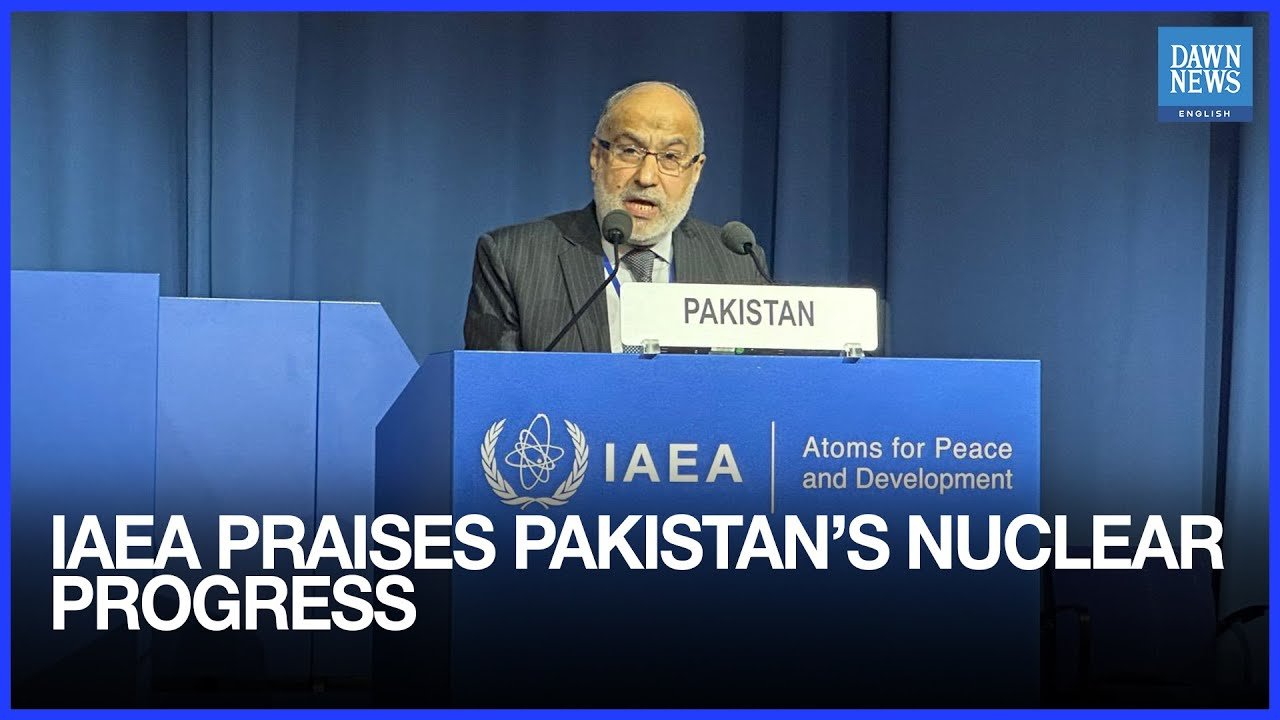

Pakistan’s nuclear programme has received international recognition from the International Atomic Energy Agency (IAEA) for its steady progress and growing cooperation with the agency.
IAEA Director General Rafael Mariano Grossi, in a post on X following his meeting with Pakistan Atomic Energy Commission (PAEC) Chairman Raja Ali Raza Anwar at the 69th IAEA General Conference in Vienna, commended Pakistan’s achievements in expanding civil nuclear energy.
He noted that the programme was advancing “at a good pace,” particularly with the construction of Chashma Nuclear Power Plant Unit-5 (C-5), where he had witnessed the first concrete pouring in February—a milestone for Pakistan’s energy security.
The meeting also reviewed cooperation in key IAEA initiatives, including Atoms4Food, which enhances crop yields and food safety, and Rays of Hope, which expands nuclear medicine and radiotherapy access for cancer care.
Grossi lauded Pakistan’s active engagement, especially in capacity-building, training, and applying nuclear knowledge for socio-economic development.
Chairman Anwar reaffirmed Pakistan’s commitment to peaceful uses of nuclear technology, highlighting the high safety standards of nuclear power plants and their contribution to reliable, low-carbon electricity. He emphasized that PAEC’s activities aligned with IAEA’s mission of promoting nuclear technology for peace, health, and prosperity.
On the sidelines of the conference, Pakistan and the IAEA signed the fifth Country Programme Framework (CPF) for 2026–2031.
This framework outlines national priorities where nuclear science and technology will support socio-economic development, covering five key areas: food and agriculture, human health, climate change and water management, nuclear power, and radiation safety.
The CPF reaffirms Pakistan’s role as a responsible IAEA partner and strengthens its contributions to sustainable development and regional cooperation.
