

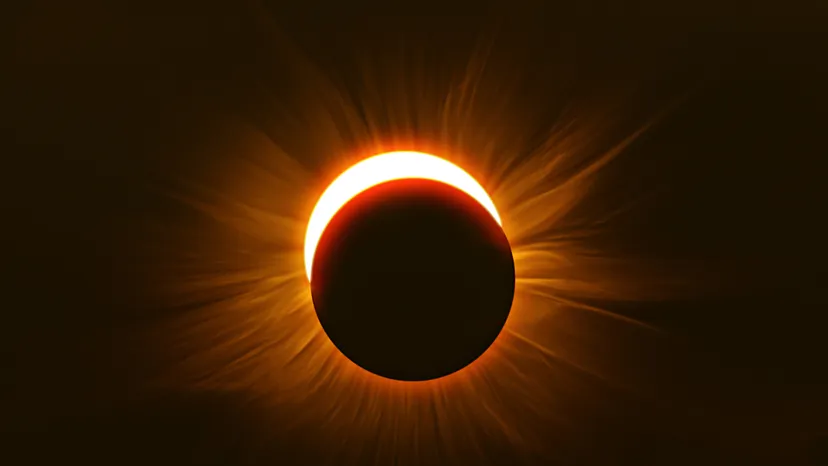

Sky watchers should note that a partial solar eclipse is set to occur overnight on September 21–22, according to NASA. While this rare celestial event will not be visible in the United States, observers in regions including Australia, Antarctica, and across the Pacific and Atlantic Oceans will have the best opportunity to witness it.
In Pakistan, the Climate Data Processing Centre of the Pakistan Meteorological Department (PMD) reported that the eclipse will technically begin at 10:30 p.m. (PST) on September 21, reach its peak at 12:42 a.m., and conclude by 2:54 a.m. on September 22.
However, it will remain invisible across the country. NASA explains that a partial solar eclipse occurs when the Moon moves between the Earth and the Sun but without perfect alignment, leaving a crescent-shaped portion of the Sun visible.
This eclipse marks the second major celestial event of the month, following the total lunar eclipse that occurred on September 7–8. Adding to September’s astronomical highlights, the September equinox will also take place on September 22, when day and night durations are nearly equal across the globe.
Looking ahead, NASA has announced that the next total solar eclipse visible in parts of North America will occur on August 12, 2026. This eclipse will cross Greenland, Iceland, Spain, Russia, and a small section of Portugal, with a partial eclipse observable across much of North America, Europe, Africa, and various oceanic regions.
In the same year, an annular eclipse is also scheduled for February 17, which will be visible in certain parts of Antarctica, while partial phases will be observable across Africa, South America, and surrounding oceans.
NASA has strongly advised that people must never look directly at the Sun without using proper eclipse glasses or filters. Viewing the Sun through regular optical devices without a certified solar filter can cause severe and permanent eye injury.
