

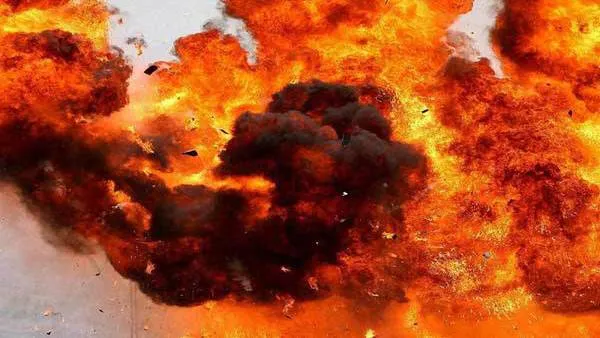

Explosives hidden in passenger luggage detonate at busy transit hub near Pak-Afghan border; investigation underway
CHAMAN, BALOCHISTAN — At least five people were killed and three others injured in a powerful explosion that rocked a busy border taxi stand in Chaman on Wednesday, officials confirmed.
According to Assistant Commissioner Chaman, the blast was triggered by explosives concealed inside a piece of passenger luggage. The device detonated at the height of activity at the transit terminal, which serves as a key crossing point for travelers and traders moving between Pakistan and Afghanistan.
Emergency responders rushed to the scene, and the casualties were immediately shifted to the District Headquarters (DHQ) Hospital. Hospital sources confirmed that several of the injured were in critical condition.
Following the incident, law enforcement and security personnel cordoned off the area, launching a detailed investigation into the origin and nature of the explosive device. The Balochistan Home Department has formally ordered an inquiry, with security agencies collecting forensic evidence from the blast site to identify those responsible.
Ongoing Violence in Balochistan
The attack comes amid a renewed wave of violence in Balochistan province, where security forces have been battling multiple insurgent groups and terror outfits.
Just two days prior to the Chaman incident, five Pakistani soldiers — including a captain — were martyred in an improvised explosive device (IED) attack in Kech district. In retaliation, Pakistani security forces launched an operation that resulted in the killing of five militants allegedly linked to an Indian-backed proxy group, Fitna al Hindustan.
Earlier this month, a suicide bombing at a Balochistan National Party (BNP) rally on Quetta’s Sariab Road killed over a dozen people, underscoring the persistent threat to political and civilian gatherings in the region.
Regional Security Concerns
Pakistan’s security apparatus continues to express concern over the rising number of cross-border attacks originating from Afghanistan. Intelligence sources allege that groups like the Tehrik-i-Taliban Pakistan (TTP) are receiving logistical, operational, and financial support from within Afghanistan — claims supported by a recent UN Security Council report, which highlighted Kabul’s alleged nexus with terror elements operating in Pakistan.
As part of its diplomatic efforts, Islamabad has consistently urged the Afghan interim government to ensure that its territory is not used for hostile activities against Pakistan.
The Chaman blast adds to the urgency of these concerns, particularly given the strategic importance of the Pak-Afghan border, which spans over 2,500 kilometers and serves as a vital artery for regional trade and people-to-people contact.
