

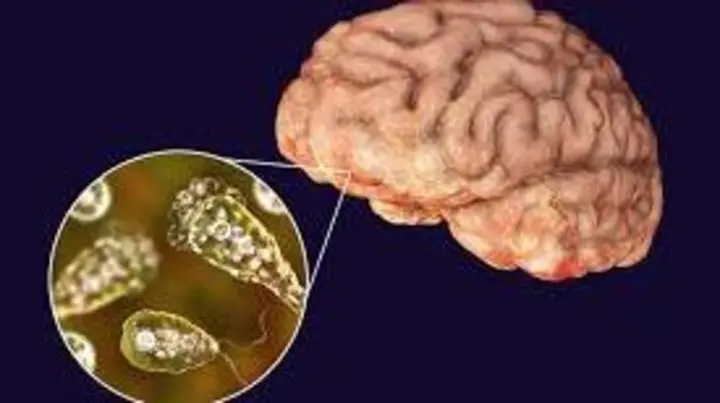

Kerala, India — Health authorities in India have issued a statewide alert following a sharp rise in cases of Naegleria fowleri, a rare but deadly “brain-eating” amoeba, with 19 deaths and 72 infections confirmed so far this year — double the number reported in 2024.
The southern state of Kerala, where the majority of infections have occurred, has seen nine deaths and 24 confirmed cases in September alone, prompting aggressive public health measures and large-scale water testing efforts.
“We are now conducting tests on a large scale across the state to detect and treat new cases early,” said Dr. Altaf Ali, a member of the state’s government task force. “What’s worrying is that new cases are appearing across multiple regions, not just in isolated pockets as in previous years.”
Rare but Deadly Infection
Naegleria fowleri, often dubbed the “brain-eating amoeba,” is a free-living microorganism commonly found in warm freshwater bodies like lakes, rivers, and poorly chlorinated pools. Infection occurs when contaminated water enters the body through the nose, allowing the amoeba to travel to the brain. It does not spread from person to person.
According to the US Centers for Disease Control and Prevention (CDC), once the amoeba reaches the brain, it causes a condition known as Primary Amoebic Meningoencephalitis (PAM), which destroys brain tissue and is almost always fatal. The CDC notes that while infections are extremely rare, the fatality rate exceeds 95%.
Symptoms typically begin with headache, fever, nausea, and vomiting, and escalate rapidly to seizures, hallucinations, confusion, and coma, as described by the World Health Organization (WHO).
Global Cases and Rising Concern
Though global numbers remain low, Naegleria fowleri has killed hundreds since it was first identified in 1962. Most reported cases have come from India, Pakistan, the United States, and Australia.
Last year, Kerala saw nine deaths out of 36 infections, highlighting a significant year-over-year increase in both infections and fatalities in 2025. The rapid spike has pushed health authorities to step up public awareness campaigns, issue guidelines for safe water use, and advise against swimming in untreated or stagnant warm water.
The situation remains under close observation, with health workers across Kerala deployed to monitor new cases and manage the growing concern over this silent yet deadly pathogen.
