

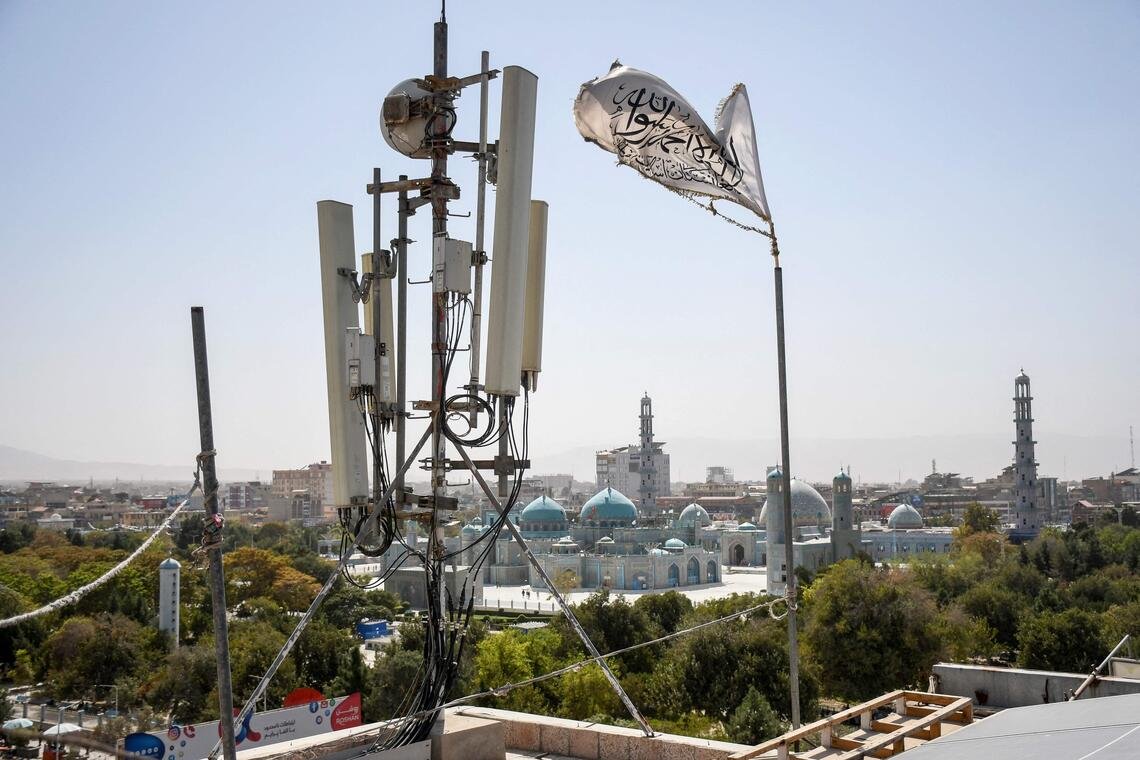

Afghanistan’s Taliban authorities have expanded their crackdown on internet access, cutting fibre optic connections in several provinces this week under orders from Supreme Leader Hibatullah Akhundzada.
Officials claimed the move was part of efforts to combat “vice,” but the decision has left tens of thousands without reliable access and raised alarm among residents and businesses.
In northern Balkh province, fibre optic internet was fully banned, provincial spokesman Attaullah Zaid confirmed, noting that alternatives would eventually be offered nationwide. Reports indicate similar restrictions in Badakhshan, Takhar, Kandahar, Helmand, and Uruzgan, with access now only possible through disrupted telephone networks.
Fibre optic is Afghanistan’s most widely used internet technology, and service providers fear the clampdown will trigger major economic losses. “If these connection problems are not resolved, we will suffer great losses,” said Atta Mohammed, a marble trader in Kandahar. He warned that delayed responses to international clients in Dubai and India could threaten his business operations.
Authorities in Nangarhar said the measure has not yet reached the province but expect nationwide implementation soon. In a statement, provincial spokesperson Qureshi Badloun defended the restrictions, citing studies that claim online applications have eroded Afghanistan’s “economic, social, cultural, and religious foundations” while promoting moral corruption.
The move marks a reversal from earlier promises to expand connectivity. As recently as 2024, Kabul promoted its 9,350-kilometre fibre optic network, built largely under US-backed administrations, as a crucial tool for economic revival and global integration.
Since retaking power in 2021, the Taliban have enforced sweeping social restrictions, including curbs on women’s education and work. The latest internet crackdown reflects their growing control over digital space, threatening to further isolate Afghanistan from international markets and communications.
