

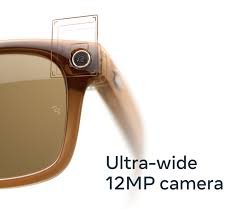

Meta’s next-generation smart eyewear has been accidentally revealed through a leaked YouTube video, showcasing the company’s ambitious leap into heads-up display (HUD) technology. The Meta Ray-Ban Display glasses represent a significant evolution in consumer smart eyewear, introducing advanced neural control interfaces and integrated AI capabilities.
Accidental Reveal: What the Leaked Video Showed
Meta inadvertently disclosed its upcoming smart glasses through a YouTube video that was quickly removed, but not before tech enthusiasts captured crucial details about the device. The leak appears strategically timed with Meta Connect 2025, the company’s flagship annual conference, suggesting an imminent official announcement.
Revolutionary HUD Technology in Consumer Eyewear
Fixed Display System
The Meta Ray-Ban Display glasses feature a fixed heads-up display that provides information directly to the wearer’s right eye only. Unlike augmented reality (AR) systems that overlay digital content onto the real world, this HUD approach offers:
- Constant access to information without environmental integration
- Simplified optical design for better battery efficiency
- Reduced processing requirements compared to full AR systems
- More affordable manufacturing costs
Core Functionality
The HUD system is designed to provide seamless access to:
- Meta AI assistant for voice queries and smart responses
- Real-time messaging and communication features
- Turn-by-turn navigation for hands-free guidance
- Notification management from connected devices
- Quick information display for weather, time, and calendar events
Advanced Neural Interface: sEMG Wristband Control
Surface Electromyography Technology
The glasses work in conjunction with Meta’s innovative sEMG (Surface Electromyography) wristband, representing a breakthrough in consumer neural interface technology:
- Muscle signal detection from forearm electrical pulses
- Finger movement tracking without physical contact
- Gesture-based control for interface navigation
- Hands-free interaction while maintaining natural movement
Evolution of Neural Interface
This wristband appears to be an advanced iteration of Meta’s previously demonstrated Neural band technology, offering:
- Enhanced sensitivity and accuracy
- Improved battery life and wireless connectivity
- Better integration with smart glasses ecosystem
- Reduced learning curve for new users
Technical Specifications and Design Changes
Physical Characteristics
The Display variant introduces notable design modifications:
- Weight increase to 70 grams (40% heavier than standard 50g Ray-Ban Meta glasses)
- Chunkier frame design to accommodate HUD components
- Enhanced battery capacity for display and processing power
- Reinforced construction for added electronic components
Pricing and Market Positioning
- Expected retail price: $800 according to industry reports
- Significant premium over existing Ray-Ban Meta models
- Positioned as professional/enthusiast-grade smart eyewear
- Competitive with enterprise AR solutions
Product Lineup Expansion
Clear Brand Differentiation
Meta is establishing distinct product categories:
Meta Ray-Ban Display:
- HUD-enabled smart glasses
- Neural wristband integration
- Premium pricing tier
Standard Ray-Ban Meta:
- Camera and audio functionality
- No display components
- Consumer-friendly pricing
Oakley Meta Series:
- HSTN model with 3K video recording
- Extended battery life
- Sports-focused design
- Upcoming Sphaera variant
Meta Connect 2025: Official Announcement Expected
Strategic Timing
The leak’s timing strongly suggests:
- Imminent official reveal at Meta Connect 2025
- Coordinated marketing campaign beginning
- Developer preview programs launching soon
- Consumer availability within months
Market Impact Predictions
The Display glasses could significantly impact:
- Consumer smart glasses adoption rates
- Competitive response from Apple, Google, and Microsoft
- Neural interface technology mainstream acceptance
- Workplace productivity tool integration
Competitive Analysis and Market Context
Advantages Over Competition
- Established Ray-Ban partnership for style and brand recognition
- Proven smart glasses ecosystem with existing user base
- Advanced neural control ahead of most competitors
- Meta AI integration leveraging company’s AI investments
Potential Challenges
- Higher price point may limit mainstream adoption
- Battery life concerns with added display functionality
- Privacy considerations around constant HUD access
- Learning curve for neural interface adoption
Privacy and Ethical Considerations
Data Collection Implications
The always-on HUD system raises important questions:
- Continuous visual field monitoring capabilities
- Integration with Meta’s advertising ecosystem
- User consent for biometric data collection
- Regulatory compliance across global markets
User Control Features
Expected privacy controls include:
- Manual activation/deactivation options
- Data retention period settings
- Third-party app permission management
- Offline mode capabilities
Future Implications for Smart Eyewear
Technology Convergence
The Meta Ray-Ban Display represents convergence of:
- Consumer electronics miniaturization
- Neural interface democratization
- AI assistant ubiquity
- Fashion-tech integration
Industry Trajectory
This launch could accelerate:
- Mainstream smart glasses adoption
- Neural interface technology development
- Workplace productivity transformation
- Social interaction paradigm shifts
Expected Launch Timeline and Availability
Based on the Meta Connect 2025 timing:
- Developer preview: Q4 2025
- Limited consumer release: Q1 2026
- Wide availability: Q2 2026
- International expansion: H2 2026
Conclusion: A Pivotal Moment for Smart Eyewear
The leaked Meta Ray-Ban Display glasses represent a watershed moment in consumer smart eyewear evolution. By combining established fashion design with cutting-edge HUD technology and revolutionary neural interfaces, Meta is positioning itself at the forefront of the next computing platform transition.
The $800 price point, while premium, reflects the sophisticated technology integration and positions these glasses as professional tools rather than consumer gadgets.
