

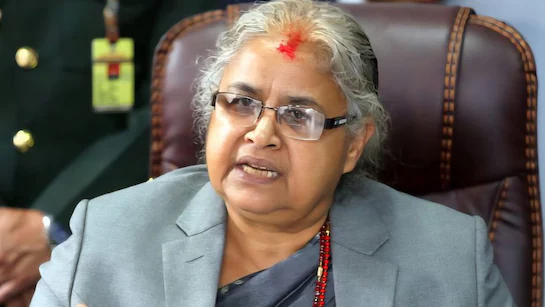

Nepal has entered a historic new chapter with the swearing-in of former chief justice Sushila Karki as prime minister, following days of deadly unrest that toppled the previous government.
Karki, 73, is the first woman to hold the position of chief justice and now steps in as the country’s first female prime minister, after mass anti-corruption protests spiraled into violence, killing at least 51 people. President Ram Chandra Paudel administered the oath in a brief ceremony, as the army continues to enforce a curfew in the capital Kathmandu.
Karki’s appointment comes amid chaos sparked by the resignation of ex-premier KP Sharma Oli after protesters set parliament and government buildings ablaze.
The movement, led largely by disaffected youth under the umbrella of “Gen Z,” turned to Karki for leadership, citing her integrity and independence. A former justice colleague praised her as courageous and incorruptible, while protesters hailed her as the face of change.
The new prime minister has long spoken out against entrenched corruption and has supported youth leadership in politics. Her judicial legacy includes historic rulings against government corruption and convictions of soldiers for war-era crimes.
She survived a controversial impeachment attempt in 2017, which the UN condemned as politically motivated, further cementing her reputation as defiant and independent.
Despite her credibility, Karki inherits a nation reeling from political instability, economic hardship, and widespread unrest.
More than 12,500 prisoners escaped during the chaos, while unemployment and economic stagnation remain deep concerns for Nepal’s young population. Protesters continue to push for systemic reforms, and Karki has been tasked with leading a transitional government to oversee fresh elections.
For many, her rise symbolizes hope after one of Nepal’s darkest weeks. As one protester put it: “We started this movement so we could make a better Nepal — and now, we believe change is possible.”
