

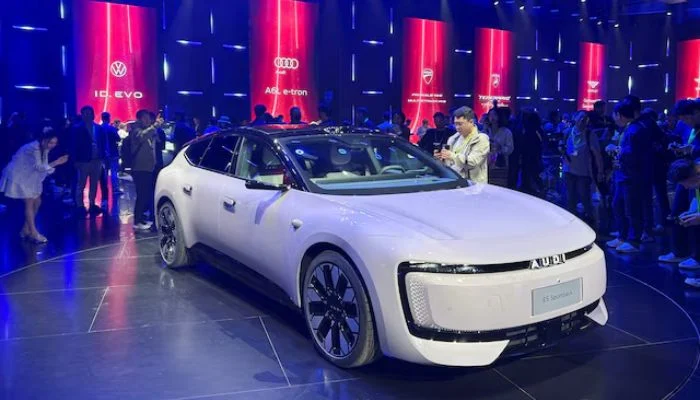

Audi Responds to Chinese Competition
Audi executives were stunned in 2021 when they first saw the Zeekr 001, a sleek, long-range Chinese EV. The model, with European-inspired design and advanced range, convinced Audi it needed Chinese technology to compete. Stefan Poetzl, president of SAIC Audi Sales and Marketing, admitted, “We needed to do something about it.”
Launch of Audi E5 Sportback in Record Time
To respond, Audi developed the AUDI E5 Sportback within 18 months using technology from its Chinese partner SAIC. The partnership provided crucial elements, including batteries, electric powertrains, infotainment software, and advanced driving assistance systems. Audi will begin delivering the $33,000 EV to Chinese customers this month.
Rivals Eye Chinese Partnerships
Global rivals are also embracing similar strategies. Toyota is collaborating with GAC, while Volkswagen is co-developing models with Xpeng. Both companies want China-specific EVs tailored for the world’s largest market. Meanwhile, Renault and Ford are considering global models based entirely on Chinese EV platforms.
Benefits for Both Sides
These licensing deals provide new revenue streams for Chinese EV makers while giving global brands faster access to innovation. Chinese automakers face a brutal price war at home and trade barriers abroad. Meanwhile, foreign automakers urgently need shortcuts to catch up with China’s rapid EV advancements.
“China Inside” Strategy Gains Ground
Analysts compare this model to the famous “Intel Inside” campaign of the 1990s. In this case, Chinese firms supply complete EV platforms. Automakers then customize these underpinnings into branded electric cars without heavy upfront investment. Leapmotor already partnered with Stellantis to expand outside China, while more talks are underway.
Renault and Ford Push Further
Renault built the budget-friendly Dacia Spring in Europe using a platform from Dongfeng in 2021. Now Renault’s upcoming Twingo is being developed in Shanghai with technical support from Launch Design, a Chinese EV engineering firm. Meanwhile, Ford is actively seeking a Chinese partner, with CEO Jim Farley openly praising Xiaomi’s SU7 sedan.
Volkswagen Expands Its Strategy
Volkswagen plans to expand cooperation with Xpeng beyond EVs to include all fuel types. The deal gives Volkswagen access to Xpeng’s electronic layouts and software, speeding up its China-focused development pipeline.
