

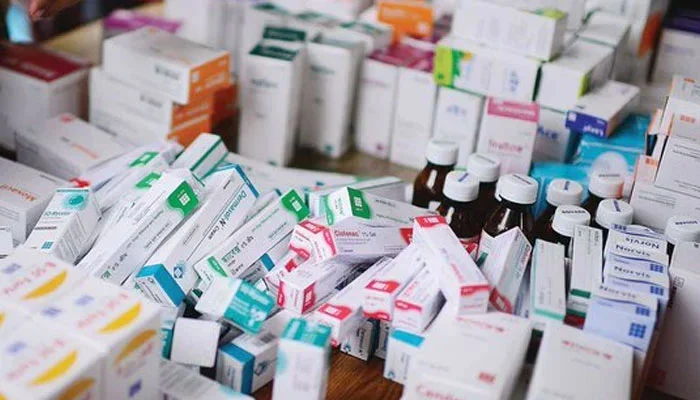

Nearly all medicines required by patients in Pakistan are now readily available at local pharmacies, following the government’s decision to deregulate prices of non-essential drugs, according to pharmaceutical industry representatives and health officials.
They note that the long-standing issue of medicine shortages has eased significantly, while black-market profiteering and counterfeit supplies have been curtailed.
The move comes after years of complaints that strict government price controls had made it unfeasible for manufacturers to continue producing several widely used medicines. Pharmaceutical producers in Karachi explained that inflation, rupee depreciation, and rising international raw material costs had left many companies unable to sustain production.
For example, a tablet costing Rs 3 to manufacture was capped at that same price, discouraging supply. Deregulation allowed such medicines to be sold at Rs 6, making them profitable again and restoring availability.
Tauqeer ul Haq, Chairman of the Pakistan Pharmaceutical Manufacturers Association (PPMA), stressed that critical treatments such as insulin, tuberculosis medicines, and over-the-counter painkillers like Panadol were frequently unavailable under the old pricing regime. He credited deregulation with bringing these back into the market.
Health experts have endorsed the reform, highlighting that it has improved access to quality medicines while reducing the incentives for smuggling and counterfeiting. Importantly, the change applies only to non-essential drugs, while over 460 essential medicines—including life-saving treatments—remain under government price control to ensure affordability for the public.
A recent joint survey by PPMA, Pharma Bureau, and IQVIA revealed that average prices for the top 100 pharmaceutical brands rose by 16.5 percent post-deregulation, though industry representatives argue that much of this increase stemmed from earlier adjustments and the launch of new products.
Data from the Pakistan Bureau of Statistics also showed that urban medicine prices rose by 13.05 percent and rural prices by 15.3 percent in June 2025—figures still below broader inflation levels.
With shortages easing, previously scarce medicines such as psychiatric treatments, anti-epileptics, and certain cancer therapies are now widely accessible. IQVIA further reported that market volume growth has improved, rising from 0.8 percent in 2023 to 3.6 percent in 2025, reflecting renewed stability in the pharmaceutical supply chain.
