

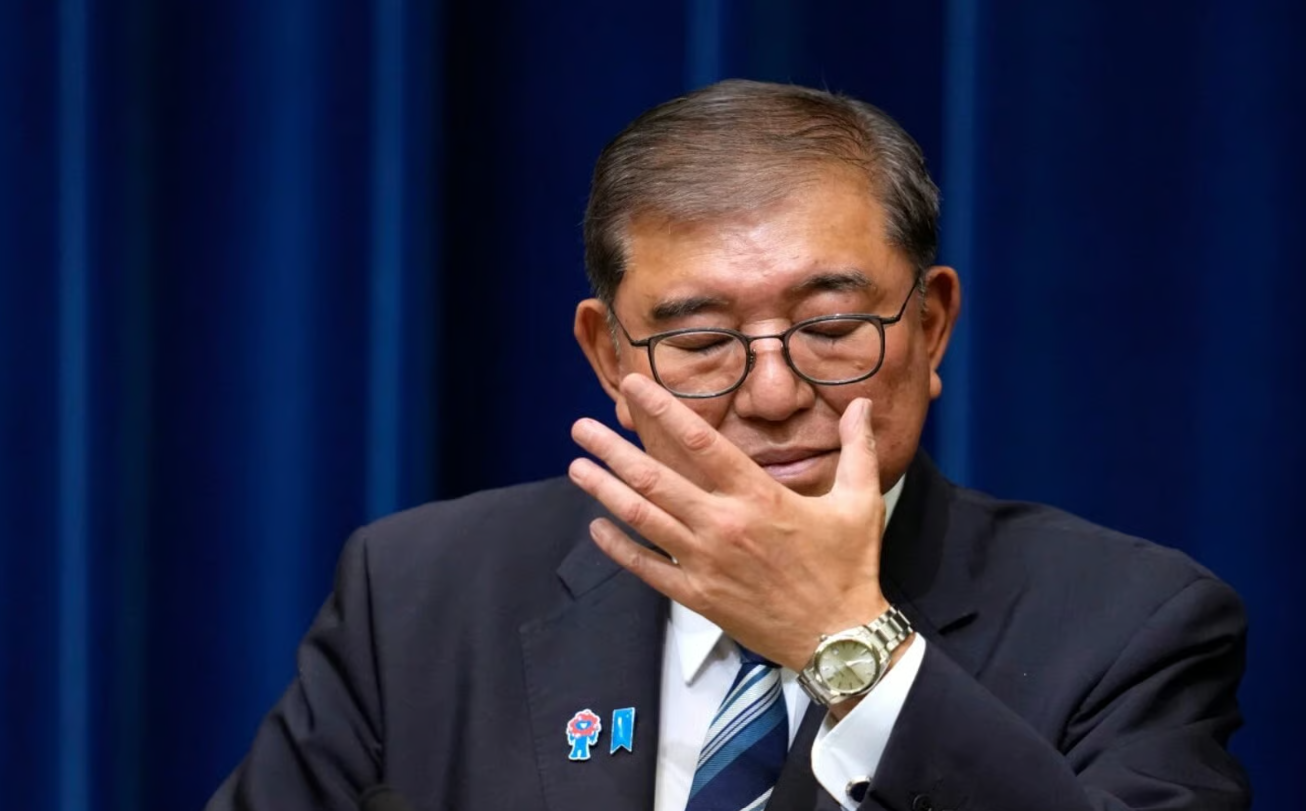

Japanese Prime Minister Shigeru Ishiba announced his resignation on Sunday, stepping down less than a year after taking office. The decision followed mounting pressure from within the ruling Liberal Democratic Party (LDP), which suffered significant defeats in recent upper house elections.
Ishiba, 68, secured the party’s leadership in September 2024 on his fifth attempt, becoming Japan’s prime minister soon after. His rise was considered a hard-fought achievement, yet his fall came swiftly. Party members demanded fresh leadership following poor election performances, leaving Ishiba with little choice but to step aside.
Political Journey and Leadership Challenges
The son of a regional governor and a member of Japan’s small Christian minority, Ishiba was seen as a stable figure capable of guiding the LDP. When he became prime minister, he was the tenth LDP leader to hold the office since 2000. His leadership came with promises to “create a new Japan,” revive struggling rural areas, and address the demographic crisis caused by the country’s declining population.
However, his political agenda soon faced challenges. Ishiba’s decision to call snap lower house elections in October 2024 backfired. The LDP recorded its worst result in 15 years, losing the majority it had long relied upon. As a result, the ruling coalition, which included Komeito, was forced to negotiate with opposition parties to pass key legislation.
Election Defeats and Public Discontent
The July 2025 upper house elections intensified pressure on Ishiba’s leadership. The LDP lost its majority, sparking calls for his resignation. Public dissatisfaction further worsened the situation, as rising living costs became a dominant concern. Rice prices had doubled within a year, fueling anger among voters and driving down his approval ratings.
Gender representation also became a point of criticism. Ishiba’s cabinet included only two female ministers, compared with five appointed by his predecessor, Fumio Kishida. Many saw this reduction as a step backward for diversity in government leadership.
Economic and Trade Struggles
Another major test for Ishiba’s government was managing Japan’s economic relationship with the United States. U.S. President Donald Trump imposed steep tariffs on Japanese steel, aluminum, and automobiles. Ishiba engaged Washington through repeated visits and negotiations, which eventually delivered a small victory. In early September, the U.S. agreed to reduce auto tariffs from 27.5 percent to 15 percent, easing some of the pressure on Japanese exporters.
Despite this achievement, the overall trade relationship remained strained. A bilateral trade pact announced in late July soon revealed disagreements, undermining Ishiba’s claim of delivering economic stability.
A Short-Lived Tenure
Ishiba’s resignation highlights the volatility of Japanese politics. The LDP has maintained near-continuous control since 1955, but internal leadership shifts remain frequent. Ishiba’s brief tenure reflects the growing challenges faced by Japanese leaders as they balance economic reform, international trade, and domestic discontent.
He leaves behind a mixed legacy — one marked by ambition, but overshadowed by political miscalculations and electoral defeats. His departure opens the way for new leadership within the LDP, as Japan navigates both internal pressures and global challenges.
