

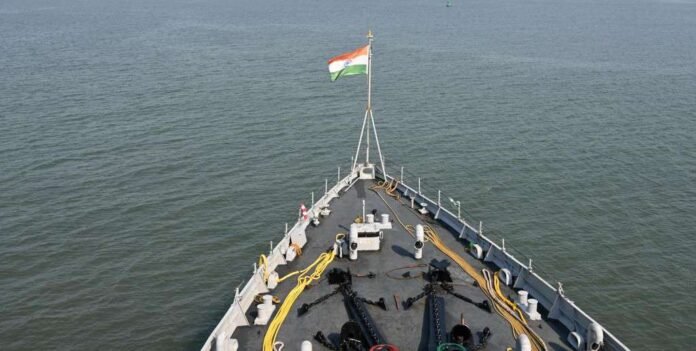

India has unveiled an ambitious 15-year defence modernisation roadmap that places strong emphasis on naval power, indigenous production, and technological advancement.
A key highlight of the plan is the potential construction of the country’s third aircraft carrier, which would be its first nuclear-powered vessel. The project aims to give India longer operational reach, enhanced stealth, and a stronger foothold in the Indian Ocean region.
Currently, India operates two carriers — INS Vikramaditya of Russian origin and the indigenously built INS Vikrant. The proposed nuclear-powered carrier would mark a significant leap in naval capabilities, supported by the planned development of at least 10 nuclear propulsion systems for future warships.
This reflects New Delhi’s determination to reduce dependence on foreign defence suppliers and strengthen domestic industries.
The roadmap also outlines the induction of new-generation twin-engine deck-based fighters and light combat aircraft being developed by Hindustan Aeronautics Ltd.
This will be the first time Indian-made fighter jets are deployed on navy carriers. Additionally, India is set to procure two electromagnetic aircraft launch systems, similar to those used by the US Navy, ensuring more advanced carrier operations.
To supplement indigenous production, India signed a deal with France in April worth 630 billion rupees (around $8 billion) for 26 Rafale-Marine jets. These will join the navy’s fleet by 2030, alongside 36 Rafale aircraft already in service with the air force. For now, the navy continues to rely on Soviet-origin MiG-29Ks.
The document also highlights the role of drones, which proved pivotal in the recent May conflict with Pakistan, signaling an increased focus on unmanned systems for surveillance and combat.
With a defence budget of 6.81 trillion rupees ($77 billion), India ranks as the world’s fourth-largest defence spender, after the US, China, and Russia.
