

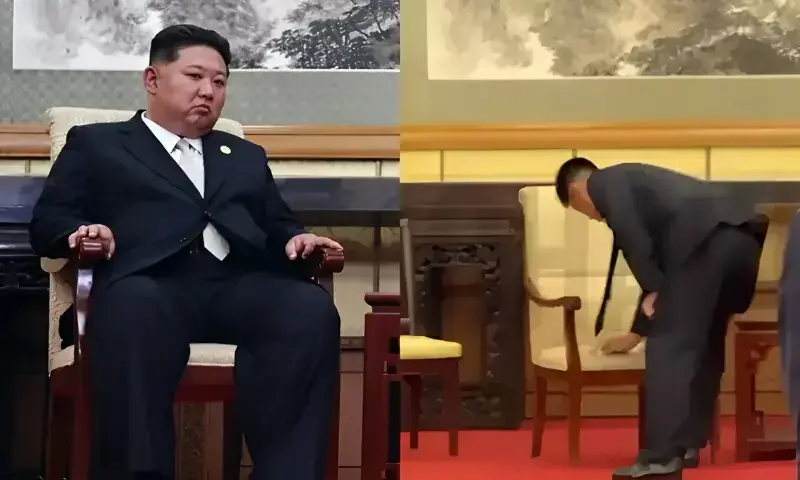

After North Korean leader Kim Jong Un met Russian President Vladimir Putin in Beijing, his staffers were seen meticulously scrubbing and removing items he touched — part of Pyongyang’s extraordinary counter-espionage protocols to conceal clues about the leader’s health.
Footage shared on Telegram by Kremlin reporter Alexander Yunashev showed two North Korean staff members wiping down the chair Kim used, including its backrest and armrests, as well as cleaning a nearby coffee table. His drinking glass was also promptly removed.
“After the negotiations were over, the staff carefully destroyed all traces of Kim’s presence,” Yunashev noted.
The leaders spoke for more than two hours before moving to a tea meeting, where they bid each other a warm farewell.
Secrecy Protocols to Conceal Health Clues
Kim Jong Un’s entourage has long enforced stringent measures during foreign visits, aimed at preventing foreign intelligence agencies from obtaining samples of his DNA or medical evidence.
According to Japan’s Nikkei, citing South Korean and Japanese intelligence, Kim even travels with his own toilet system on his iconic green train to Beijing, ensuring no waste is left behind.
Michael Madden, a North Korea leadership expert with the US-based Stimson Center, explained:
“The special toilet and waste disposal protocol prevent any agency — even a friendly one — from obtaining samples. Such traces could reveal Kim’s medical conditions through analysis of hair, skin, or bodily waste.”
Not the First Time
Kim’s hyper-vigilant protocols have been repeatedly observed:
-
After the 2019 Hanoi summit with US President Donald Trump, his guards cleaned his hotel room for hours, even removing a bed mattress.
-
In 2018, before meeting South Korean President Moon Jae-in, North Korean security sprayed and disinfected chairs and desks before Kim sat down.
-
Ahead of his 2023 summit with Putin, guards wiped down his chair with disinfectant and scanned it with a metal detector to ensure safety.
These measures underscore Pyongyang’s deep concern about foreign espionage, as well as the regime’s determination to protect details of Kim’s health — a closely guarded state secret.
