


By Muhammad Fahad Thaheem
Executive Summary
Pakistan, the world’s fifth most populous country with over 250 million people in 2025, is grappling with systemic governance and management challenges that are deeply rooted in its current provincial framework. With only four federating units, Pakistan is an outlier compared to other populous federal states. The overwhelming size and diversity of provinces, especially Punjab, with its more or less 127 million residents, creates severe administrative overload, inequitable representation, and uneven development.
This brief argues that urgent subdivision of provinces is necessary to ensure efficient governance, equitable service delivery, and national cohesion. Drawing on global experiences (India, Nigeria, Indonesia) and theoretical insights from fiscal federalism, consociationalism, and institutional capacity theory, the brief shows that creating new provinces can reduce governance overload, balance federal power, and enhance citizens’ trust in the state.
- The Problem
1.1 Overloaded Provinces
Pakistan’s provinces are simply too large to govern effectively. Punjab alone, with over half of the national population (53%), exceeds the population of many countries (Japan, Mexico, and Germany). Its centralization in Lahore leaves peripheral areas like South Punjab underserved.
Similarly, Sindh is burdened with the stark contrast between cosmopolitan Karachi and agrarian rural Sindh _ a divide that fuels long-standing political tensions. In KP, the incorporation of ex-FATA has stretched provincial administrative capacity, while Hazara feels politically marginalized. Balochistan, geographically vast but administratively weak, suffers from the lack of institutional reach, fuelling alienation and nationalist movements.
In essence, provinces designed in 1947 for just 30 million people are entirely misfit to govern a 250 million-strong nation in 2025.
1.2 Inequitable Representation
The current structure of the provinces badly undermines political inclusion. In Punjab, the dominance of central districts translates into skewed development priorities. South Punjab receives less than 17% of provincial development funds, despite its share of 32% of the population.
In Sindh, Karachi’s urban demands overshadow rural needs, creating a resource allocation imbalance. KP’s Hazara community has repeatedly demanded separation due to the lack of support. In Balochistan, Quetta-centric decision-making completely overlooks the coastal districts such as Gwadar and Makran.
This inequity deepens perceptions of elite capture and exclusion of peripheral identities, weakening the legitimacy of the federation.
1.3 Weak Service Delivery
Public services are strained because of the large provinces’ centralized decision-making, making responsiveness difficult. Health, education, and policing are often controlled from provincial capitals, setting aside the local realities.
For example:
- In South Punjab, rural health facilities are chronically understaffed as the recruitment and budgets are controlled from Lahore.
- In interior Sindh, infrastructure remains underdeveloped as Karachi’s urban sprawl absorbs the lion’s share of investment/expenditures of the government.
- In Balochistan, vast distances and weak administration make schools, hospitals, and policing inaccessible.
Service delivery failures weaken citizen–state trust, contributing to political disaffection and unrest.
1.4 Political Instability
Subdivision debates are politically sensitive. Nationalist parties frame reforms as threats to their ethnic majorities, while mainstream parties fear losing electoral strongholds. Yet avoiding reform has proven costlier, with repeated protests, strikes, and separatist rhetoric in South Punjab, Hazara, and Balochistan.
In sum, without rethinking provincial boundaries, governance inefficiency and political instability will deepen.
- Evidence and Global Lessons
2.1 India: States Reorganization for Efficiency
India reorganized states from 14 in 1947 to 28 (plus 8 UTs) today. Subdivision addressed governance overload and ensured linguistic and regional representation. The creation of Jharkhand, Uttarakhand, and Chhattisgarh in 2000 improved service delivery in previously neglected regions. Jharkhand, for example, saw increased education enrolment rates and greater control of local mineral resources.
2.2 Nigeria: From 3 to 36 States
Nigeria expanded from 3 regions in 1960 to 36 states in 1996 to manage ethnic complexity and resource disputes. Subdivision reduced secessionist pressures (notably the Biafra war), decentralized resource allocation, and increased regional representation. While corruption persisted, the new structure has prevented state collapse and kept ethnic minorities politically included.
2.3 Indonesia: The Pemekaran Experience
Indonesia implemented pemekaran (administrative fragmentation) post-1999, creating 200+ new districts/provinces. Despite concerns over costs, decentralization improved governance in remote areas like Papua by enabling locally responsive institutions and reducing Jakarta’s monopoly.
2.4 Theoretical Anchors
- Fiscal Federalism (Oates, 1972): Local governments are better positioned to allocate resources efficiently.
- Consociationalism (Lijphart, 1977): Power-sharing reduces conflict in plural societies.
- Institutional Capacity (Grindle, 2004): Smaller administrative units can better match governance structures to local needs.
Global and theoretical evidence demonstrates that subdivision enhances federal stability rather than undermining it.
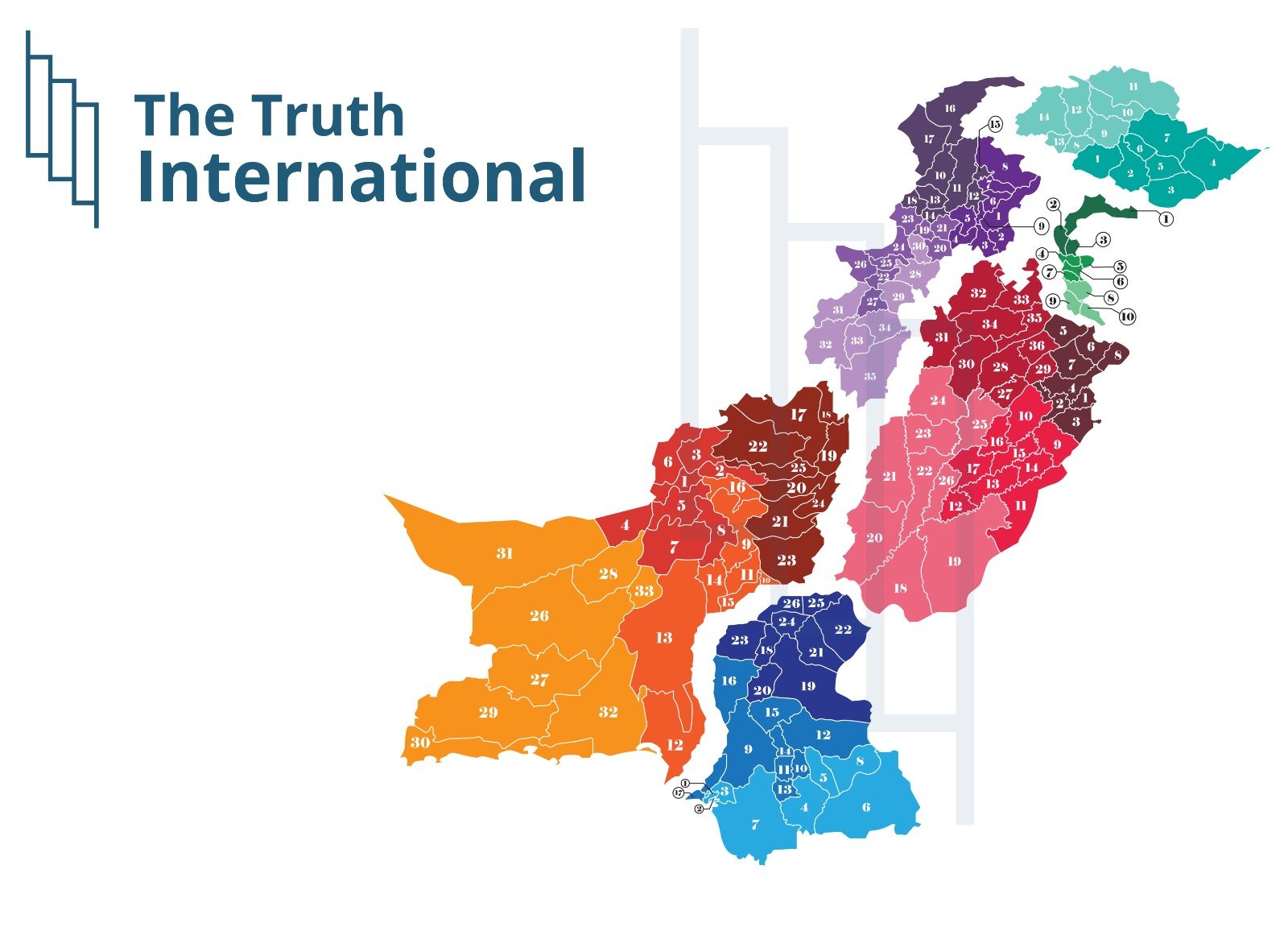
- Proposed Subdivision Models for Pakistan
- 6-Province Model (Minimalist)
- Punjab → North Punjab & South Punjab
- Sindh → Karachi-Hyderabad, Rural Sindh
- KP → Hazara Division and Khyber
- Balochistan →
Strength: Quick to implement, addresses obvious imbalances.
Weakness: Leaves Hazara and Makran grievances unresolved.
- 8-Province Model (Moderate)
- Punjab: North & South
- Sindh: Urban & Rural
- KP: Hazara Province
- Balochistan: North & South
Strength: Balanced and politically feasible, reduces centralization in all provinces.
Weakness: Requires significant adjustments in NFC Award.
- 12-Province Model (Comprehensive)
- Each major division (Multan, Hazara, Gwadar, etc.) was elevated to provincial status.
Strength: Maximizes inclusion and fairness, ensures no peripheral area is marginalized.
Weakness: High transition costs, elite resistance, and administrative complexity.
- Why Subdivision Will Improve Governance
- Efficient Service Delivery: Smaller units reduce bureaucratic layers and ensure quicker response to local needs.
- Equitable Resource Allocation: New Provincial Finance Commissions can direct funds fairly, countering capital-centric resource capture.
- Political Inclusion: Regions like Hazara and South Punjab gain their own legislatures, reducing alienation.
- Conflict Mitigation: Framing subdivisions as administrative avoids ethnic polarization.
- Federal Balance: Dilutes Punjab’s overwhelming dominance, strengthening federal equilibrium.
- Managing Risks: Policy Mechanisms
5.1 Institutional Safeguards
- Create an Independent Boundary & Transition Commission (IBTC) with judicial oversight.
- Ensure all subdivisions follow constitutional amendment procedures (Article 239(4)).
5.2 Phased Implementation
- Pilot with South Punjab Province, monitoring governance and service delivery outcomes before expanding.
5.3 Fiscal Guarantees
- Amend NFC Award to accommodate new provinces.
- Use equalization transfers (Canadian model) to prevent fiscal disparities.
5.4 Communication Strategy
- Frame reforms as administrative modernization, not ethnic division.
- Launch broad consultations with civil society and academia to legitimize the process.
- Key Recommendations
- Adopt 8-Province Model as a balanced reform pathway.
- Anchor reforms in service delivery and governance efficiency rather than ethnic mobilization.
- Establish an Independent Boundary & Transition Commission for transparency.
- Reform fiscal arrangements to ensure equitable funding for all provinces.
- Build consensus through multi-party dialogue and civic engagement.
Pakistan’s governance crisis is not only about leadership it is about institutional scale and structure. Provinces that were once suitable for a smaller population are now overstretched, creating inefficiencies and political grievances. By reconfiguring provinces, Pakistan can enhance service delivery, promote inclusion, and stabilize its federation.
Subdivision is not fragmentation; it is federal strengthening. If framed and implemented as a governance necessity, supported by fiscal reforms and public engagement, the creation of new provinces can transform Pakistan into a more equitable, resilient, and governable state capable of meeting the demands of its growing population.
