

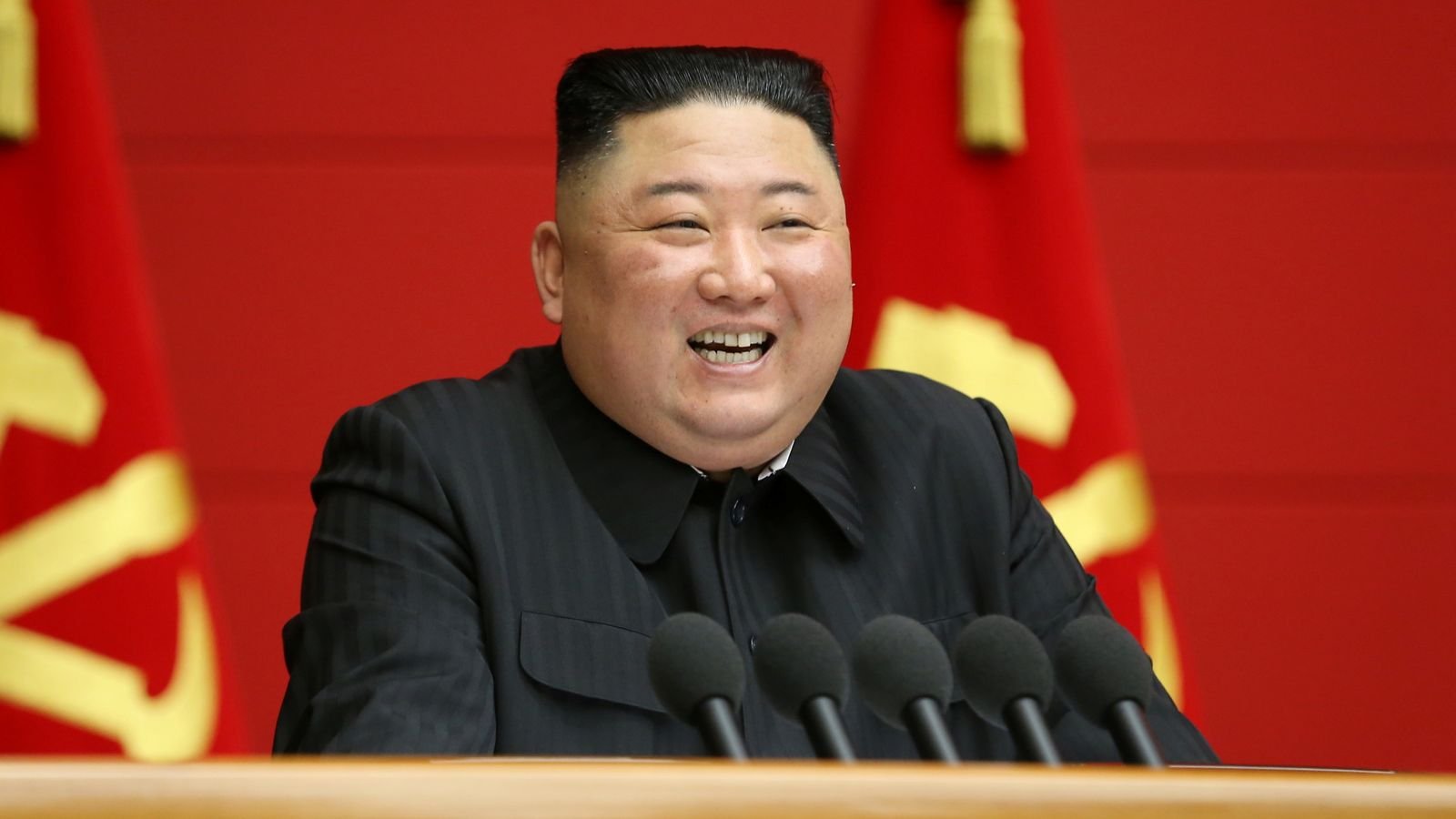

North Korean leader Kim Jong Un has officially crossed into China, according to reports by the North’s state-run radio. The trip marks a rare foreign visit for Kim, who is among 26 world leaders expected to attend a major military parade in Beijing, commemorating the 80th anniversary of Japan’s surrender in World War II.
If the visit proceeds as scheduled, it will be historically significant, as it brings together Kim Jong Un, Russian President Vladimir Putin, and Chinese President Xi Jinping at the same international event for the first time. The convergence of these three leaders underscores deepening trilateral cooperation in response to Western alliances and sanctions.
Just a day earlier, Xi and Putin jointly criticized the West during a gathering of Eurasian leaders in Tianjin, south of Beijing. The meeting was held under the umbrella of the Shanghai Cooperation Organisation (SCO), a 10-member regional bloc that positions itself as a counterweight to NATO and Western-led institutions. Kim’s participation in Beijing is being widely interpreted as a formalization of a China-Russia-North Korea partnership designed to challenge Western influence.
Kim Jong Un’s international engagements have been sporadic in recent years. In 2018, he held high-profile summits with then-U.S. President Donald Trump and South Korean President Moon Jae-in, raising hopes of denuclearization and peace on the Korean Peninsula. However, the collapse of talks at the 2019 Hanoi Summit prompted Kim to retreat from the global stage.
His reemergence has been gradual. Following the COVID-19 pandemic, Kim largely remained within North Korea until 2023, when he met Putin in Russia’s Far East, signaling renewed alignment with Moscow. Now, his appearance in Beijing places him once again at the center of great-power politics, with implications for both regional security and global diplomacy.
The Beijing parade and trilateral show of unity between Pyongyang, Moscow, and Beijing are expected to send a clear message of defiance to the West while reinforcing military and strategic ties among the three states.
