

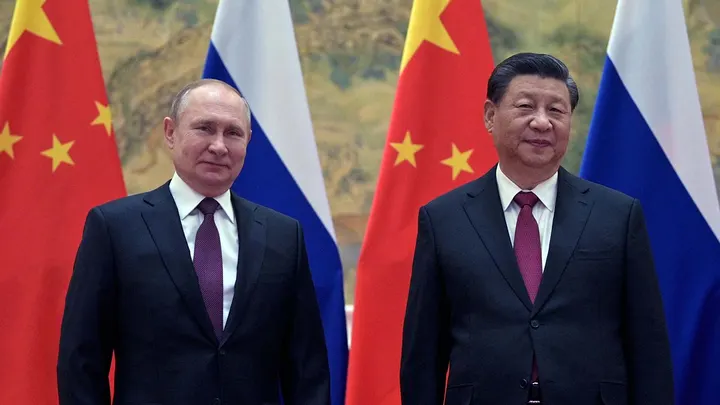

Chinese President Xi Jinping and Russian President Vladimir Putin outlined their joint vision for a new global order during the Shanghai Cooperation Organisation (SCO) summit in Tianjin, China. The two leaders emphasized the need for a security and economic framework that reduces dependence on Western-led structures and prioritizes the Global South.
Xi Calls for Inclusive Global Governance
Hosting over 20 leaders from Asia, the Middle East, and beyond, Xi stressed the importance of democratizing international relations. He said that global governance had reached a turning point amid growing turbulence. Xi called on SCO members to resist hegemonism, avoid power politics, and embrace true multilateralism.
He introduced his “Global Governance Initiative,” highlighting the need for stronger representation of developing countries. While not outlining detailed policies, Xi framed the proposal as part of China’s long-term strategy to expand its global influence.
Push for Economic Integration
Xi also promoted the idea of more inclusive globalization. He pointed to the SCO’s vast markets and economic opportunities in areas such as energy, technology, and science. He argued that strengthening economic integration would protect developing economies from global trade disruptions.
As part of this effort, Xi announced plans for an SCO development bank. Such an institution could help the bloc build alternatives to the US dollar in trade and financial transactions. He pledged 2 billion yuan ($280 million) in free aid for SCO member states this year, along with 10 billion yuan in loans through the SCO banking consortium.
China also committed to establishing an artificial intelligence cooperation center and invited SCO nations to participate in its planned lunar research station.
Putin Advocates Eurasian Stability
Putin reinforced Xi’s message, highlighting the growing use of national currencies in trade among SCO countries. He described this trend as evidence of “genuine multilateralism.” According to Putin, it provides a foundation for a balanced security system in Eurasia, one that respects the interests of all members.
He contrasted this approach with Euro-Atlantic security models, which he argued serve the interests of a single power at the expense of others. The Russian leader said the SCO’s framework could prevent such imbalances while supporting regional stability.
Broader Participation and Diplomacy
The SCO, once a small Eurasian bloc, now includes 10 permanent members and 16 dialogue or observer countries. Leaders from South Asia, Central Asia, and the Middle East attended the summit. Among them was Indian Prime Minister Narendra Modi, who visited China for the first time in seven years.
During his bilateral talks with Xi, both leaders described their nations as development partners rather than rivals. They explored ways to strengthen economic cooperation and stabilize relations.
A Challenge to the Western Order
The summit highlighted the SCO’s ambition to reshape global governance and reduce reliance on Western-dominated structures. With China and Russia at the forefront, the bloc aims to create new financial systems, promote technological cooperation, and offer a voice to developing nations.
While the initiatives remain in early stages, the pledges of aid, investment, and cooperation underscore the SCO’s role in advancing an alternative vision for international order. As global power dynamics shift, the Tianjin summit signals that China and Russia are determined to lead a multipolar world.
