

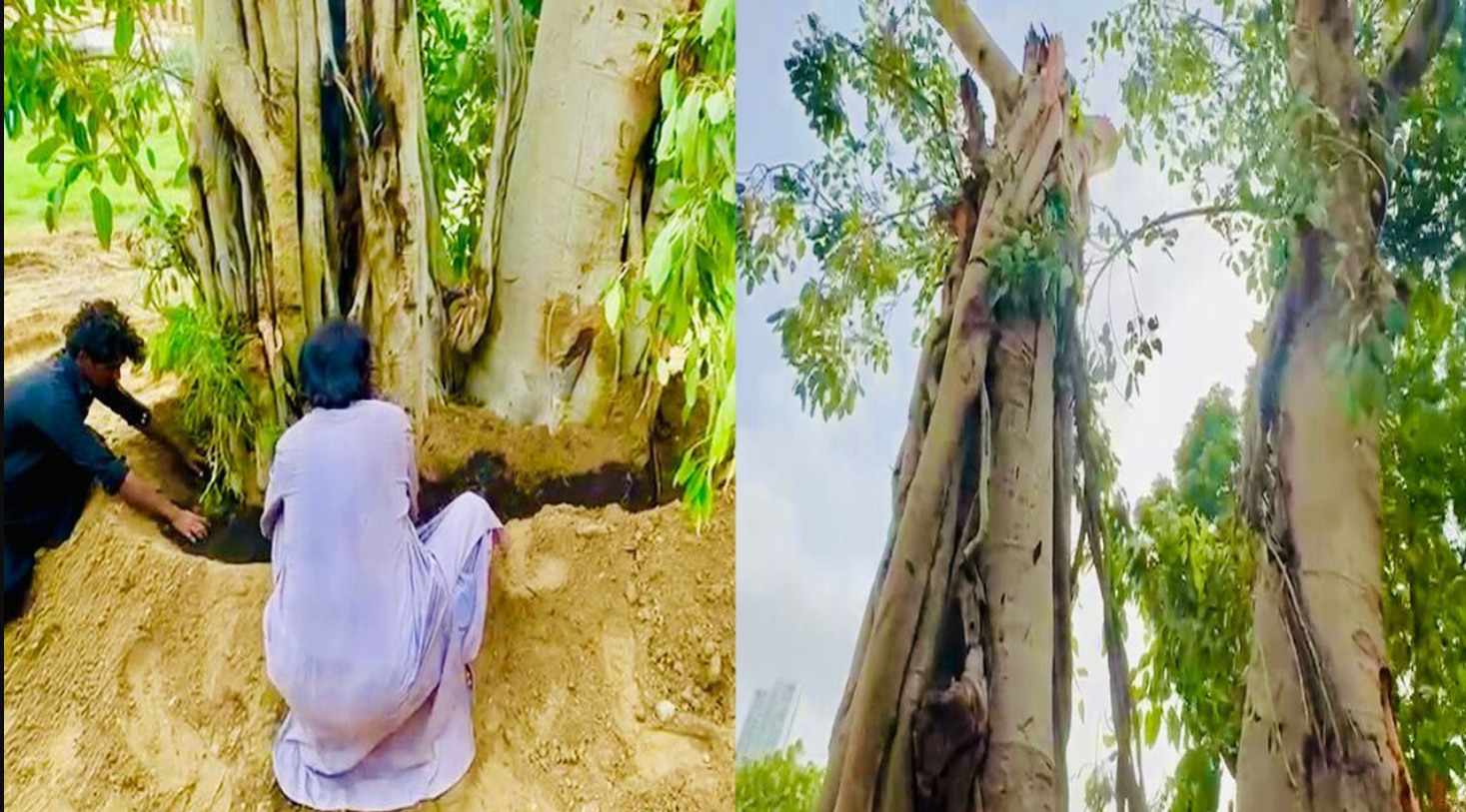

Karachi’s iconic 150-year-old banyan tree, known as the “Tree of Life,” has been revived after collapsing during heavy monsoon rains. The restoration, carried out by the Sindh Forest Department, has given new life to a symbol of the city’s heritage.
The banyan, originally planted during the British colonial era near Qasr-e-Naz, toppled over after torrential rains weakened its roots. Experts revealed that fungus and termite infestations had further damaged the tree, making it vulnerable to collapse.
Restoration Process
To save the historic tree, authorities launched a complex recovery operation. Two heavy cranes were used to carefully relocate and replant the banyan in a nearby spot. Forestry officials expressed confidence that with proper care, the tree could now live for another hundred years.
Nisar Ahmed Awan, a long-time employee of Qasr-e-Naz who has looked after the tree for more than four decades, shared that the banyan is being “nurtured back to life.” He said the revival effort represents not just environmental care but also a deep respect for cultural heritage.
Environmental and Cultural Significance
Environmentalists welcomed the effort, stressing that old trees like this banyan are vital for biodiversity, urban cooling, and air purification. Moreover, they hold immense cultural value, representing resilience, continuity, and a connection to the city’s past.
The banyan, often referred to as Karachi’s “Tree of Life,” has stood as a silent witness to generations. Experts believe its survival sends a strong message about environmental responsibility and the importance of preserving natural heritage.
Government Support
The restoration effort was carried out under special instructions from Sindh Chief Minister Murad Ali Shah. Provincial officials emphasized that protecting such ecological treasures remains a priority and that more initiatives will be launched to preserve the city’s urban forests.
The revival of Karachi’s banyan tree highlights the urgent need to protect urban green spaces. With increasing climate challenges and urban development, heritage trees must be safeguarded to maintain ecological balance. Officials and environmentalists agree that continued care will ensure the “Tree of Life” thrives for future generations.
