


Palestinians Decry Land Seizure as Displacement Strategy
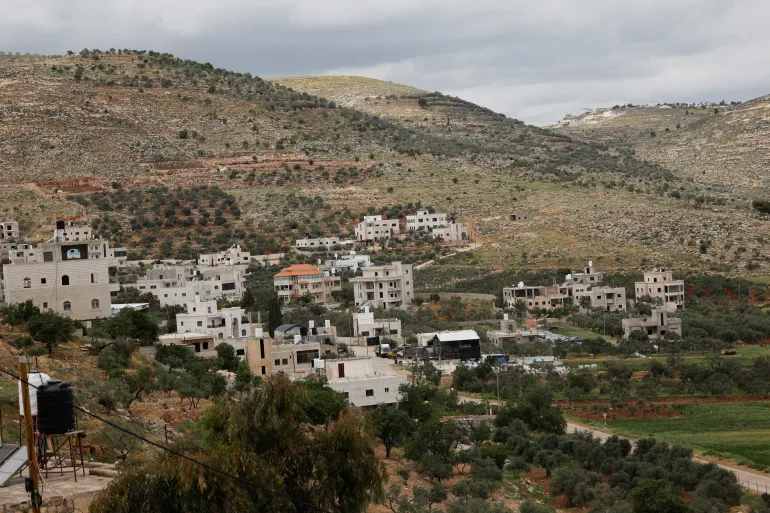
The Israeli military has uprooted approximately 3,000 olive trees in the Palestinian village of al-Mughayyir, located northeast of Ramallah in the occupied West Bank, triggering widespread anger and despair among residents. Locals say the destruction is part of a broader Israeli campaign to forcibly displace Palestinians and seize their ancestral lands.
According to Marzouq Abu Naim, deputy head of al-Mughayyir’s village council, Israeli soldiers stormed the area early Saturday, targeting a 0.27 square kilometer plot of farmland. The military claimed the olive trees posed a “security threat” to a nearby Israeli settlement road. In the process, soldiers raided over 30 homes, damaging personal property and vehicles, residents reported.
“This area is one of the most fertile parts of Ramallah,” said Hamza Zubeidat, a Palestinian researcher. “By uprooting trees, blocking access to water sources, and restricting movement, Israel is deliberately creating food and water insecurity for Palestinians.”
Al-Mughayyir, home to about 4,000 people, relies heavily on olive farming and livestock for economic survival. The destruction of olive groves not only undermines the local economy but also strikes at the heart of Palestinian cultural and national identity.
Decades-Long Pattern of Land Confiscation
Human rights groups and Palestinian advocates say the recent incident is part of a long-standing Israeli policy aimed at eroding Palestinian presence in the West Bank. Since 1967, thousands of olive trees have been destroyed, and farmland regularly seized under various pretexts.
“This is not a one-off event,” Zubeidat said. “It’s a continuation of the same displacement strategy that’s been in place for decades. The uprooting of trees is symbolic — it’s about removing people from the land physically and psychologically.”
Olive trees hold deep cultural significance for Palestinians, symbolizing resilience, heritage, and a generational connection to the land. The repeated targeting of these trees is seen by many as an assault on Palestinian identity.
Escalating Violence and Humanitarian Crisis in the West Bank
The destruction in al-Mughayyir comes amid a surge in violence across the West Bank, fueled by Israel’s ongoing war in Gaza. According to the United Nations Office for the Coordination of Humanitarian Affairs (OCHA), over 2,370 settler attacks on Palestinians were recorded between January and July 2024.
In the same period, Israeli forces and settlers have killed at least 671 Palestinians in the West Bank, including 129 children. Tens of thousands have been displaced, as the humanitarian situation continues to deteriorate.
In Ramallah alone, OCHA documented 585 settler attacks, with nearby Nablus recording 479. Residents of al-Mughayyir now fear that the destruction of their trees could be a precursor to full-scale land confiscation or community displacement.
“This isn’t just about trees,” said Abu Naim. “It’s about our future, our existence. Without land, we have nothing.”
