

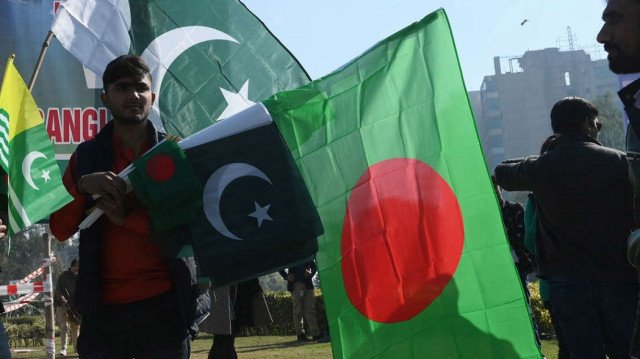

For the first time since the 1971 war, Bangladesh has decided to lift the visa requirement for Pakistani officials, marking a significant development in bilateral relations between the two South Asian nations.
The exemption, which will remain in place for five years, applies to individuals holding diplomatic and official passports from both countries. This move is being seen as an important confidence-building measure, signaling Dhaka and Islamabad’s willingness to normalize and expand cooperation.
According to foreign media reports, the interim government of Bangladesh, led by Nobel Laureate Professor Muhammad Yunus, has formally approved this mutual visa exemption agreement.
Yunus’s press secretary, Shafique Islam, announced at a press conference in Dhaka that the agreement aligns with similar arrangements Bangladesh already has with 31 other nations. He clarified that under this decision, Pakistani officials would now be able to travel to Bangladesh without requiring a visa, and the same facility will be extended reciprocally to Bangladeshi officials visiting Pakistan.
The development comes shortly after a high-level meeting in Dhaka last month between Bangladesh’s Home Adviser, Jahangir Alam Chowdhury, and Pakistan’s Interior Minister, Mohsin Naqvi. During those talks, both sides had agreed to finalize a memorandum of understanding (MoU) on visa-on-arrival for holders of official passports, paving the way for the current announcement.
Visa-free entry between the two nations was halted in the aftermath of the 1971 conflict, which led to the creation of Bangladesh. Since then, relations between Dhaka and Islamabad have often been strained, though recent months have seen a notable improvement in diplomatic engagement.
Adding further momentum to this positive shift, Pakistan’s Commerce Minister, Jam Kamal Khan, arrived in Dhaka on Wednesday for a four-day official visit, scheduled from August 21 to 24. His visit aims to strengthen bilateral trade ties, promote economic cooperation, and build on the recent diplomatic thaw.
Officials on both sides expressed optimism that easing travel restrictions for government representatives will foster greater dialogue, cooperation, and trust between the two countries.
