

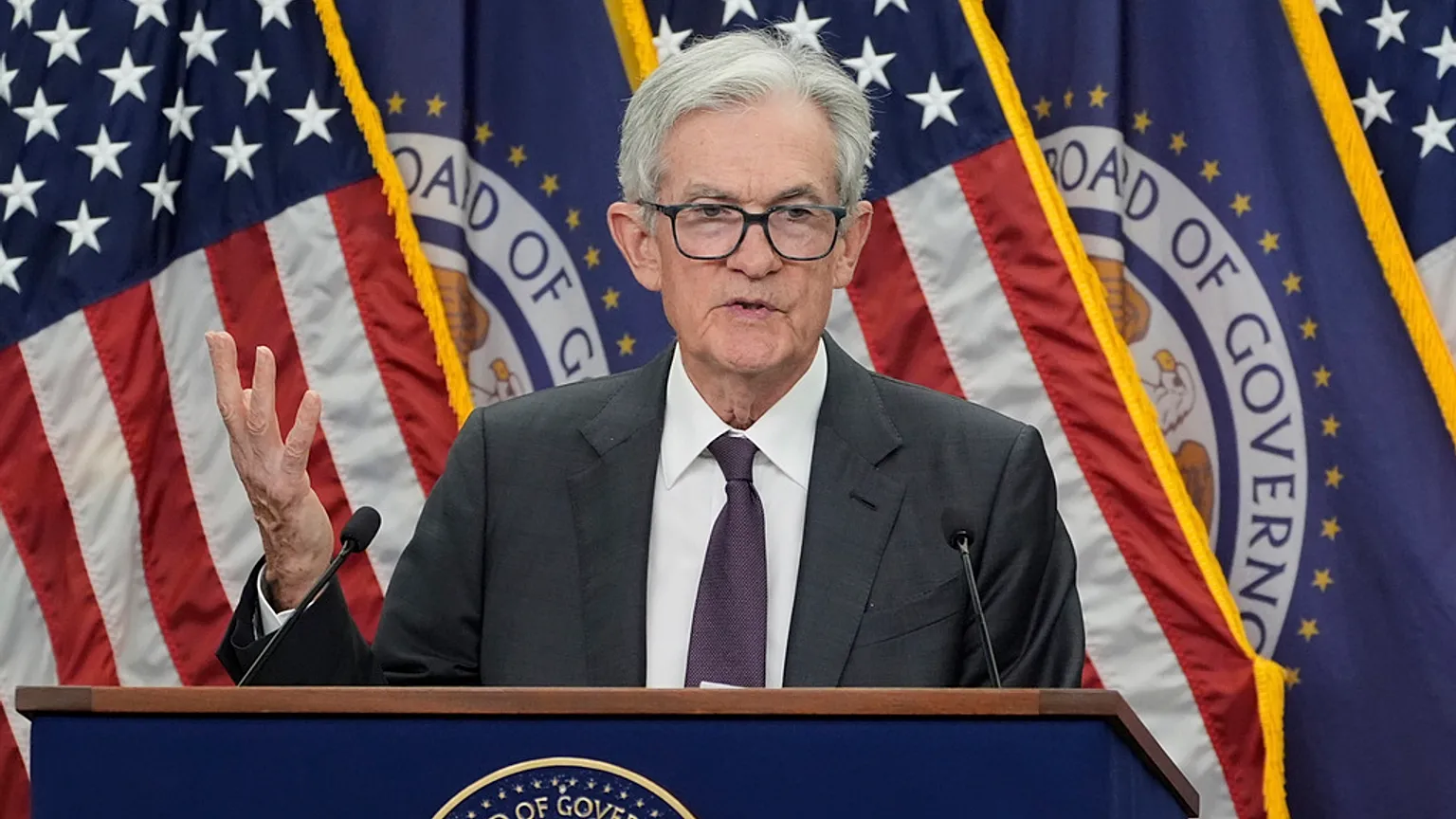

Federal Reserve Chair Jerome H. Powell, in a widely anticipated speech at the annual Jackson Hole conference hosted by the Kansas City Fed, provided his clearest indication yet that the central bank is preparing to restart interest rate cuts in the near future.
Speaking before a global audience of central bankers, policymakers, and economists, Powell emphasized vulnerabilities in the labor market and the broader economy, even as inflation remains above the Fed’s target. While he stopped short of explicitly committing to a rate cut at the Fed’s next meeting in September, his remarks strongly suggested that easing monetary policy is likely in the coming weeks.
Powell noted that the balance of economic risks appears to be shifting. Rising borrowing costs have begun to weigh on economic activity, while signs of a softening labor market suggest that downside risks to employment are increasing.
He highlighted a recent slowdown in monthly job growth and pointed out the “curious balance” in the labor market, with uncertainty over whether changes reflect weaker demand from companies or reduced labor supply. According to Powell, these dynamics underscore the need for caution and flexibility in monetary policy.
Despite these concerns, Powell stressed that inflation remains too high to warrant aggressive rate reductions. He downplayed fears that tariffs would permanently elevate price pressures, noting that their impact is likely to be a temporary, one-time shift in price levels. Nevertheless, he acknowledged the Fed faces a challenging situation as it balances its dual mandate of price stability and full employment.
Powell signaled that when the Fed does begin cutting rates, it will likely do so gradually, given that current policy settings are only “modestly restrictive.” The central bank aims to reach a neutral stance, where rates neither stimulate nor constrain economic activity. He also outlined a revised framework for monetary policy, discarding the 2020 “flexible average inflation targeting” strategy, which allowed for temporary inflation overshoots to compensate for prior shortfalls.
Powell explained that the framework has been adjusted to better reflect current economic conditions, removing outdated language regarding employment shortfalls and emphasizing a more balanced approach to policy implementation.
Financial markets reacted positively to Powell’s speech. Stocks rallied, with the S\&P 500 gaining 1.5 percent and the Nasdaq Composite rising 1.9 percent, while bond yields fell in response to expectations of lower rates.
Investors interpreted Powell’s guidance as a clear signal that the Fed is preparing to support growth while remaining vigilant about inflation, setting the stage for a potential policy easing in the near term.
Overall, Powell’s speech reinforced the Fed’s commitment to a careful, data-driven approach, acknowledging both the economic challenges and the flexibility required to navigate a complex and evolving financial landscape.
