

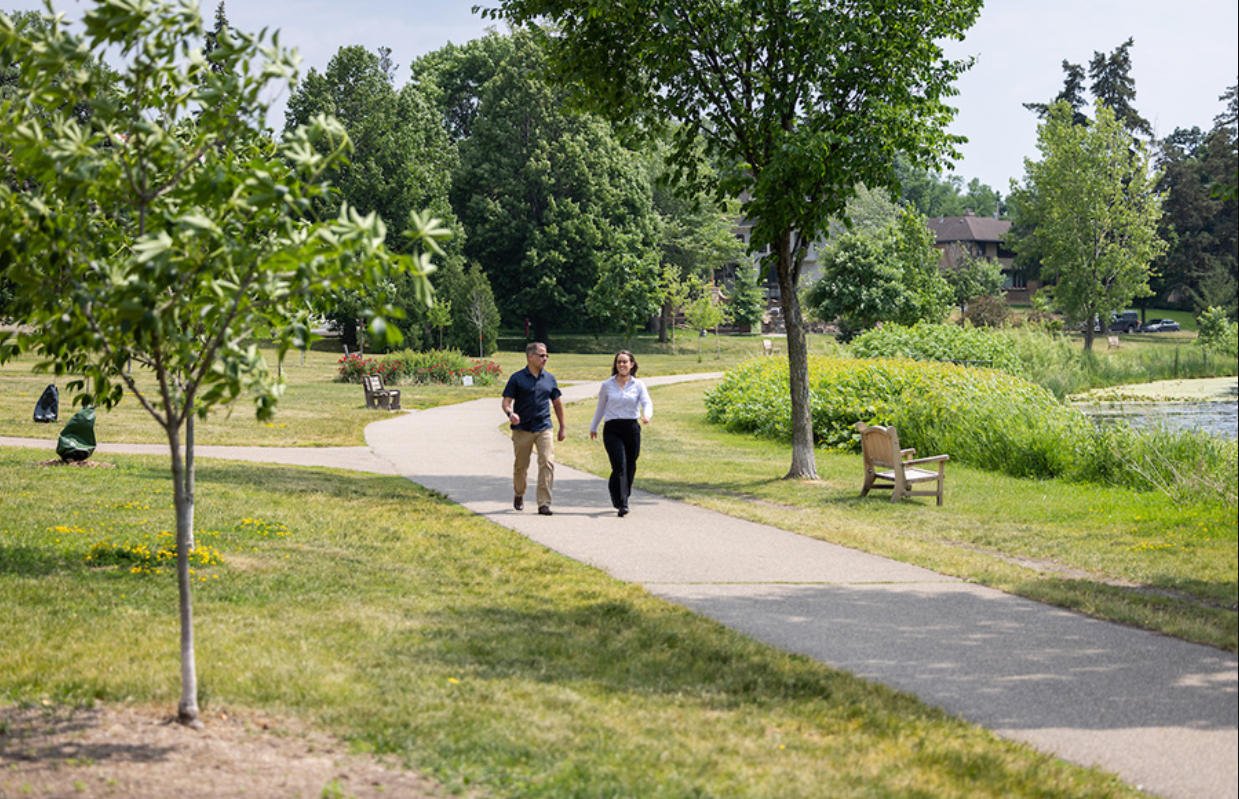

A recent study by researchers from Carleton University and the University of Toronto highlights the critical role of green spaces in protecting mental health during the early months of the COVID-19 pandemic. The national research, published in PLOS One, shows that older adults living in neighborhoods with more greenery were significantly less likely to experience depression amid pandemic restrictions.
Greener Neighborhoods Linked to Lower Depression Rates
The study, titled “Residential Greenness Reduced Depression During COVID-19: Longitudinal Analyses from the Canadian Longitudinal Study on Aging (CLSA),” analyzed data from over 13,000 urban-dwelling Canadians. Findings reveal that access to nearby green spaces—including parks, playgrounds, tree-lined streets, and private gardens—served as a mental health buffer, particularly for those without a history of depression, lower-income individuals, and people with mobility limitations.
Dr. Paul J. Villeneuve, lead author and professor at Carleton University, emphasized:
“Urban greenery wasn’t just a backdrop—it played a protective mental health role in one of the most stressful global events in recent history.”
Key Findings of the Study
-
Lower Rates of Depression in Green Areas
Participants living in greener neighborhoods were less likely to develop depression during the pandemic. The effect was especially pronounced among those who had not experienced depression prior to COVID-19. -
Greater Benefits for Lower-Income Canadians
Satellite data used to measure residential greenness indicated that the mental health benefits were more significant for lower-income residents. Co-author Susanna Abraham Cottagiri, a doctoral candidate at Queen’s University, noted:
“Green spaces provided modest, yet meaningful support for mental well-being, offering relief amid deepening socio-economic inequities.” -
Support for People with Mobility Limitations
Individuals with restricted mobility gained the most from nearby greenery, as their ability to access distant parks was limited. Dr. Ying Jiang, senior epidemiologist at the Public Health Agency of Canada, explained:
“When mobility is limited, the greenery right outside your door plays a particularly important role in supporting mental health.” -
Enhanced Benefits for Less Socially Active Individuals
Those who rarely ventured outside their yards before the pandemic experienced stronger mental health benefits from nearby green spaces during lockdowns. Dr. Margaret de Groh, co-author, highlighted:
“The psychological value of green space increases when social connections are restricted.”
Implications for Urban Planning and Public Health
The research underscores the need to rethink urban design and mental health policies. Professor Esme Fuller-Thomson of the University of Toronto stressed the importance of expanding equitable access to green spaces, particularly in lower-income neighborhoods, and integrating greenery into mental health resilience strategies.
Unique Contribution of the Study
This longitudinal analysis is among the few to assess how access to green spaces influenced mental health during the pandemic. By combining satellite data with validated depression measures at two time points, pre-pandemic and six months into the pandemic, the study provides robust evidence of the protective effects of residential greenery.
The study also highlights important considerations, such as how socioeconomic status, mobility challenges, and social behavior shape the mental health benefits of green spaces. However, the researchers caution that some vulnerable groups, such as residents of long-term care facilities, were not included in the sample.
