

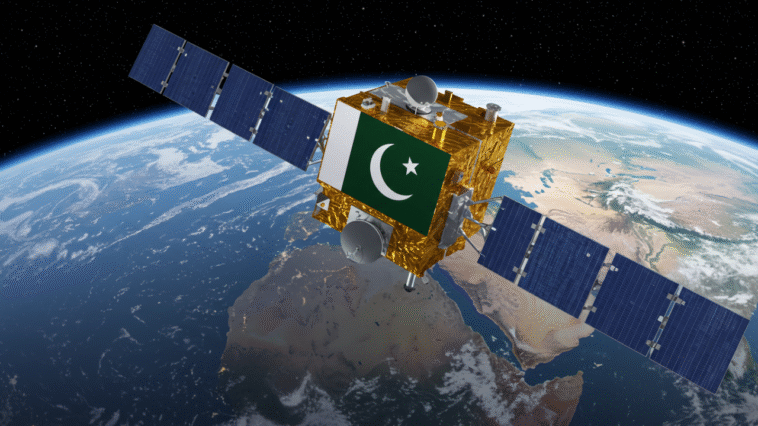

LAHORE: Pakistan’s latest remote sensing satellite has successfully reached its designated orbit and formally begun operations, officials from the Space and Upper Atmosphere Research Commission (Suparco) confirmed on Saturday. The development marks a significant milestone for the country’s space programme, with the satellite having been launched from China’s Xichang Satellite Launch Centre on July 31.
According to Suparco, the satellite has established stable communication with ground stations and has already started capturing high-resolution images, which are being transmitted back to Earth. These images will be used across a wide range of sectors, enhancing data-driven decision-making and providing crucial support for development initiatives nationwide.
The advanced imaging capabilities of the satellite are expected to transform the way Pakistan approaches urban planning and infrastructure development. With the ability to closely monitor urban sprawl and map growth patterns, it will provide policymakers with the information necessary to guide sustainable development and manage expanding cities more effectively.
One of the most important roles of the satellite will be in disaster management. By delivering timely and accurate data, it will strengthen Pakistan’s capacity to prevent and respond to natural disasters. Authorities will be better equipped to anticipate and mitigate the effects of floods, landslides, earthquakes, and similar hazards, potentially saving lives and minimizing damage.
The satellite will also contribute to environmental protection. It will be able to track deforestation, observe the melting of glaciers, and monitor ecological changes across the country, offering insights that are crucial for preserving natural resources and tackling climate change.
Agriculture is another sector set to benefit from this development. Experts believe that by providing precise land and crop monitoring data, the satellite will help increase agricultural productivity and improve food security.
Beyond these areas, the satellite is expected to support the execution of major national initiatives, including projects under the China-Pakistan Economic Corridor (CPEC). It will aid in mapping transportation networks, identifying geological hazards, and ensuring the effective use of natural resources.
Overall, the satellite’s successful deployment represents not only a leap forward in Pakistan’s technological capabilities but also a vital tool for economic growth, environmental sustainability, and national security.
