

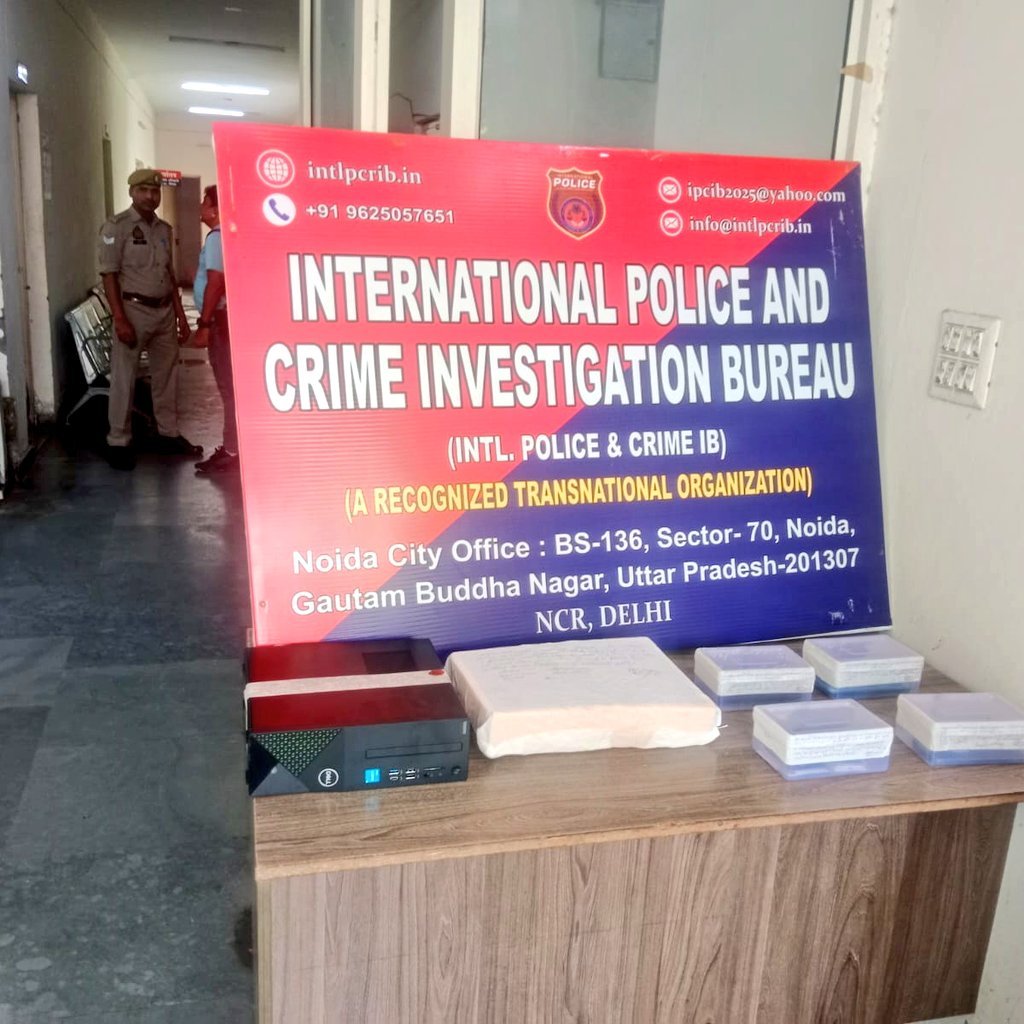

Indian police have arrested six men for allegedly impersonating law enforcement officers and extorting money through a fraudulent organization they called the “International Police and Crime Investigation Bureau.”
The group operated out of a rented office in Noida, a satellite city of New Delhi, which was decorated to resemble an official police establishment with police-like colors and logos to deceive the public.
According to a police statement released late Sunday, the accused had forged official documents and certificates to support their false claims. They also ran a website where they solicited “donations” from victims, further adding to their scam’s credibility. The group claimed to have affiliations with prominent international law enforcement agencies, including Interpol and other global crime units, to convince people of their legitimacy.
Authorities said the men presented themselves as genuine public servants, but upon investigation, it was revealed they had no such authority. During the arrest, police recovered multiple mobile phones, chequebooks, stamp seals, and fake identity cards that the accused used to maintain their facade.
This case follows another recent incident where a man was arrested for running a fake embassy near New Delhi, duping hopeful job seekers with promises of overseas employment. The accused, Harsh Vardhan Jain, 47, operated an illegal “West Arctic embassy” in Ghaziabad, Uttar Pradesh, a city neighboring the capital.
Jain claimed to be the ambassador of fictitious countries such as “West Arctica,” “Saborga,” “Poulvia,” and “Lodonia.” He reportedly used vehicles equipped with fake diplomatic number plates and circulated doctored photographs showing him alongside Indian political leaders to support his elaborate scheme.
Local police have also accused Jain of money laundering, indicating the scam involved significant financial fraud. Both cases highlight the ongoing challenges law enforcement faces in curbing impersonation crimes and fraudulent activities that exploit public trust in official institutions.
The arrests are a reminder for citizens to remain vigilant against such scams and to verify the credentials of individuals or organizations claiming official authority.
