

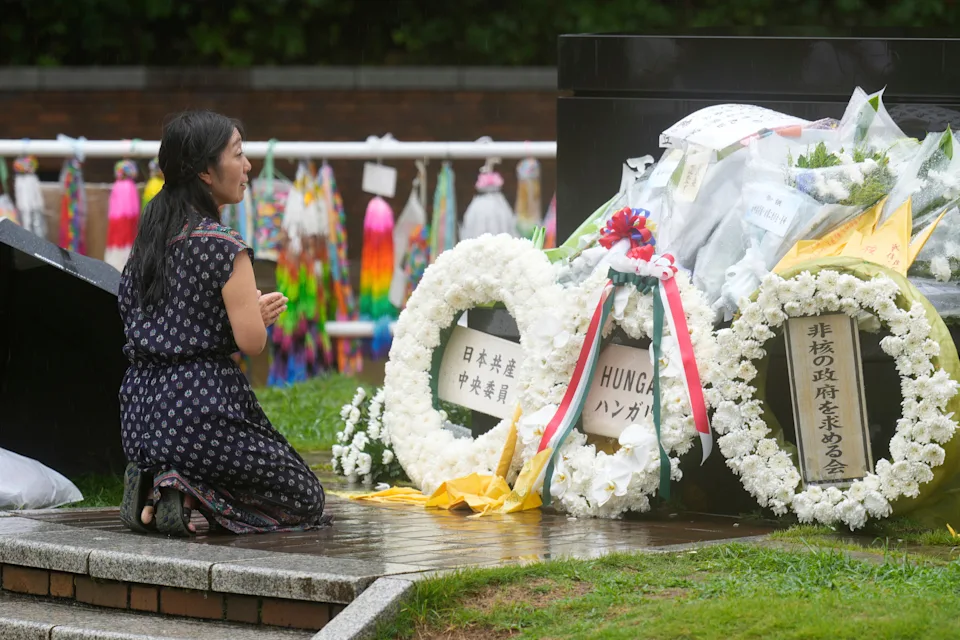

Nagasaki held a solemn memorial this Saturday to commemorate the 80th anniversary of the U.S. atomic bombing. Thousands gathered at the Nagasaki Peace Memorial Park, bowing their heads in prayer and observing a moment of silence at 11:02 a.m., the exact time the bomb was dropped in 1945.
A Harsh Reminder of the Past—and a Warning for the Present
Addressing the assembled crowd, Mayor Shiro Suzuki—whose parents were survivors of the bombing—issued a stark warning: ongoing global conflicts could thrust the world into nuclear war again. He reminded leaders that the existential threat humanity faces is immediate, urging a swift return to the principles of the UN Charter and demanding concrete steps toward nuclear disarmament. “Delay is no longer permissible,” he stressed. “This is a crisis of human survival that is closing in on each and every one of us.”
Suzuki’s address was emotionally anchored by a survivor’s harrowing recollection:
“Around me were people whose eyeballs had popped out… Bodies were strewn about like stones.” The Economic Times
He cited this as both a chilling reminder of nuclear horror and a call to global solidarity:
“Is it not this ‘global citizen’ perspective that will serve as the driving force behind stitching back together our fragmented world?” The Economic Times
Global Participation in a Call for Peace
The event drew international participation, with delegates from 95 countries and territories, including the U.S., Russia, and Israel, attending the ceremony.
Prime Minister Shigeru Ishiba, speaking at the event, reiterated Japan’s firm commitment to a nuclear-free future and emphasized the country’s moral leadership role in fostering peace.
The Ever-Diminishing Voice of Hibakusha
The ceremony also highlighted the role of hibakusha—survivors of the atomic bombing—whose numbers have dropped below 100,000 for the first time. Their testimonies, now increasingly rare, continue to drive the call for disarmament and peace. Last year, their leading organization, Nihon Hidankyo, received the Nobel Peace Prize for its advocacy.
A Shared Memory Fuels Urgency
Reflecting on the tragedy’s legacy, Kochi Kawanaka, a 14-year-old visitor from Osaka, said, “I truly believe a tragedy like this must never be repeated. We can only pledge to take the initiative ourselves in making a step toward peace.” His words underscored how the memory of Nagasaki continues to resonate across generations.
A Renewed Call to Action
As the crowd released doves in a symbolic gesture of peace, the ceremony served both as a memorial and as an urgent plea: to learn from our past, elevate the voices of survivors before they fade, and push for real-world solutions—not merely commemorations. In a time when nuclear threats are ascendent across the globe, Nagasaki’s message is more vital than ever.
