

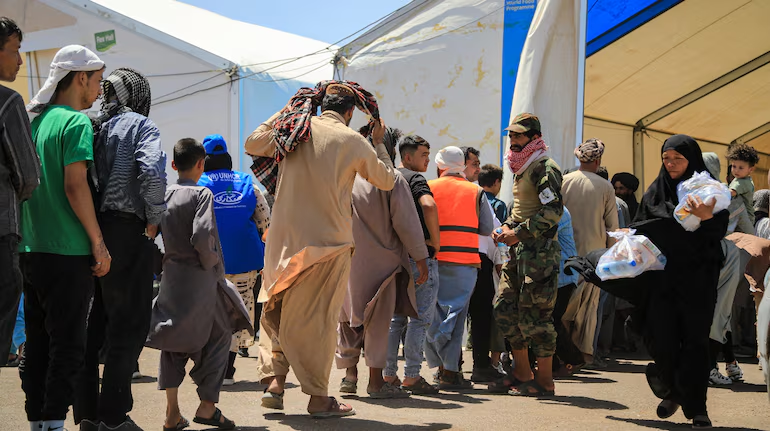

Pakistan has begun deporting documented Afghan refugees even before the formal September 1 deadline set by its government, according to the United Nations High Commissioner for Refugees (UNHCR). This move could potentially impact over one million Afghans who have been legally residing in Pakistan for decades, primarily under the Proof of Registration (PoR) card scheme.
The Pakistani interior ministry had earlier announced that PoR cardholders—representing the last group of Afghans residing legally in the country without visas—became unlawful residents following the expiration of their cards on June 30.
On July 31, the ministry confirmed that the formal deportation of more than 1.3 million PoR cardholders would begin on September 1. However, reports indicate that deportations and detentions of registered Afghan refugees began as early as August 1, with the UNHCR confirming that hundreds had already been sent back to Afghanistan between August 1 and 4.
Qaisar Khan Afridi, UNHCR’s spokesperson, expressed concern over these early expulsions and stressed that such actions breach Pakistan’s international legal obligations. The UNHCR has urged Pakistani authorities to halt the forced returns and adopt a humane, voluntary, and phased approach to repatriation.
In a statement, the agency warned that “such massive and hasty return could jeopardise the lives and freedom of Afghan refugees, while also risking instability not only in Afghanistan but across the region.”
While a formal repatriation process is scheduled to begin in September, a directive from Pakistan’s interior ministry indicated that the voluntary return of documented refugees would commence immediately. However, the ministry has not responded to media queries about reports of early deportations.
Pakistan’s repatriation initiative falls under the broader Illegal Foreigners Repatriation Plan, launched in late 2023. The country has maintained that only Afghan nationals with valid visas will be allowed to remain.
Pakistani officials have often linked Afghan nationals to security concerns, including terrorism and crime, although Afghanistan has denied such allegations and labelled the removals as forced deportations.
In parallel, Afghanistan is also dealing with a fresh wave of deportations from Iran, heightening the burden on an already fragile state. Humanitarian groups have raised alarms about the potential for further destabilisation, as both countries send back large numbers of Afghans to an uncertain and volatile environment.
Many of those facing deportation have lived in Pakistan for over four decades, having fled waves of conflict and instability in their homeland since the 1980s.
