

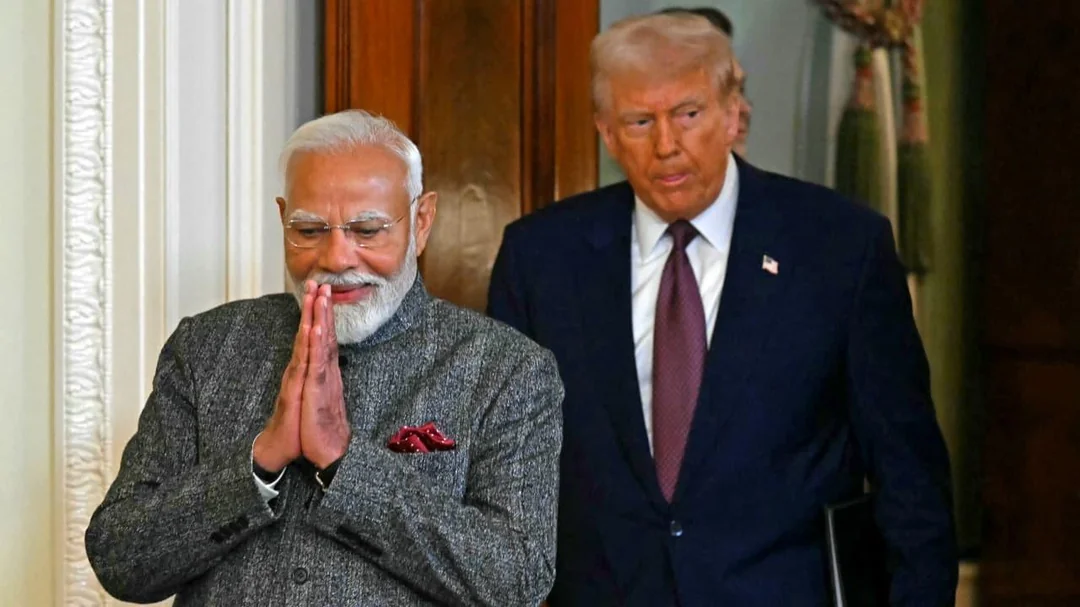

In a significant escalation of economic tensions, U.S. President Donald Trump has announced plans to “substantially” increase tariffs on Indian imports as a response to India’s ongoing purchase of Russian oil. Trump argues that New Delhi’s continued trade with Russia undermines global efforts to pressure Moscow into ending its war in Ukraine.
Trump took to his social media platform, Truth Social, to criticize India’s oil trade practices, accusing the country of purchasing “massive amounts” of Russian oil and reselling a considerable portion on the international market for “big profits.” He sharply condemned India’s actions, stating, “They don’t care how many people in Ukraine are being killed by the Russian War Machine.”
As a result of these grievances, Trump declared his intention to impose substantially higher tariffs on Indian goods imported into the United States. Although he did not provide specific details on the new tariff rates, it is worth noting that during his previous tenure, Trump had proposed a broad 25% tariff on Indian imports. This earlier proposal was rooted in complaints over trade imbalances and what he described as “strenuous and obnoxious non-monetary trade barriers” imposed by India.
The Indian government swiftly responded to Trump’s comments, emphasizing that their energy policies are guided by national security interests and economic considerations rather than external pressure. Officials reaffirmed that India would not cease purchasing Russian oil, underscoring the “steady and time-tested partnership” between the two countries.
Recent statistics show that Russian oil accounted for 33.7% of India’s crude imports between April and June 2025, a slight decline from 36% in 2024. Meanwhile, U.S. crude exports to India increased from 3.5% to 8.5% in the same period, reflecting India’s efforts to diversify its energy sources.
Trump’s critique extended beyond oil imports. He accused India of unfair trade practices and controversially labeled both India and Russia as “dead economies.” Furthermore, he warned of additional penalties if India continued purchasing Russian military equipment, framing the Indo-Russian relationship as a broader global security concern.
India, meanwhile, remains focused on diversifying its crude oil supplies. Public sector oil companies have been directed to source crude from various regions, including the Middle East, Africa, and the Americas, to reduce dependence on any single supplier and ensure energy security.
This ongoing disagreement marks a rising tension between Washington and New Delhi, with trade and geopolitical dynamics playing a significant role in shaping their future relationship.
